
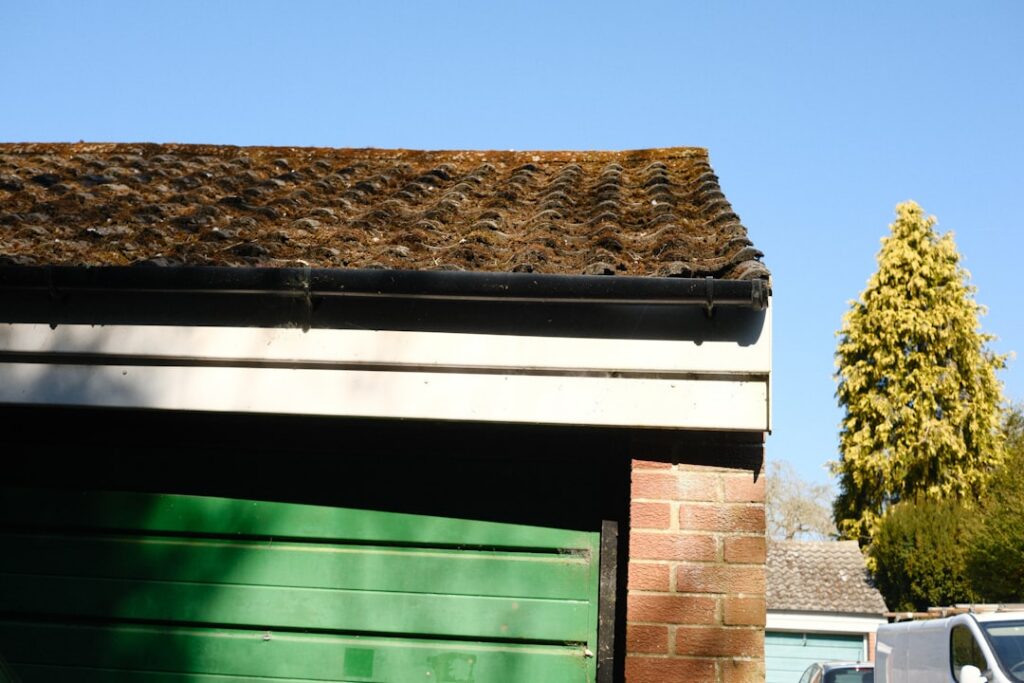
Why Asbestos Garage Roof Replacement Is a Health and Safety Priority
Asbestos garage roof replacement is one of the most important — and most misunderstood — home improvement projects an older property owner can face.
Here is what you need to know right away:
- Asbestos was widely used in garage roofing from the 1930s through 2000 because it was durable, fire-resistant, and cheap
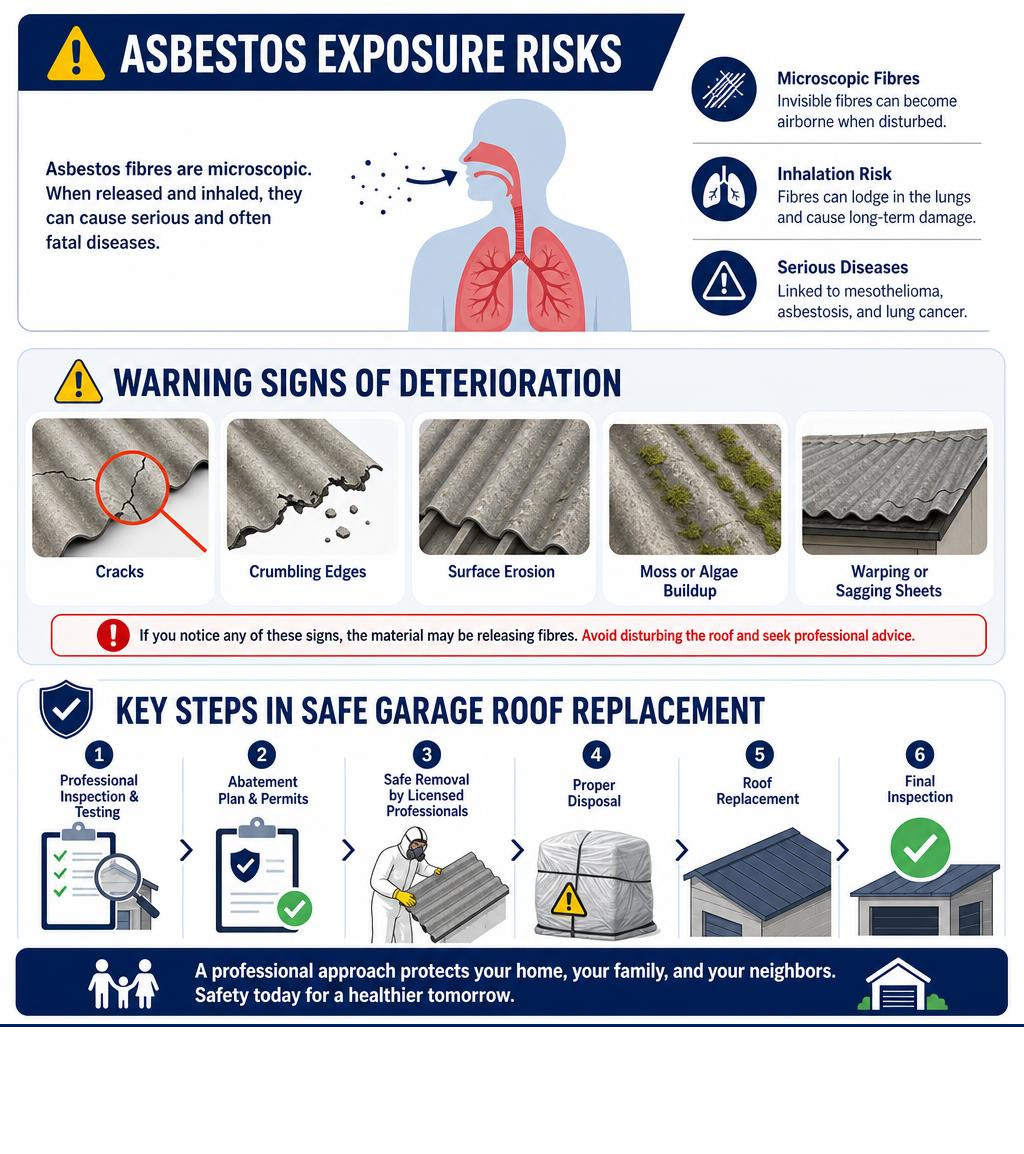
- Undisturbed asbestos is low-risk, but cracked, crumbling, or weathered sheets can release microscopic fibres into the air
- Inhaling those fibres is linked to serious and often fatal diseases, including mesothelioma and asbestosis
- DIY removal is not recommended — it can release harmful fibres and may violate local regulations
- Licensed professionals should handle removal, disposal, and replacement to keep you, your family, and your neighbors safe
- Modern alternatives — including metal roofing, EPDM rubber, and fibre cement — are safer, durable, and built to last decades
If your garage was built before 2000 and has grey corrugated cement sheets on the roof, there is a real chance it contains asbestos. The safest first step is a professional assessment — not a ladder and a crowbar.
I’m Oscar Perez, founder of Anchor Up Roofing and a retired veteran with years of hands-on experience in roofing and exterior construction across South Florida — including guiding homeowners through the complexities of asbestos garage roof replacement and modern roofing upgrades. In this guide, I’ll walk you through everything you need to know to handle this process safely, legally, and with confidence.
The Process of Asbestos Garage Roof Replacement

A safe asbestos garage roof project is not just a roofing job. It is part inspection, part abatement planning, part hazardous material handling, and part modern roof installation.
That is why the process should be handled in a careful sequence:
- Identify whether the roof contains asbestos.
- Check the condition of the roofing sheets and structure.
- Confirm local permit requirements.
- Plan containment, worker safety, and disposal.
- Remove asbestos-containing material without breaking it apart.
- Transport and dispose of the waste correctly.
- Install a modern, code-compliant replacement roof.
- Clean, inspect, and document the completed work.
In South Florida, roof work is also shaped by wind-load requirements, hurricane exposure, local building codes, and in some areas, High Velocity Hurricane Zone standards. Miami-Dade, Broward, Homestead, Hialeah, Doral, Pembroke Pines, Naples, Fort Myers, Sarasota, Venice, Lee County, Collier County, and surrounding coastal areas all demand roofing systems that are more than just “good enough.”
For local permitting context, Miami-Dade provides information on permit requirements for roofing projects. Requirements vary by jurisdiction, so homeowners should always verify what applies to their exact property before work begins.
Preparing for Asbestos Garage Roof Replacement
Preparation is where a safe project is won or lost.
Before anyone removes a single sheet, the first step is to determine whether asbestos is actually present. If the garage was built before 2000 and has older corrugated cement roofing, asbestos should be treated as a possibility until testing or documentation proves otherwise.
A proper preparation phase usually includes:
- Visual inspection: Looking for corrugated cement panels, weathered edges, old fixings, cracks, staining, patch repairs, and signs of deterioration.
- Material sampling when needed: A qualified asbestos professional may collect a sample for laboratory analysis. Homeowners should not snap off a corner or drill into the roof to “check.” That is exactly how fibers can become airborne.
- Structural assessment: The garage frame, rafters, purlins, walls, fasteners, gutters, and drainage points should be checked before choosing a replacement material.
- Access planning: Crews need safe access around the garage, clear working space, and a plan for moving waste without dragging materials through living areas.
- Containment zones: The work area may need barriers, warning signs, controlled access, and protection for nearby surfaces.
- Weather planning: In South Florida, wind and rain matter. Removing a roof during stormy weather is not just inconvenient; it can be unsafe.
- Permit review: Depending on the property and scope, roofing permits, asbestos notifications, or disposal documentation may be required.
- Safety planning: Crews need appropriate PPE, respirators, gloves, disposable coveralls, eye protection, and decontamination procedures.
The goal is simple: do not disturb asbestos unless the job is planned, controlled, and documented.
Common signs that an asbestos garage roof may need replacement include:
- Cracked, split, or broken roofing sheets
- Crumbling edges or exposed fibers
- Persistent leaks after rain
- Water staining, mold, or damp smells inside the garage
- Sagging roof sections
- Rusted or failing fixings
- Loose panels after heavy wind
- Repeated patch repairs
- Dust or debris collecting under the roof
- Roof age, especially on garages built before 2000
One important note: health symptoms should not be used as a “test” for asbestos exposure. Asbestos-related diseases can take many years to develop. If a roof looks damaged or you suspect asbestos, act early.
Executing the Asbestos Garage Roof Replacement Safely
Safe removal is about keeping asbestos-containing material intact and preventing fibers from becoming airborne.
The safest methods generally focus on control, not force. That means no smashing, no grinding, no dry sweeping, no pressure washing, and absolutely no “let’s just break it into smaller pieces so it fits in the truck.” That last idea belongs in the same category as juggling chainsaws: memorable, but not wise.
A professional asbestos removal process often includes:
Site setup
- Establishing a controlled work zone
- Restricting access to the area
- Protecting nearby surfaces
- Preparing labeled waste packaging
Fiber suppression
- Light wetting techniques may be used to reduce dust
- Materials should be handled gently
- Power tools are avoided unless specialized controls are in place
Careful sheet removal
- Fasteners are removed with minimal disturbance
- Panels are lowered intact whenever possible
- Broken pieces are handled as contaminated waste
Waste packaging
- Asbestos waste is typically wrapped or bagged in approved materials
- Packaging must be sealed and labeled
- Waste should not be mixed with ordinary construction debris
Transport and disposal
- Asbestos waste must go to an approved facility
- Documentation, manifests, or disposal receipts should be retained
- Homeowners should request proof that disposal was handled legally
Final cleanup
- The area is cleaned using appropriate methods
- Dust and debris are controlled
- The garage is checked before new roofing work continues
Broward County provides useful public information through its asbestos roofing safety guidelines, and similar caution should be applied throughout South Florida.
After the asbestos-containing roof is removed, the replacement phase begins. This is where roofing experience matters. The new system must be properly attached, flashed, sealed, and built for local weather conditions. In our area, that means strong wind resistance, moisture control, drainage, and durable materials that can handle heat, salt air, and summer storms.
Modern Non-Asbestos Replacement Materials

The good news: replacing an asbestos garage roof gives you a chance to upgrade, not just swap old panels for new ones.
Modern non-asbestos materials are safer, cleaner, better looking, and better suited to Florida weather. The right choice depends on the roof shape, slope, garage structure, budget, energy goals, and local code requirements.
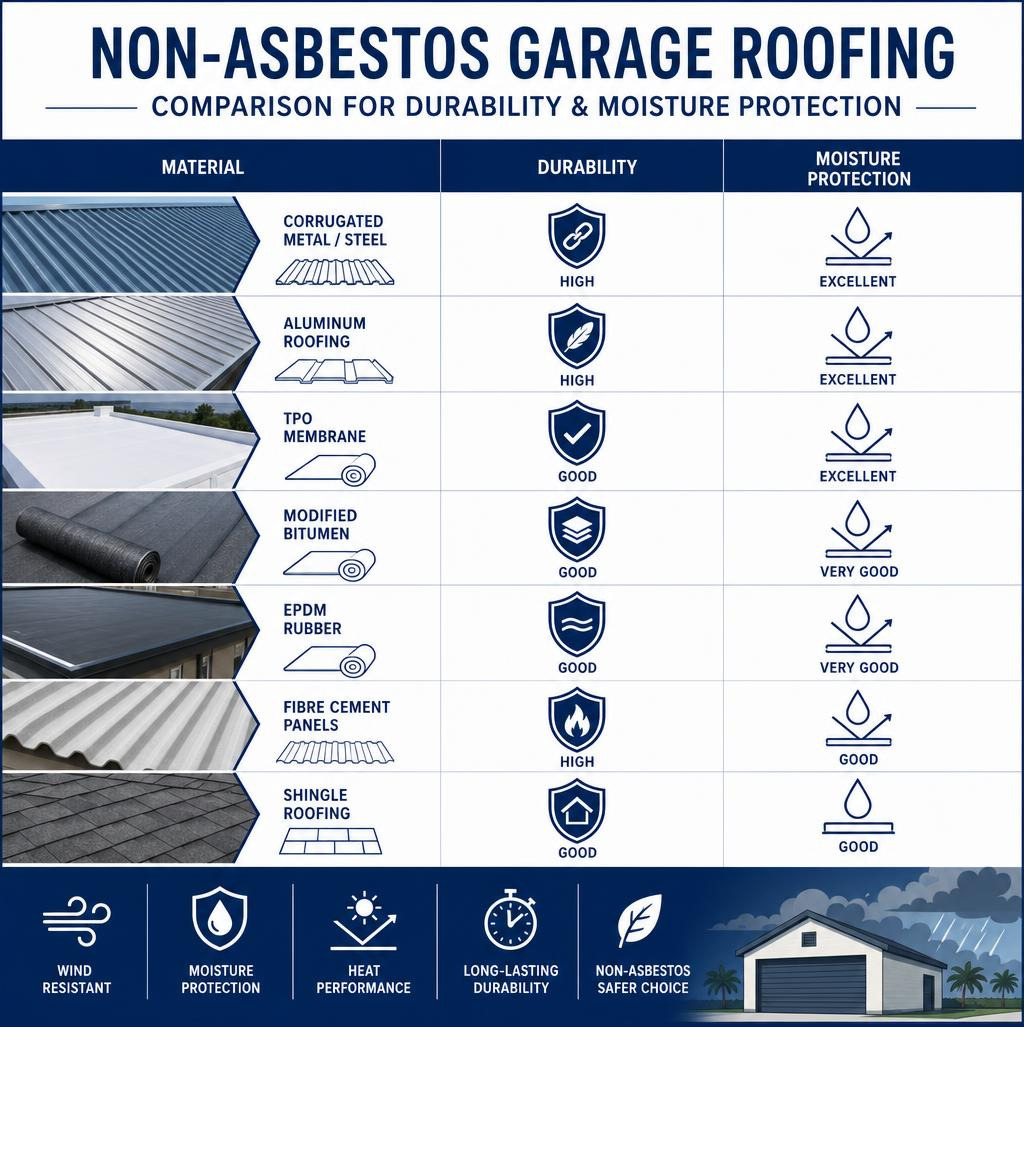
Here is a simple comparison:
| Material | Best For | Strengths | Considerations |
|---|---|---|---|
| Corrugated metal or steel | Pitched or low-slope garage roofs | Durable, wind-resistant, long service life, recyclable | Needs correct fastening, coatings, and corrosion protection |
| Aluminum roofing | Coastal areas and lighter structures | Rust-resistant, lightweight, good for salt-air environments | Can be more costly than basic sheet options |
| TPO membrane | Flat or low-slope roofs | Reflective, heat-welded seams, good moisture protection | Requires expert installation and drainage planning |
| Modified bitumen | Flat or low-slope roofs | Proven system, layered protection, good waterproofing | Performance depends heavily on installation quality |
| EPDM rubber | Low-slope roofs and simple layouts | Flexible, durable, good waterproofing | Black membranes can absorb heat unless specified otherwise |
| Fibre cement panels | Traditional corrugated appearance | Non-asbestos, familiar look, fire-resistant | Heavier than some metal options; structure must be assessed |
| Shingle roofing | Sloped garage roofs matching a home | Familiar appearance, many design options | Not ideal for very low slopes |
A roof that works in a dry inland climate may not be the best choice for Miami-Dade, Broward, Naples, Fort Myers, Sarasota, or coastal South Florida. Here, we think about:
- Wind uplift
- Fastener spacing
- Edge metal strength
- Drainage
- Ponding water
- Salt-air corrosion
- Solar heat
- Hurricane-season readiness
- Product approvals where required
Metal and Steel Roofing
Metal and steel roofing are among the strongest choices for many garage roof replacements.
For a garage with a suitable slope and structure, corrugated steel or metal panels can provide excellent durability, strong weather resistance, and a clean modern look. Metal is also a practical choice in South Florida because it can be engineered for high wind exposure when properly installed.
Benefits include:
- Long service life
- Strong resistance to wind when correctly fastened
- Good shedding of rainwater
- Fire resistance
- Low maintenance compared with many older systems
- Reflective coating options for heat reduction
- Recyclability
- Compatibility with many garage styles
For coastal communities such as Miami, Hialeah, Homestead, Naples, Fort Myers, Venice, and Sarasota, material selection matters. Coatings, fasteners, and panel type should be chosen with corrosion resistance in mind. Salt air is beautiful when you are watching the sunset. It is less charming when it is chewing through cheap metal components.
A professionally installed metal garage roof should include:
- Code-compliant fastening patterns
- Proper underlayment where required
- Correct panel overlap
- Sealed penetrations
- Strong perimeter and edge detailing
- Flashing at walls and transitions
- Gutters or drainage planning when needed
Metal roofing is not just about the panel. The installation system is what makes it perform.
Flat Roof Membranes
Many garages in South Florida have flat or low-slope roofs. In that case, membrane systems may be more appropriate than corrugated panels.
Common flat roof options include:
- TPO membrane: A reflective single-ply membrane often used on low-slope roofs. Heat-welded seams can provide strong leak resistance when installed correctly.
- Modified bitumen: A layered asphalt-based membrane system known for waterproofing and durability.
- EPDM rubber: A flexible rubber membrane used on low-slope roofs, especially where movement or simple roof geometry is a factor.
- Built-up roofing systems: Multi-layer systems that can work well when designed and installed properly.
Flat roofs are not truly flat. At least, they should not be. They need slope, drains, scuppers, or other drainage details to move water away. Ponding water is one of the biggest enemies of flat roofs, especially during South Florida’s rainy season.
For a flat garage roof replacement, we look closely at:
- Existing deck condition
- Drainage direction
- Low spots
- Edge termination
- Wall flashings
- Penetrations
- Insulation needs
- Wind-uplift requirements
- Compatibility with the existing structure
A membrane roof can be a smart choice, but it is not a shortcut. Seam quality, drainage, and edge details make or break the system.
Frequently Asked Questions About Garage Roof Upgrades
Asbestos roof projects bring up a lot of questions. That is completely normal. Most homeowners do not wake up excited to learn about hazardous waste rules, wind-load engineering, and fiber suppression. We get it.
Here are the questions we hear most often.
Do I need planning permission or permits to replace my roof?
In South Florida, the phrase “planning permission” is not usually the term homeowners deal with. What matters here is building permits, local roofing rules, asbestos-related requirements, and code compliance.
For a garage roof replacement, permits may be required depending on:
- Your city or county
- The scope of work
- Whether structural repairs are involved
- Whether the roof covering is being changed
- Whether asbestos-containing material is being disturbed
- Whether the property is in a high-wind or coastal zone
- Whether product approvals are required
In Miami-Dade and Broward, roofing work can be subject to strict wind-load and product-approval requirements. Other areas, including Naples, Fort Myers, Sarasota, Venice, Lee County, and Collier County, also have local permitting and inspection processes.
You should never assume that a small detached garage is automatically exempt. It may feel like “just the garage,” but building departments often see it as a structure that still needs safe, code-compliant work.
A qualified contractor should help you understand:
- What permits are needed
- What inspections may apply
- Which materials are approved
- Whether asbestos professionals need to be involved
- What documentation you should keep
Can I remove an asbestos roof myself?
We strongly recommend that you do not remove an asbestos garage roof yourself.
Even when asbestos is bonded into cement sheets, it can become dangerous if the material is cracked, cut, drilled, sanded, pressure washed, dropped, or broken. One wrong move can release microscopic fibers that you cannot see, smell, or taste.
DIY removal creates several risks:
- Personal exposure to asbestos fibers
- Exposure to family members, neighbors, and pets
- Contamination of clothing, tools, vehicles, and soil
- Improper waste transport
- Illegal disposal
- Fines or enforcement issues
- Higher cleanup costs if the site becomes contaminated
- No proper disposal record for future buyers or insurers
Professional asbestos crews use specialized procedures, PPE, containment, wetting methods, packaging, labeling, and disposal documentation. A regular roofing crew should not treat asbestos like ordinary tear-off debris.
The safest approach is:
- Do not disturb the roof.
- Keep people away from damaged areas.
- Do not sweep or pressure wash dust.
- Do not drill test holes.
- Contact qualified professionals for assessment.
- Use licensed or properly credentialed asbestos specialists when required.
- Replace the roof with a modern, code-compliant system.
How long does the removal and installation process take?
The timeline depends on the garage size, roof condition, access, permitting, asbestos requirements, replacement material, and weather.
Some straightforward garage roof replacements can be completed quickly once permits, materials, and abatement plans are ready. More complex projects take longer, especially when there is hidden structural damage, difficult access, storm delays, or extensive asbestos handling requirements.
A typical project timeline may include:
- Initial consultation: Discussing the roof, age, visible damage, and goals.
- Inspection or testing: Confirming whether asbestos is present.
- Scope and material selection: Choosing metal, membrane, fibre cement, or another approved option.
- Permitting and approvals: Handling local requirements before work begins.
- Asbestos removal: Controlled removal and disposal by qualified professionals.
- Structural repairs if needed: Replacing damaged decking, framing, fascia, or supports.
- New roof installation: Installing the selected roof system.
- Final cleanup and documentation: Leaving the site safe and providing relevant records.
The biggest scheduling mistake homeowners make is waiting until the roof is actively leaking. Once water gets into framing, drywall, stored belongings, insulation, or electrical components, the project can grow. If your garage roof is already cracked, sagging, or shedding debris, it is better to plan now than panic during the next thunderstorm.
Do I need an asbestos survey before replacing my garage roof?
If asbestos is suspected, testing or professional confirmation is the safest path.
You may need an asbestos survey or sample analysis if:
- The garage was built before 2000
- The roof is made of older corrugated cement sheets
- There is no documentation showing the material is asbestos-free
- The material is damaged or deteriorating
- A contractor, building department, or disposal facility requires confirmation
- You are selling, renovating, or demolishing the structure
Sometimes an experienced professional can identify a likely asbestos-containing material visually, but visual identification is not the same as laboratory confirmation. Many materials look similar. Modern fibre cement can resemble older asbestos cement, and older panels can vary widely in appearance.
If testing is needed, it should be done safely by someone trained to collect samples without spreading fibers.
What are the legal and safety requirements for asbestos disposal?
Asbestos waste must not go into normal construction debris, household trash, or an unapproved dumpster.
Safe disposal usually involves:
- Keeping asbestos-containing material wet or controlled during handling
- Avoiding unnecessary breakage
- Wrapping or bagging in approved materials
- Sealing and labeling the waste
- Transporting it according to applicable rules
- Using an approved disposal facility
- Keeping waste manifests, receipts, or disposal documentation
The paperwork matters. If you sell the property later, proof of proper asbestos removal can help show that the work was handled responsibly.
Also, beware of any contractor who says:
- “We’ll just toss it with the regular debris.”
- “No need for paperwork.”
- “You can take it to the dump yourself.”
- “We’ll break it up so it’s easier.”
- “Permits slow everything down, so let’s skip them.”
Those are not shortcuts. They are red flags wearing a fake mustache.
Should I repair, encapsulate, or replace an asbestos garage roof?
It depends on the roof condition.
If asbestos-containing roofing is intact, sealed, not leaking, and unlikely to be disturbed, a professional may recommend monitoring or encapsulation in some cases. Encapsulation means applying a suitable coating or system that helps lock down fibers and protect the surface.
However, replacement is usually the better long-term option when the roof is:
- Leaking
- Cracked
- Crumbling
- Sagging
- Repeatedly patched
- Storm damaged
- Structurally questionable
- Near the end of its useful life
- In the way of planned renovations
Encapsulation is not a magic eraser. It does not remove asbestos from the property. It may also be unsuitable if the roof is too fragile, wet, dirty, or damaged. A proper assessment is needed before deciding.
What are the best modern materials for South Florida garages?
For South Florida, the best material depends on the garage design.
In general:
- Metal roofing is excellent for many sloped garage roofs and can offer strong wind performance.
- TPO membrane is a strong option for flat and low-slope roofs where reflectivity and seam strength matter.
- Modified bitumen is a proven low-slope roofing option with good waterproofing.
- EPDM rubber can work well for certain low-slope applications.
- Fibre cement panels can preserve a traditional corrugated look without asbestos.
- Shingles or tile may be appropriate when the garage roof is designed to match the main home and has the correct slope.
The key is not choosing the trendiest material. It is choosing the material that fits the structure, slope, code requirements, and local weather exposure.
Are there grants or financial support options for asbestos garage roof replacement?
Government grants for private asbestos garage roof replacement are not something homeowners should count on in South Florida. Availability can vary, and programs may change.
That said, financial help may still be available through:
- Home improvement financing
- Contractor financing programs
- Insurance claims if damage is tied to a covered event
- Local housing assistance programs, when available
- Energy-efficiency or resilience programs, depending on the project
- Property improvement loans
At Anchor Up Roofing, we offer flexible financing options for qualified customers, which can help homeowners move forward with necessary roofing work instead of delaying a safety-sensitive project.
Conclusion
Asbestos garage roof replacement is not a project to rush, guess at, or hand to the lowest bidder with a pickup truck and a pry bar.
Done correctly, it protects your health, keeps your property compliant, improves weather resistance, and gives your garage a safer modern roof built for South Florida conditions.
The most important takeaways are:
- If your garage was built before 2000, asbestos may be present.
- Damaged asbestos roofing should not be disturbed by homeowners.
- A professional assessment is the safest first step.
- Removal requires careful handling, packaging, disposal, and documentation.
- Replacement materials should be selected for wind, rain, heat, and local code requirements.
- Metal, TPO, modified bitumen, EPDM, fibre cement, shingles, and tile all have a place depending on the roof.
- Permits and inspections may apply, especially in South Florida’s high-wind environment.
- Financing can help make a necessary replacement more manageable.
We are Anchor Up Roofing: retired veteran-owned, backed by more than 20 years of roofing and exterior construction experience, and trusted across South Florida for residential and commercial roofing, metal, tile, shingle, flat roofing, gutters, soffit and fascia, insulation, and hurricane-impact windows and doors.
If you suspect your garage roof contains asbestos, do not climb up and investigate it yourself. Let us help you plan the safe, compliant next step.