
Roof and attic insulation plays a huge role in how comfortable and energy efficient your home feels every day. Many homeowners do not realize that the attic is one of the biggest places where heat enters or escapes a house. If insulation is weak or outdated, your HVAC system has to work harder and your energy bills can rise quickly.
Two of the most common options for roof and attic insulation are spray foam and fiberglass. Both materials help control temperature, but they work in different ways and come with different benefits.
If you are trying to decide which option is right for your home, understanding how these insulation types compare can help you make the best decision for comfort, efficiency, and long term value.
Need help evaluating your attic insulation? Contact Anchor Up Roofing for a professional inspection and honest recommendations.
Choosing the Best Roof and Attic Insulation
If you are deciding between spray foam and fiberglass insulation, the right choice depends on your goals, budget, and the condition of your attic. Here are the main points to keep in mind:
- Best for energy efficiency: Spray foam insulation performs best because it seals air leaks while insulating, which helps reduce energy loss and improve indoor comfort.
- Best budget friendly option: Fiberglass insulation is typically the most affordable option for homeowners looking for a basic attic insulation upgrade.
- Best for moisture control: Closed cell spray foam offers strong resistance to moisture and can help prevent mold or humidity problems in the attic.
- Best for long term performance: Spray foam usually lasts longer and maintains its insulation performance without sagging or settling over time.
For many homes, the best solution depends on the attic structure, insulation goals, and budget.
A professional roof and attic inspection can help determine which insulation type will perform best for your home.
Understanding Roof and Attic Insulation
What Is Roof and Attic Insulation?
Roof and attic insulation is a material placed in the attic space or under the roof structure to slow down heat transfer. In simple terms, insulation helps keep cool air inside during hot months and warm air inside during colder months.
Without proper insulation, your home can lose a large amount of energy through the roof area.
Common areas where insulation is installed include:
- Attic floors
- Roof decks
- Ceiling cavities
- Wall spaces connected to the attic
Good insulation helps your home stay comfortable year round.
Why Proper Attic Insulation Is Important
Many homes have insulation that is old, thin, or poorly installed. This can cause several problems:
- Higher energy bills
- Uneven temperatures between rooms
- Hot upstairs areas during summer
- Cold drafts during winter
- Moisture problems in the attic
Upgrading your roof and attic insulation can improve:
- Energy efficiency
- Indoor comfort
- Air quality
- HVAC system performance
- Home value
How Insulation Is Measured (R-Value Explained)
Insulation performance is measured using something called R-value.
The R-value tells you how well insulation resists heat flow.
- Higher R-value = better insulation performance
- Lower R-value = less resistance to heat transfer
For attic insulation, higher R-values usually mean better temperature control and lower energy costs.
Different insulation materials provide different R-values per inch, which is why comparing spray foam and fiberglass is important.
Thinking about upgrading your attic insulation?
Our roofing specialists can evaluate your home and recommend the best insulation solution.
What Is Spray Foam Insulation?
How Spray Foam Insulation Works
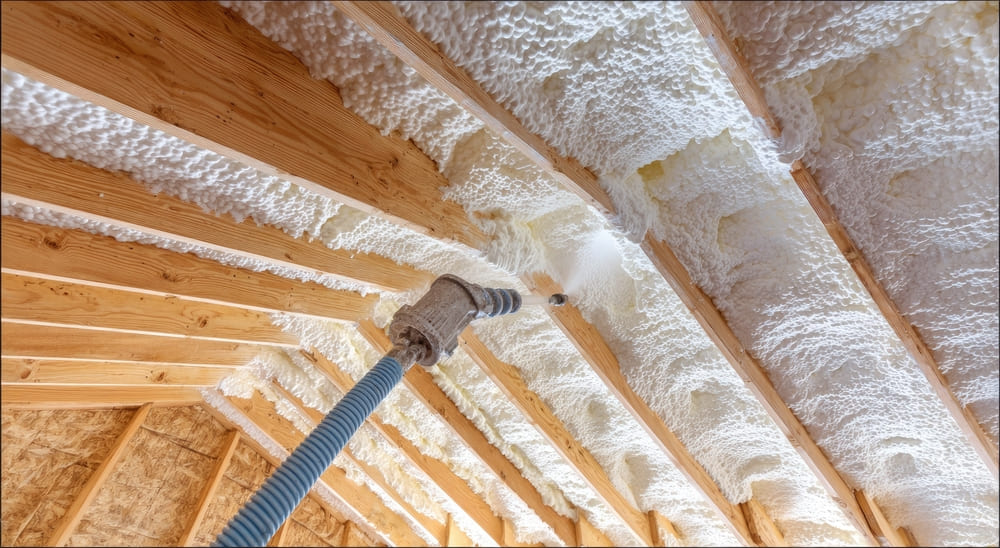
Spray foam insulation is applied as a liquid that expands into a thick foam once sprayed into place. As it expands, it fills small gaps, cracks, and spaces that traditional insulation may miss.
This expansion creates a tight seal that reduces air leaks in the attic.
Because of this sealing effect, spray foam insulation is known for strong energy performance.
Types of Spray Foam Insulation
There are two main types used in attics.
Open Cell Spray Foam
Open cell foam is softer and lighter. It expands quickly and fills open spaces in attic cavities.
Closed Cell Spray Foam
Closed cell foam is denser and more rigid. It provides a higher insulation value and also helps resist moisture.
Both types are effective depending on the structure of the attic and insulation goals.
Advantages of Spray Foam Insulation
Spray foam has become very popular for roof and attic insulation because of several benefits.
- High R-value per inch
- Creates an airtight seal
- Helps reduce energy loss
- Blocks moisture and drafts
- Does not sag or settle over time
- Improves overall home comfort
Many homeowners notice lower energy bills after installing spray foam insulation.
Disadvantages of Spray Foam Insulation
Although spray foam performs well, there are some things to consider.
- Higher upfront cost than fiberglass
- Must be installed by trained professionals
- Installation requires proper equipment and safety procedures
Even though the initial investment can be higher, many homeowners recover the cost through long term energy savings.
What Is Fiberglass Insulation?
How Fiberglass Insulation Works
Fiberglass insulation is made from very thin glass fibers. These fibers trap pockets of air, which helps slow down heat transfer.
Fiberglass is commonly installed in two forms:
- Batts or rolls placed between attic joists
- Loose fill insulation blown into attic spaces
This type of insulation has been used in homes for decades.
Advantages of Fiberglass Insulation
Fiberglass insulation remains popular for several reasons.
- Lower initial cost
- Quick installation in open attic spaces
- Fire resistant material
- Good sound reduction
Because of its affordability, many homeowners choose fiberglass when working within a tighter budget.
Disadvantages of Fiberglass Insulation
Fiberglass insulation also has some limitations.
- Lower R-value compared to spray foam
- Allows some air leakage
- Can absorb moisture if not protected
- May sag or compress over time
When fiberglass becomes wet or compacted, its performance can decrease.
Spray Foam vs Fiberglass: Key Differences
When homeowners compare insulation options, the main goal is usually the same: better comfort, lower energy bills, and a more efficient home. Spray foam and fiberglass both help insulate the attic, but they work differently and offer different levels of performance.
Looking at how they compare in key areas like energy efficiency, moisture protection, installation, and cost can help you decide which option makes the most sense for your home.
Energy Efficiency
Energy efficiency is one of the main reasons homeowners upgrade their roof and attic insulation. The better the insulation performs, the easier it is to keep indoor temperatures stable and reduce the workload on your heating and cooling system.
Spray foam
- Creates a tight air seal that helps prevent heat from escaping or entering the attic
- Provides a higher R-value per inch, which means stronger insulation performance
- Helps maintain consistent indoor temperatures throughout the home
- Often leads to noticeable reductions in heating and cooling costs
Fiberglass
- Helps slow down heat transfer but does not fully stop airflow
- Has a lower R-value compared to spray foam
- Performance depends heavily on correct installation
- Can still help improve energy efficiency, especially when replacing old insulation
Air Sealing and Draft Protection
Air leaks in the attic are one of the main reasons homes lose energy. Small gaps around vents, wiring, and framing can allow outside air to enter the home and make temperature control more difficult.
Spray foam
- Expands as it is applied and fills cracks, gaps, and small openings
- Creates an airtight seal across the attic space
- Helps eliminate drafts coming from the roof area
- Improves the overall efficiency of the home
Fiberglass
- Insulates surfaces but does not seal air gaps
- Air can still move through small openings in the attic
- Drafts may remain if the attic is not properly air sealed
- May require additional sealing around vents and penetrations
Moisture and Mold Resistance
Attics can experience humidity and moisture, especially in warmer climates. Choosing insulation that handles moisture properly helps protect the roof structure and prevent damage over time.
Spray foam
- Closed cell spray foam helps block moisture from entering attic spaces
- Does not easily absorb water
- Helps reduce the chance of mold growth
- Adds another layer of protection to the roof structure
Fiberglass
- Can absorb moisture if exposed to leaks or humidity
- Wet insulation loses much of its insulating ability
- Moisture buildup can lead to mold issues
- Damaged fiberglass insulation may need replacement
Installation Process
The installation process is another factor homeowners should consider when choosing attic insulation. The complexity of installation can affect both performance and long term durability.
Spray foam
- Requires professional installation and specialized equipment
- Expands quickly and fills hard to reach attic areas
- Must be applied carefully to ensure proper coverage
- Typically installed by experienced roofing or insulation contractors
Fiberglass
- Available as batts, rolls, or loose fill insulation
- Can sometimes be installed by experienced homeowners
- Works best in open attic areas with standard framing
- Incorrect installation can reduce its effectiveness
Longevity and Durability
Homeowners often want insulation that will continue performing well for many years without needing replacement.
Spray foam
- Can last decades when properly installed
- Maintains its shape without sagging or settling
- Does not shift over time
- Provides consistent insulation performance long term
Fiberglass
- May compress or shift as it ages
- Can lose effectiveness if it settles in the attic
- May require additional insulation over time
- Performance can decrease if exposed to moisture
Cost Comparison
Cost is another important factor when comparing insulation types. Spray foam and fiberglass have very different upfront prices, but they also differ in long term value and energy savings.
Spray foam
- Usually costs about $3 to $7 per square foot, depending on the type and thickness installed
- Higher upfront installation cost
- Requires professional equipment and trained installers
- Creates an airtight seal that can help lower heating and cooling costs over time
- Often considered a premium insulation option because of its performance and durability
Fiberglass
- Typically costs around $0.30 to $1.50 per square foot
- Lower initial material and installation cost
- Common choice for budget friendly attic insulation projects
- Helps improve energy efficiency but does not seal air leaks
- May need upgrades or additional insulation sooner than spray foam
While spray foam costs more at the start, many homeowners see long term savings through improved energy efficiency and lower utility bills.
Things to Consider Before Choosing Attic Insulation
Choosing the right insulation is not only about the material itself. The design of your attic, your climate, and the current condition of your home all influence which insulation will perform best. Understanding these factors can help you make a smarter decision when upgrading your roof and attic insulation.
- Climate conditions
Homes in hotter climates need insulation that reduces heat entering through the roof. Strong thermal performance can help keep indoor temperatures stable and reduce cooling costs. - Attic structure
Some attics have complex framing, tight corners, or irregular spaces. In these cases, expanding insulation like spray foam can fill gaps more effectively than traditional materials. - Existing insulation
Many homes already have fiberglass insulation installed. If it is damaged, compressed, or outdated, adding new insulation or replacing it may significantly improve performance. - Energy efficiency goals
Some homeowners prioritize long term energy savings, while others focus on keeping upfront costs lower. Your goals will influence which insulation option makes the most sense. - Ventilation and moisture control
Proper attic ventilation is important for insulation performance. Managing humidity and moisture helps protect the roof structure and prevents mold problems.
When to Upgrade Your Roof or Attic Insulation
You may need new insulation if you notice:
- Rising energy bills
- Uneven room temperatures
- Hot upstairs areas
- Old or damaged insulation
- Drafts coming from the attic
Many homeowners upgrade insulation during a roof replacement since the attic area is already accessible.
Professional Roof Insulation vs DIY Installation
While some insulation projects appear simple, professional installation often delivers better results.
Professional installation helps ensure:
- Proper insulation thickness
- Correct air sealing
- Safe installation practices
- Maximum energy efficiency
Working with experienced roofing professionals can prevent costly mistakes.
FAQs About Roof and Attic Insulation
Spray foam often provides better energy performance because it seals air leaks while insulating.
Properly installed spray foam insulation can last several decades.
Yes. Fiberglass can absorb moisture, which reduces its insulation ability.
Most homes require enough insulation to meet recommended R-value levels based on climate.
High performance insulation like spray foam can help reduce heat entering through the roof.
Why Choose Anchor Up Roofing for Roof Insulation
Choosing the right contractor matters when upgrading roof insulation. You want a team that understands both roofing systems and attic energy performance.
At Anchor Up Roofing, our specialists focus on providing reliable roofing and insulation solutions designed to improve comfort and efficiency for homeowners.
Why homeowners trust our team:
- Experienced roofing professionals with years of industry knowledge
- Specialized expertise in roof and attic insulation systems
- High quality materials designed for Florida homes
- Honest inspections and clear recommendations
- Award winning service and strong customer satisfaction
We proudly serve homeowners in Miami and nearby areas including Miami, Doral, Miami Lakes, Hialeah Gardens, and West Miami.
Get Expert Roof and Attic Insulation in Miami, FL
If your attic insulation is outdated or not performing well, upgrading it can make a big difference in comfort and energy efficiency.
The team at Anchor Up Roofing in Miami, FL provides professional inspections and insulation solutions designed to protect your home and improve performance.
Contact Anchor Up Roofing today to schedule your roof and attic insulation evaluation and get expert guidance on the best insulation option for your home.