
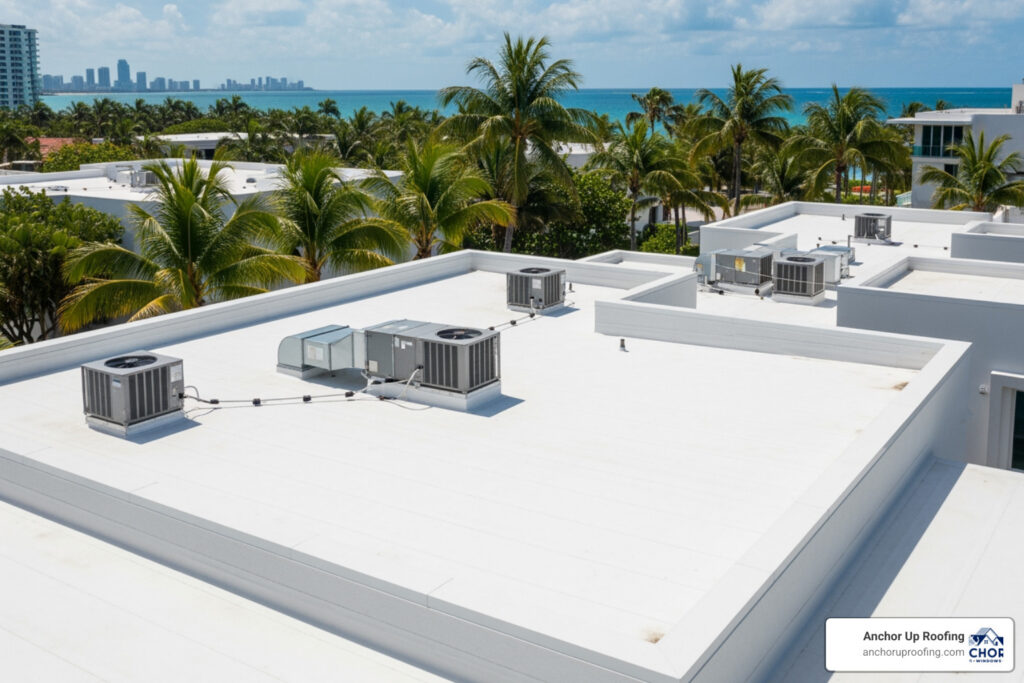
Why Residential Flat Roofing in Miami Demands More Than a Standard Approach
Residential flat roofing in Miami is one of the most demanding roofing challenges in the United States – and most homeowners do not realize that until something goes wrong.
Here is what you need to know at a glance:
| Topic | Quick Answer |
|---|---|
| Best material | TPO membrane (new installs); modified bitumen (re-roofing) |
| Average cost | $12,000 – $52,000 depending on size and system |
| Typical lifespan | 15-20+ years with proper installation and maintenance |
| Biggest risk | Ponding water from Miami’s 62 inches of annual rainfall |
| Code requirement | Must meet Miami-Dade High-Velocity Hurricane Zone (HVHZ) standards |
| Key benefit | Reflective membranes can cut rooftop temps by up to 50°F |
Miami’s climate is brutal on roofs. You are dealing with intense UV radiation, hurricane-force winds, heavy seasonal rain, and high humidity – all year round. Flat roofs face these forces differently than sloped roofs. Without the right materials, slope engineering, and drainage design, even a brand-new flat roof can fail within a few years.
This guide covers everything Miami homeowners need to know – from choosing the right material to understanding local building codes, costs, maintenance, and how to pick a contractor you can trust.
I am Oscar Perez, founder of Anchor Up Roofing, and over the past two decades I have installed, repaired, and replaced hundreds of residential flat roofs across Miami-Dade, Broward, and South Florida. I have seen what works in this climate – and what fails – so everything in this guide is grounded in real-world experience.
For homeowners who want to review local code requirements directly, the Miami-Dade County Permitting, Environment, and Regulatory Affairs department provides roofing and permitting resources.
Residential flat roofing Miami: why this roof type needs a different strategy
Flat roofs are common across Miami-Dade, Broward, Hialeah, Doral, Pembroke Pines, Miramar, Homestead, and other South Florida communities, especially on older CBS homes, additions, duplexes, and modern-style houses. But Residential flat roofing Miami projects cannot be handled like generic low-slope work in milder climates.
Why? Because Miami combines almost every roofing stressor at once:
- High UV exposure
- Year-round humidity
- Salt air in many coastal and near-coastal areas
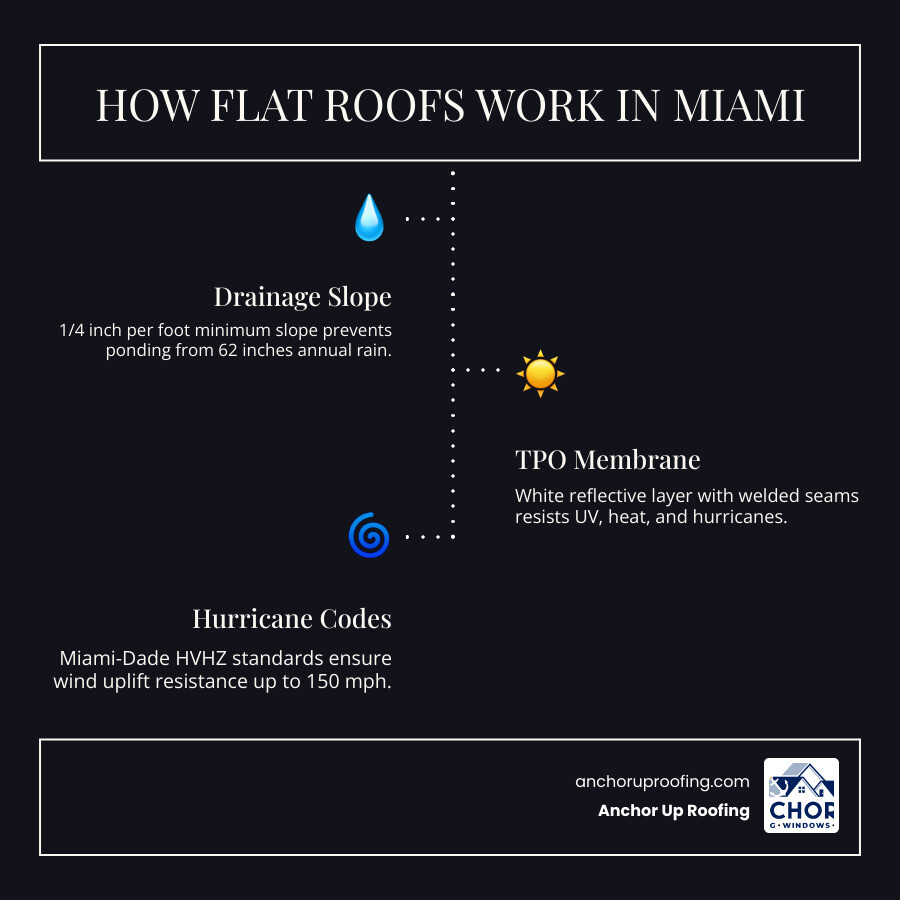
- Roughly 62 inches of annual rain
- Sudden tropical downpours
- Hurricane-season uplift pressure
- Heat buildup on exposed roof surfaces
That combination creates a simple truth: on a flat roof, small mistakes become expensive leaks.
The biggest climate challenges for Residential flat roofing Miami homes
The biggest enemy is not just rain. It is how rain, heat, and wind work together.
Roof surfaces in Miami can get extremely hot in summer, with some roofs reaching around 160°F. That repeated heating and cooling causes expansion and contraction in membranes, flashings, and seams. Over time, weak details can separate.
Then add short, intense storms. A sloped roof sheds water fast. A low-slope roof has to be engineered to move water on purpose. If it is not, water lingers around penetrations, seams, parapet walls, and drains. That is where leak pathways start.
Other common challenges include:
- Mold risk from trapped moisture
- Salt-related corrosion on metal edges and fasteners
- Wind pressure at roof edges and corners
- Damage at penetrations like vents, HVAC curbs, and pipe boots
- Premature membrane aging from UV exposure
A flat roof in Miami is a bit like owning a boat in the marina: if you ignore maintenance, the weather will definitely not ignore you.
Why drainage matters more than almost anything else
If we had to rank one issue above the rest, it would be drainage.
A flat roof should never be truly flat. It needs enough slope to move water toward drains, scuppers, or gutters. A common benchmark is at least 1/4 inch of slope per foot. That slope may be created by:
- Tapered insulation
- Sloped framing
- Crickets that divert water
- Careful drain placement
- Proper edge and parapet design
Water that remains on a roof for more than 48 hours is generally considered ponding water, and it is one of the leading causes of premature flat roof failure in South Florida.
Proper drainage usually includes a mix of:
- Internal drains
- Scuppers through parapet walls
- Gutters and downspouts
- Overflow paths for extreme storms
- Reinforced flashing at drains and edges
When drainage is wrong, even the best membrane can struggle. When drainage is right, the whole system performs better and lasts longer.
Flat roofs are not truly flat
This is one of the biggest homeowner misconceptions. A flat roof is really a low-slope roof.
That means successful performance depends on more than the membrane itself. It also depends on:
- Drainage engineering
- Waterproofing details
- Seam protection
- Flashing installation
- Perimeter reinforcement
- Substrate condition
In other words, a flat roof is a system, not just a surface.
If you want a closer look at how we approach low-slope systems, see our flat roof services.
Best materials for Residential flat roofing Miami properties
Not every flat roofing material performs equally well in South Florida. For residential projects, we usually evaluate the home’s structure, drainage, budget, energy goals, and whether the job is a full replacement or a re-roof over an existing system.
The most common options include:
- TPO
- Modified bitumen
- PVC
- BUR
- Reflective roof coatings in select situations
TPO roofing benefits for Miami homes
For many new residential flat roof installations in Miami, TPO is the leading choice.
TPO, or thermoplastic polyolefin, is a single-ply membrane known for its bright reflective surface and heat-welded seams. In Miami’s climate, those features matter a lot.
Benefits of TPO include:
- Reflects sunlight and reduces heat absorption
- Can lower rooftop temperatures by up to 50°F compared to dark roofing
- Helps reduce air-conditioning demand
- Strong welded seams for leak resistance
- Good UV performance
- Solid wind-uplift performance when installed correctly
- Typical lifespan of 20+ years in Miami with proper installation and maintenance
That reflective surface is especially valuable in South Florida, where cooling costs matter for much of the year. A white TPO roof can help the building stay cooler and reduce stress on insulation and HVAC systems.
TPO is often the best fit when homeowners want:
- A full replacement
- Better energy efficiency
- A clean modern appearance
- Code-compliant wind-resistant performance
- Lower surface temperatures
Modified bitumen, PVC, and BUR: when each makes sense
Modified bitumen remains a strong option for many residential flat roofs in Miami, especially where there is already an asphalt-based system in place. It is a multi-ply membrane system that offers redundancy and solid puncture resistance.
Modified bitumen often makes sense for:
- Re-roofing over compatible existing systems
- Residential additions
- Porches and smaller low-slope sections
- Homeowners who want a durable, familiar system
- Projects where budget matters but quality still comes first
PVC is another single-ply option. It is known for strong chemical resistance and durable seams, though it is not always the first choice for every residential project. In some cases, it works well where added durability around certain rooftop conditions is needed.
BUR, or built-up roofing, is the classic multi-layer system often called tar-and-gravel. It has a long history, but for many modern residential Miami projects, lighter and more energy-efficient systems such as TPO are more practical. BUR can still make sense in select low-slope applications, depending on structure and design goals.
Roof coatings can extend the life of some existing flat roofs, but they are not a cure-all. If there is saturated insulation, bad drainage, or failing substrate, a coating alone is not the answer.
Which system lasts longest in South Florida conditions
Most flat roofs last somewhere in the 15- to 30-year range, depending on material, workmanship, drainage, and maintenance.
Here is a simple comparison:
| System | Typical Miami Lifespan | Best For | Notes |
|---|---|---|---|
| TPO | 20+ years | New residential installs | Reflective, energy efficient, welded seams |
| Modified bitumen | 15+ years | Re-roofing, additions, porches | Durable multi-ply protection |
| PVC | Varies by system | Specialty residential applications | Strong seams and chemical resistance |
| BUR | Varies, often long with maintenance | Select low-slope structures | Heavier system, less common for modern homes |
The biggest lifespan factors are:
- Installation quality
- Drainage quality
- Annual maintenance
- Storm damage response
- Seam and flashing condition
A great membrane installed over poor drainage is still a problem waiting to happen.
Cost, lifespan, and replacement planning for Miami homeowners
One of the first questions homeowners ask is cost. Fair enough. Nobody likes surprise roofing math.
What a residential flat roof replacement typically costs in Miami
In Miami-Dade and Broward, residential flat roof replacement projects commonly range from about $12,000 to $52,000. That is a broad range because flat roofing costs vary significantly by size and system design.
The main cost drivers include:
- Roof square footage
- Material type
- Tear-off of existing roofing
- Permit requirements
- Drainage upgrades
- Tapered insulation
- Deck or substrate repairs
- Edge metal and flashing details
- Roof access difficulty
- Combination roof designs
- Warranty level
A small flat section on an addition will cost very differently from a full residential low-slope replacement with insulation upgrades and code-required edge work.
In South Florida, pricing should also reflect:
- Miami-Dade or Broward permitting
- HVHZ-compliant assemblies where required
- Wind-uplift attachment methods
- Inspection coordination
- Cleanup and disposal
Signs your flat roof needs repair or full replacement
Some problems can be repaired. Others point to a roof that is nearing the end of its service life.
Common warning signs include:
- Blisters in the membrane
- Open or separating seams
- Repeated leaks in the same areas
- Ceiling stains inside the home
- Soft or spongy roof decking
- Ponding water that remains after 48 hours
- Cracked flashing
- Membrane brittleness
- Storm-related uplift damage
- Frequent patch repairs
- Age approaching or exceeding expected service life
As a rule of thumb, isolated damage on a newer roof may justify repair. But if the roof is older, leaking in multiple areas, or has widespread drainage issues, replacement is usually the better long-term investment.
How long a properly installed flat roof lasts in Miami
In Miami, a properly installed flat roof often lasts around 20 years, though there is a range by material and upkeep.
- TPO: often 20+ years
- Modified bitumen: often 15+ years
- Average flat roof range overall: roughly 15 to 30 years
To reach the upper end of that range, homeowners should plan for:
- Annual inspections
- Prompt repairs after storms
- Regular drain cleaning
- Attention to flashing and edges
- Monitoring for ponding
If a roof is leaking repeatedly, showing membrane brittleness, or requiring patch after patch, that is often the sign replacement is more economical than continued repairs.
Code compliance, wind resistance, and the installation process
In Miami, roofing is not just about what looks good or costs less. It also has to meet some of the strictest code requirements in the country.
How Miami-Dade County building codes affect residential flat roofing
Miami-Dade is in the High-Velocity Hurricane Zone, or HVHZ. That means flat roof systems must meet strict standards for wind uplift resistance and approved installation methods.
Code-related requirements often involve:
- Approved roofing assemblies
- Correct fastening or adhesion patterns
- Reinforced perimeter and corner zones
- Edge metal details
- Manufacturer specifications
- Product approvals such as Miami-Dade Notice of Acceptance systems
- Permits and inspections
These rules are not red tape for the sake of red tape. They exist because roof edges, corners, and terminations are where hurricane uplift often starts.
When a contractor ignores approved assemblies or shortcuts attachment patterns, the roof may be at greater risk in major wind events.
Can flat roofs in Miami withstand hurricanes?
Yes, flat roofs in Miami can absolutely be designed to withstand hurricanes, but only when the system is engineered and installed correctly.
Important wind-resistance features include:
- Proper deck attachment
- Reinforced perimeter fastening
- Secure edge metal
- Sealed seams
- Correct termination bars
- Approved membrane attachment method
- Code-compliant flashing details
- Reliable drainage to reduce water loading
Some roofing systems used in Florida can be designed around wind benchmarks above 150 mph, but performance depends on the tested assembly and how closely the field installation matches that approval.
In plain English: a hurricane-resistant flat roof is not just about membrane choice. It is about the entire assembly.
Step-by-step Residential flat roofing Miami installation and replacement process
A quality residential flat roof replacement typically follows these steps:
- Inspection and measurements
- Condition review of the existing roof and substrate
- Written proposal with material and scope options
- Permit application
- Tear-off of the old roofing if needed
- Deck or substrate repair
- Installation of insulation, often including tapered insulation for drainage
- Membrane installation
- Flashing, penetrations, edge metal, and drain detailing
- Site cleanup and debris removal
- Final inspection
- Warranty documentation and maintenance guidance
For a more detailed overview, read our guide to flat roof installation.
Maintenance, energy savings, financing, and incentives
A flat roof is not high-maintenance, but it is not no-maintenance either. There is a difference, and your roof definitely knows it.
The maintenance routine that extends flat roof life
The best maintenance plan is simple and consistent.
We recommend:
- A professional inspection at least once a year
- Additional checks after major storms
- Cleaning drains, scuppers, and gutters
- Removing leaves and debris
- Reviewing seams and flashing
- Looking for punctures or surface wear
- Addressing minor issues early
- Keeping maintenance records
This matters because flat roof failures often start small. A tiny seam issue or clogged drain can become interior damage, mold, insulation saturation, and expensive repairs.
Preventive maintenance is almost always cheaper than emergency repair.
How reflective flat roofs lower cooling costs in Miami
Miami homes fight heat for much of the year, so roof reflectivity matters.
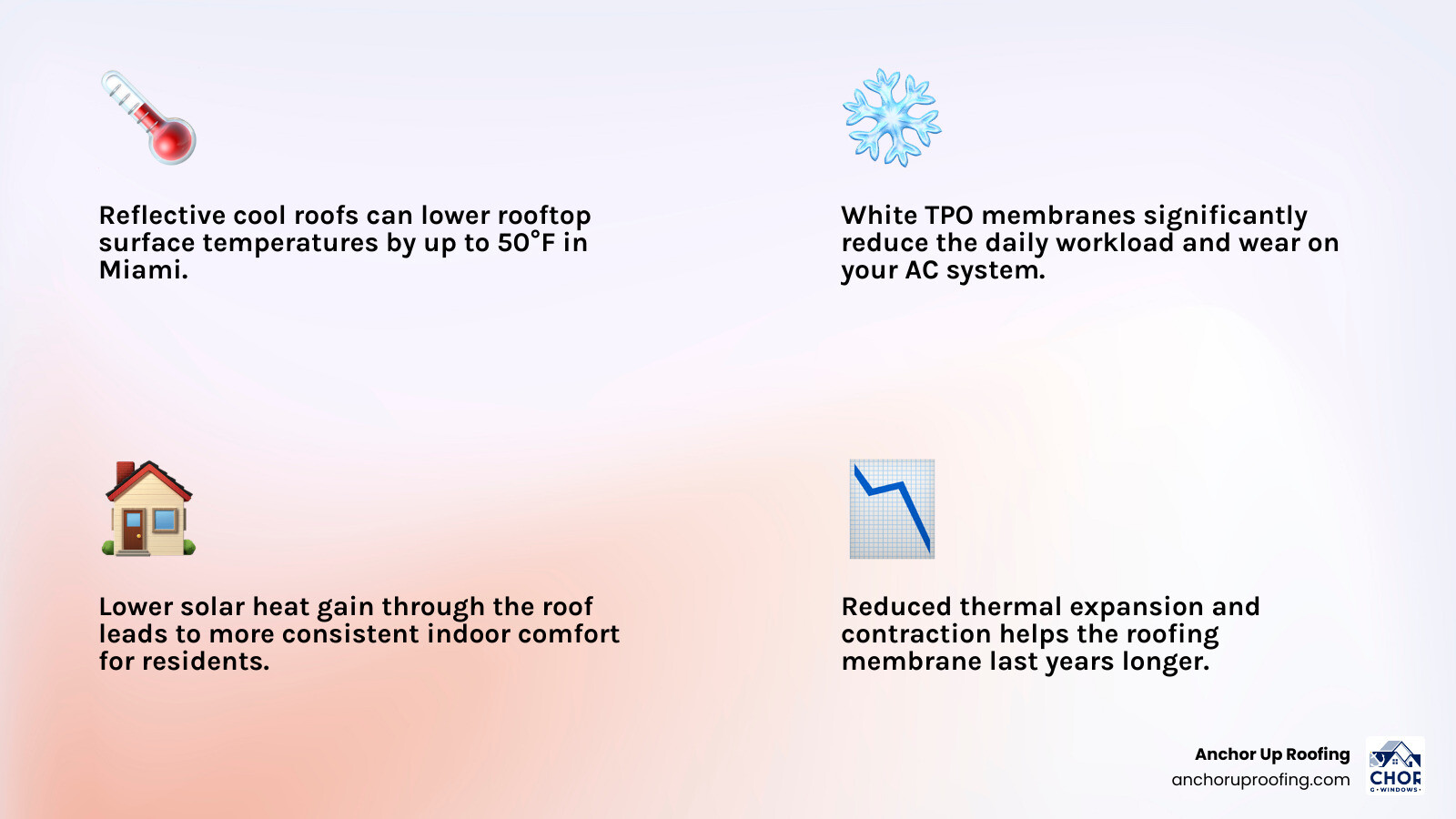
Reflective systems such as white TPO reduce solar heat absorption. Research cited by the U.S. Department of Energy shows cool roofs can reduce rooftop surface temperatures by up to 50°F compared with darker roofing.
That can help by:
- Lowering attic or ceiling heat gain
- Reducing AC workload
- Improving indoor comfort
- Supporting better overall energy performance
- Reducing thermal stress on the roofing system itself
Reflective roofs work even better when paired with good insulation and correct installation. A cool membrane alone cannot fix poor detailing, but as part of a complete system, it offers real value in Miami.
Financing options and possible energy-efficiency incentives
Many homeowners replace a flat roof because they need to, not because it was on their dream vision board for the month.
That is why financing matters.
Depending on the project and qualification, homeowners may consider:
- Monthly payment financing
- 100% financing options
- Home-improvement financing programs
- PACE-style financing in some cases
- Bundled projects that include insulation or energy upgrades
Because reflective roofing can improve energy performance, homeowners should also ask about any local or utility-related rebate opportunities that may apply at the time of installation. Programs change, so the best approach is to verify what is active in 2026 before signing.
If you want to discuss financing for a flat roof project in South Florida, we can walk you through current options and what makes sense for your home.
How to choose the right residential flat roofing contractor in Miami
Flat roofing is not the place to shop on price alone. The cheapest proposal can become the most expensive roof in a hurry.
What to look for before signing a roofing contract
Before you sign, make sure the contractor can clearly explain:
- Whether repair or replacement is the better option
- How drainage will be improved
- What code-compliant assembly will be used
- Which material is best for your home
- What cleanup includes
- What the timeline looks like
- What warranties apply
- How permits and inspections are handled
- How financing terms work, if used
You also want a contractor with real flat-roof experience, not just general roofing experience. Low-slope systems require different skills, especially in Miami-Dade and Broward.
At Anchor Up Roofing, we believe experience matters most on flat roofing projects because the details decide whether the roof lasts.
Where homeowners research contractor reputation and service quality
Homeowners usually compare contractors in a few places:
- Google reviews
- Better Business Bureau profiles
- Local directories
- Neighborhood referrals
- Project galleries
- Permit history
- Community groups and recommendations
The most useful next step is still a detailed inspection and written scope specific to your home.
When reviewing companies, look for:
- Clear communication
- Evidence of local flat-roof work
- Strong review patterns over time
- Proof of licensing and insurance
- Detailed written proposals instead of vague one-page estimates
Flat roof vs pitched roof for Miami residential design goals
Some homeowners ask whether they should keep a flat roof at all.
That depends on the house. Flat roofs work especially well for:
- Modern and contemporary architecture
- Additions and porches
- Certain CBS homes
- Homes where usable rooftop design or low-profile aesthetics matter
Pitched roofs may offer easier natural water shedding, but they also change the look, structure, and cost of the home. Flat roofs can perform extremely well in Miami when properly designed, drained, and maintained.
If you are comparing options, our guide on flat roof vs pitched roof for residential buildings can help you weigh the tradeoffs.
Conclusion
A residential flat roof in Miami is not a basic roofing project. It is a weather-management system that has to stand up to heat, humidity, wind, heavy rain, and strict code requirements all at once.
The good news is that when the system is designed correctly, a flat roof can be:
- Durable
- Energy efficient
- Hurricane resistant
- Long lasting
- A great fit for South Florida architecture
At Anchor Up Roofing, we bring a veteran-owned approach, 20+ years of experience, 5-star customer care, and straightforward guidance to every flat roof project we take on across Miami-Dade, Broward, and South Florida.
If you are planning a repair, replacement, or full inspection, explore our flat roof services or contact Anchor Up Roofing to request your free estimate today.