
Is a Flat Roof Right for Your Venice, FL Home?
If you’re looking into flat roof Venice options, here’s a quick summary of what you need to know:
- Best materials: TPO, PVC, and modified bitumen — all proven for Southwest Florida’s heat, humidity, and hurricane seasons
- Lifespan: 20–30 years with proper installation and routine maintenance
- Key benefits: Lower installation costs, energy savings from reflective membranes, and usable rooftop space
- Main risks: Ponding water, wind uplift at perimeter edges, and UV degradation — all manageable with professional installation
- Who to call: A licensed, local roofing contractor familiar with Sarasota County building codes
Flat roofing in Venice, FL is not a one-size-fits-all decision. Venice sits squarely in Southwest Florida’s coastal zone — where intense sun, salt air, heavy seasonal rainfall, and hurricane-force winds put every roofing system to the test.
About 20% of residential roofing installations in coastal Florida regions like Venice use flat roof systems. That’s because, when done right, flat roofs are durable, cost-effective, and well-suited to the region’s modern architectural styles.
But “done right” is the key phrase. A poorly installed flat roof in this climate can mean pooling water, blown-off edges, and interior water damage. A well-installed one, using the right materials and proper drainage engineering, can protect your home for decades.
I’m Oscar Perez, founder of Anchor Up Roofing, and I’ve spent years completing residential and commercial roofing projects across South Florida — including flat roof Venice installations designed to handle everything this climate throws at them. In this guide, I’ll walk you through everything you need to make a confident, informed decision.
Key Benefits of a Flat Roof Venice System
When homeowners in Sarasota County weigh their options, they often compare traditional pitched systems to modern low-slope alternatives. If you are comparing a Flat Roof vs Pitched Roof for Residential Buildings, you will quickly notice that flat roofs offer distinct architectural and functional advantages that are hard to beat.
Exceptional Energy Efficiency
In Southwest Florida, the sun is relentless. Traditional dark asphalt shingles absorb immense amounts of heat, transferring it directly into your attic and forcing your air conditioning system to work overtime. Modern flat roofing systems, particularly those utilizing single-ply membranes like TPO or PVC, are highly reflective.
These “cool roof” membranes reflect a significant portion of solar radiation back into the atmosphere. According to industry statistics, reflective flat roof membranes can substantially reduce cooling costs in hot, humid climates like Southwest Florida. By minimizing heat absorption, you enjoy a more comfortable indoor climate and lower utility bills.
Maximum Space Utilization
One of the most exciting aspects of a flat roof is the creation of usable outdoor space. While a sloped roof offers no functional surface area, a flat roof can be transformed into a functional extension of your living space.
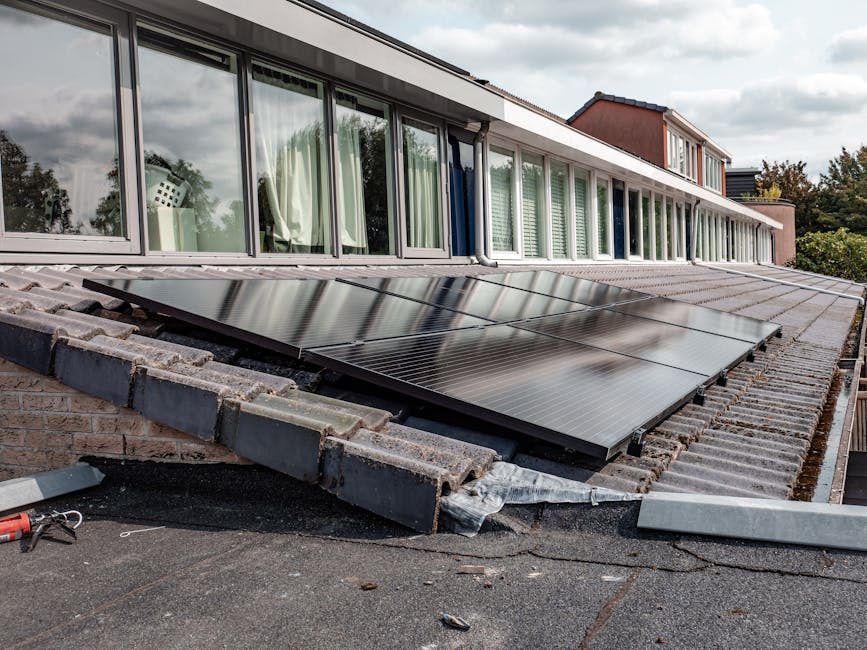
Whether you want to install a high-efficiency solar panel array, house bulky HVAC equipment out of sight, or design a stunning rooftop terrace, a flat roof makes it possible. This concept of utilizing elevated flat spaces has historic roots; for instance, the traditional Venetian “altana” is a wood-framed rooftop deck used for catching cool breezes and enjoying panoramic views, as documented in projects like the Realizzazione altana panoramica a Cannaregio, Venezia . Bringing this touch of architectural freedom to your Florida home allows you to maximize your property’s footprint.
Wind and Hurricane Resistance
Flat roofs have a aerodynamic profile that can be incredibly advantageous during Florida’s hurricane season. Unlike high-pitched roofs, which can act like sails and catch powerful wind gusts, flat roofs allow wind to pass over them with minimal resistance.
When a flat roof is engineered with proper perimeter reinforcement and secure attachment patterns in line with local building codes, it offers outstanding wind uplift resistance. This streamlined design is one reason why many municipal and commercial emergency structures throughout Sarasota County rely on low-slope and flat roof engineering.
Top Materials for Flat Roofs in Southwest Florida
Selecting the right material is the single most important decision you will make for your low-slope system. The coastal climate of Venice demands materials that resist salt spray, intense UV radiation, and rapid thermal expansion.
For more background on your choices, you can read our comprehensive guide on Everything You Need to Know About Flat Roof Types. To give you a quick overview, we have compiled a comparison of the most common materials used in our coastal service areas:
| Material Type | Primary Composition | Lifespan | Key Strengths | Best Suited For |
|---|---|---|---|---|
| TPO (Thermoplastic Polyolefin) | Blend of polypropylene and ethylene-propylene rubber | 20–30 Years | Highly reflective, heat-welded seams, resistant to chemicals and mold | Residential & Commercial properties seeking maximum energy savings |
| PVC (Polyvinyl Chloride) | Synthetic plastic polymer with plasticizers | 20–30 Years | Exceptional chemical, oil, and puncture resistance; highly flexible | Coastal homes, commercial buildings, and roofs with rooftop decks |
| Modified Bitumen | Asphalt reinforced with polyester or fiberglass | 15–20 Years | Multi-ply durability, excellent puncture resistance, proven track record | Residential additions, porches, and high-traffic roofs |
| EPDM | Synthetic rubber membrane | 15–25 Years | Highly durable, handles extreme temperature fluctuations without cracking | Budget-conscious projects, though less thermally efficient unless coated |
While traditional sloped roofs often use clay tiles from manufacturers like Tejas Verea S.A – – Miami-Dade County to achieve a classic Mediterranean look, modern flat roof materials offer a clean, minimalist aesthetic that pairs perfectly with contemporary coastal designs.
TPO and PVC Membranes for Your Flat Roof Venice Project
Single-ply membranes like TPO (Thermoplastic Polyolefin) and PVC (Polyvinyl Chloride) represent the pinnacle of modern flat roofing technology. Both materials are thermoplastic, meaning their seams are heat-welded together rather than glued or taped. Heat-welding fuses the sheets at a molecular level, creating a single, continuous, monolithic barrier that is incredibly resistant to leaks.
TPO is highly favored in Venice for its bright white surface, which provides superior UV reflectivity, helping to slash your air conditioning costs. PVC is slightly more flexible and boasts excellent resistance to animal fats, oils, and harsh chemicals, making it the premier choice for commercial applications or residential roofs where rooftop traffic is expected.
Modified Bitumen and EPDM Options
Modified Bitumen is an evolution of traditional built-up (tar and gravel) roofing. It features multiple plies of asphalt modified with synthetic polymers for added strength and elasticity. This multi-layer approach makes modified bitumen highly resistant to physical punctures, such as falling tree limbs or storm debris. It is a fantastic option for residential additions, balconies, or transition areas.
EPDM (Ethylene Propylene Diene Monomer) is a durable synthetic rubber membrane. While EPDM has a long history of performance, its naturally dark surface absorbs heat, which can increase cooling loads in Southwest Florida unless treated with a reflective top coating. However, its flexibility and ease of repair make it a reliable choice for specific low-slope configurations.
Professional Installation and Maintenance Practices

A flat roof is only as good as the hands that install it. Because gravity does not naturally shed water off a flat roof the way it does on a pitched one, the engineering behind the installation must be flawless. To understand the depth of this work, you can explore the details of a professional Flat Roof Installation.
The Step-by-Step Flat Roof Venice Installation Process
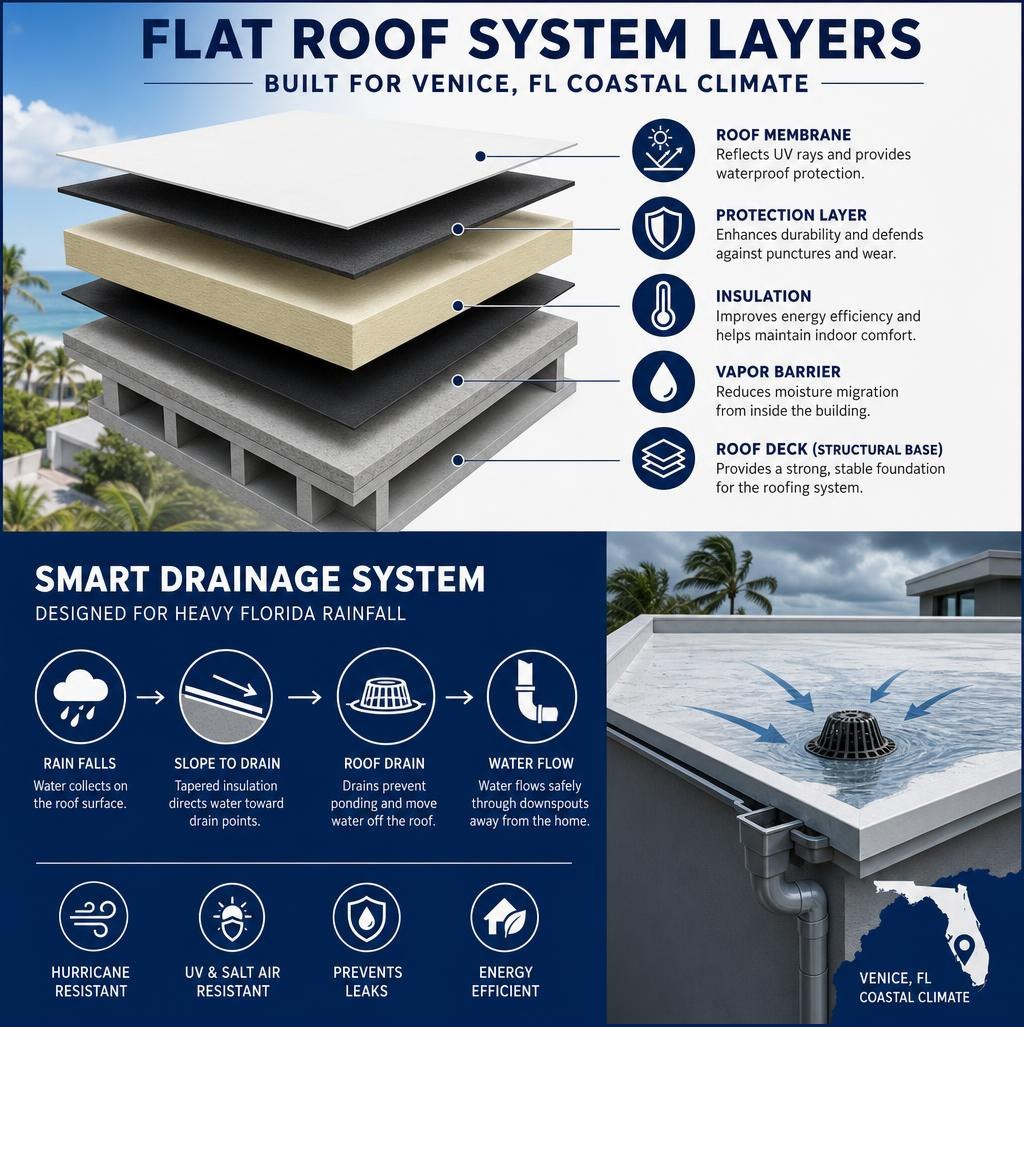
Every successful flat roof replacement or installation we perform follows a strict, code-compliant protocol:
- Comprehensive Site Assessment & Deck Inspection: We begin by stripping away the old roofing material down to the wooden deck. We carefully inspect the decking for any signs of rot, water damage, or structural weakness, replacing compromised wood immediately to establish a solid foundation.
- Drainage Engineering & Slope Verification: Despite their name, flat roofs are actually low-slope systems. We verify that the deck has a slight slope (at least 1/4 inch per foot) directing water toward scuppers, gutters, or drains to prevent water from pooling.
- Insulation Installation: High-quality polyisocyanurate (Polyiso) insulation boards are mechanically fastened or adhered to the deck. This insulation not only improves your home’s energy efficiency but also helps establish the proper slope.
- Membrane Bonding: The selected membrane (such as TPO or PVC) is rolled out, allowed to relax to prevent future wrinkling, and then adhered to the insulation layer using heavy-duty bonding adhesives or mechanical fasteners.
- Seam Welding & Detail Work: Using specialized hot-air welders, we fuse the membrane seams together. We pay extra attention to penetrations like pipes, vents, and chimneys, wrapping them in custom-fit flashing.
- Perimeter Reinforcement: Because wind uplift forces are strongest at the edges of a roof, we install heavy-duty, reinforced edge metal and termination bars to lock down the perimeter.
- Final Quality Assurance: We perform a thorough inspection of every seam and detail to ensure the system is completely watertight and fully compliant with Sarasota County building codes.
Essential Maintenance to Prevent Costly Repairs
Even the highest-quality flat roof requires regular attention to reach its full design life. Water damage is the primary threat to flat roofs, and neglecting basic upkeep can lead to costly structural repairs. Learning How to Handle Your Residential Flat Roof Repair Like a Pro starts with proactive prevention.
To keep your roof in peak condition, implement these simple maintenance habits:
- Debris Management: Regularly clear away leaves, pine needles, and branches. Debris can clog your drains and scuppers, leading to standing water.
- Routine Inspections: Inspect your roof at least twice a year, and immediately following any major tropical storm or hurricane. Look for signs of wear, shifting, or loose flashing.
- Sealant Maintenance: Keep an eye on the sealants around roof penetrations, vents, and pipes. UV rays can degrade sealants over time, requiring periodic touch-ups.
- Professional Cleaning: Over time, humidity can cause algae or mold to grow on your roof, which can degrade the membrane’s reflective properties. Periodic professional cleaning keeps your roof looking great and performing efficiently.
Frequently Asked Questions About Venice Flat Roofing
How long does a flat roof last in Florida?
With proper installation and routine maintenance, a modern flat roof system using TPO, PVC, or modified bitumen can reliably last between 20 to 30 years. The actual lifespan depends heavily on the quality of the materials used, the skill of the installers, and how diligent you are with basic maintenance like keeping drains clear of debris.
What are the building codes for flat roofs in Sarasota County?
Sarasota County enforces strict wind-uplift and energy-efficiency standards under the Florida Building Code. Flat roofs must be engineered to withstand hurricane-force winds, which requires specific fastening patterns, reinforced perimeter metal, and approved materials. Additionally, modern energy codes dictate minimum insulation R-values to ensure your home remains thermally efficient.
How do I know if my flat roof needs repair or replacement?
There are several clear warning signs that your low-slope system requires professional attention:
- Ponding Water: If water remains on your roof for more than 48 hours after a rainstorm, your drainage system is failing.
- Blistering or Bubbling: Bubbles in the membrane indicate that moisture has penetrated beneath the surface and is expanding as it heats up.
- Interior Water Stains: Discoloration on your ceilings or drywall is a direct sign of an active leak.
- Structural Sagging: Any noticeable dip or sag in the roofline requires immediate professional assessment, as it suggests structural deck damage.
While minor issues can sometimes be addressed by a handy homeowner using tips from our guide on Flat Roof Repair for the Weekend Warrior, extensive damage or aged systems should always be evaluated by a licensed professional to ensure your home remains safe and fully insured.
Conclusion
A flat roof is a fantastic, modern, and energy-efficient choice for your Venice, FL property. However, Southwest Florida’s unique coastal elements demand a system that is engineered with precision, high-quality materials, and local expertise.
At Anchor Up Roofing, we bring over 20 years of hands-on experience to every project. As a retired veteran-owned business, we pride ourselves on delivering honest, dependable craftsmanship backed by 5-star reviews and flexible financing options. Whether you need a minor repair or a complete flat roof replacement, we are here to ensure your home is fully protected against the elements.
Ready to secure your home with a dependable, high-performance low-slope system? More info about Venice FL roofing services is just a click away. Contact us today to schedule your comprehensive roof evaluation!