
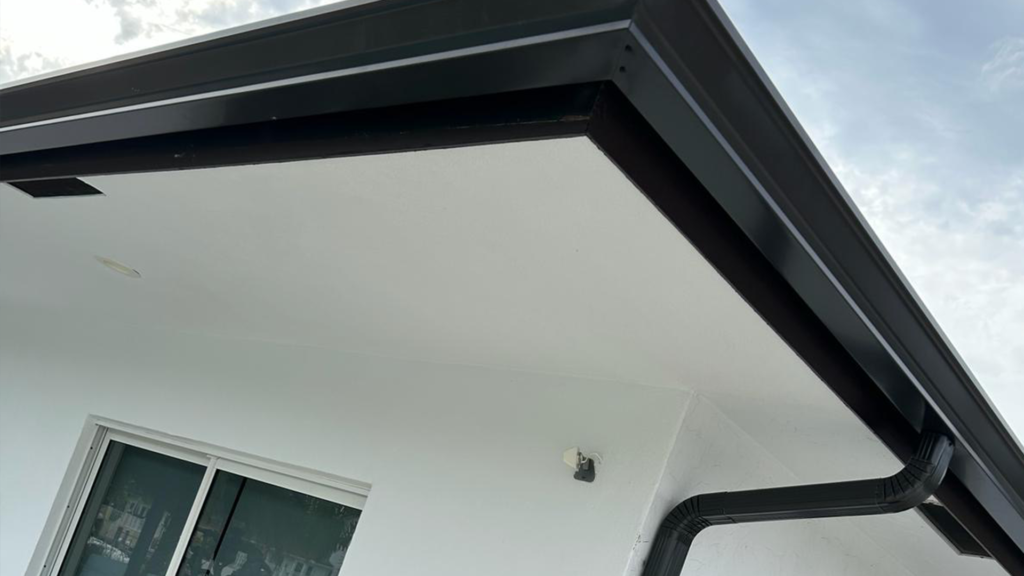
Why Rain Gutter Installation Is One of the Most Important Home Decisions You’ll Make
Rain gutter installation done right protects your home from some of the most costly damage a Florida homeowner can face — foundation erosion, mold, and interior water leaks.
Here’s a quick overview of what proper gutter installation involves:
| Step | What It Means |
|---|---|
| 1. Choose your material | Aluminum, steel, copper, or vinyl — each has different durability and maintenance needs |
| 2. Plan the layout | Measure your roofline and decide downspout locations (one per 30–40 ft) |
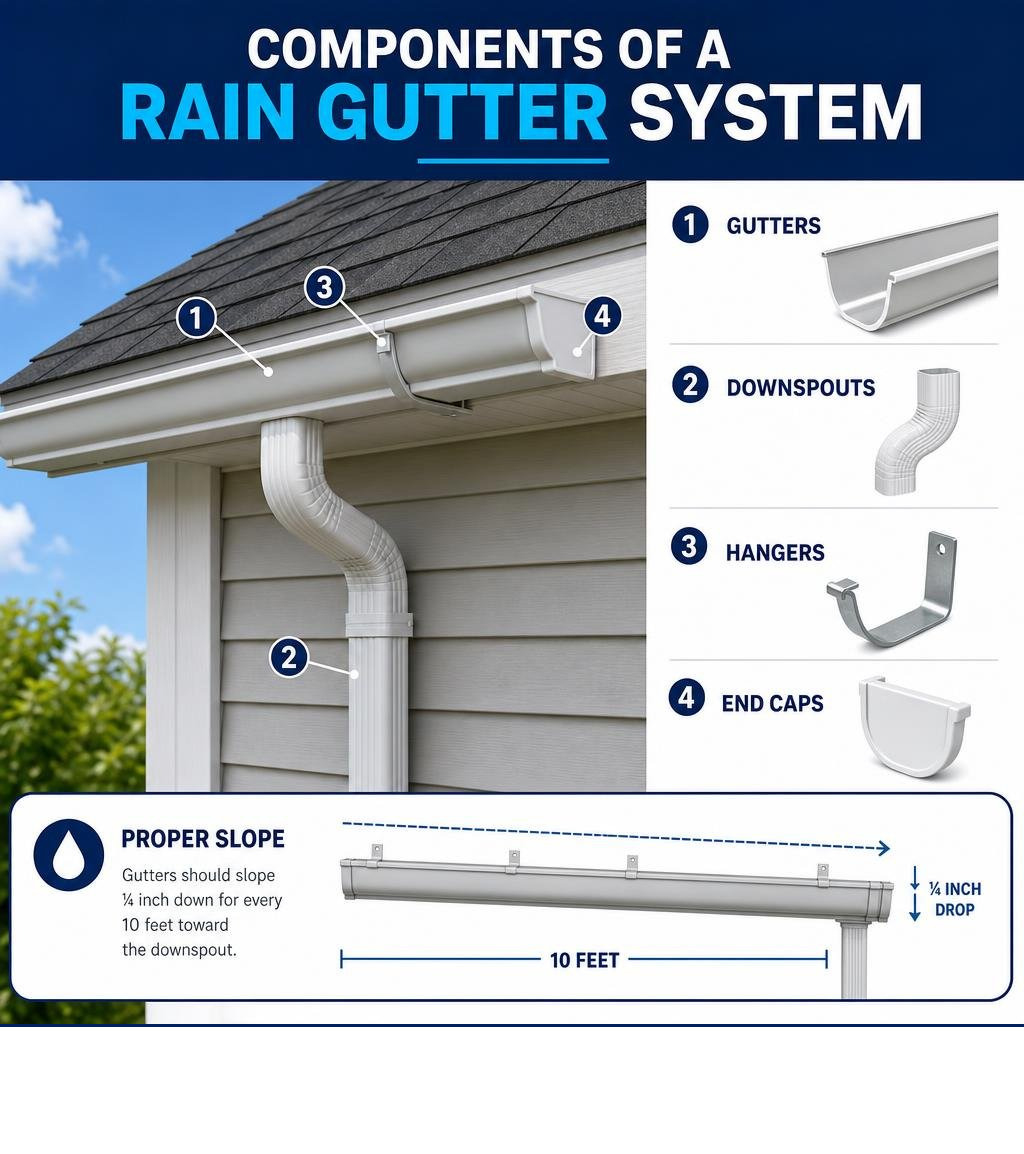
| 3. Set the slope | Gutters need a ¼-inch drop per 10 feet toward the downspout |
| 4. Install hangers | Space them every 18–24 inches along the fascia |
| 5. Mount gutters and downspouts | Secure sections, seal joints, and direct water away from your foundation |
| 6. Add gutter guards (optional) | Reduces debris buildup and cleaning frequency |
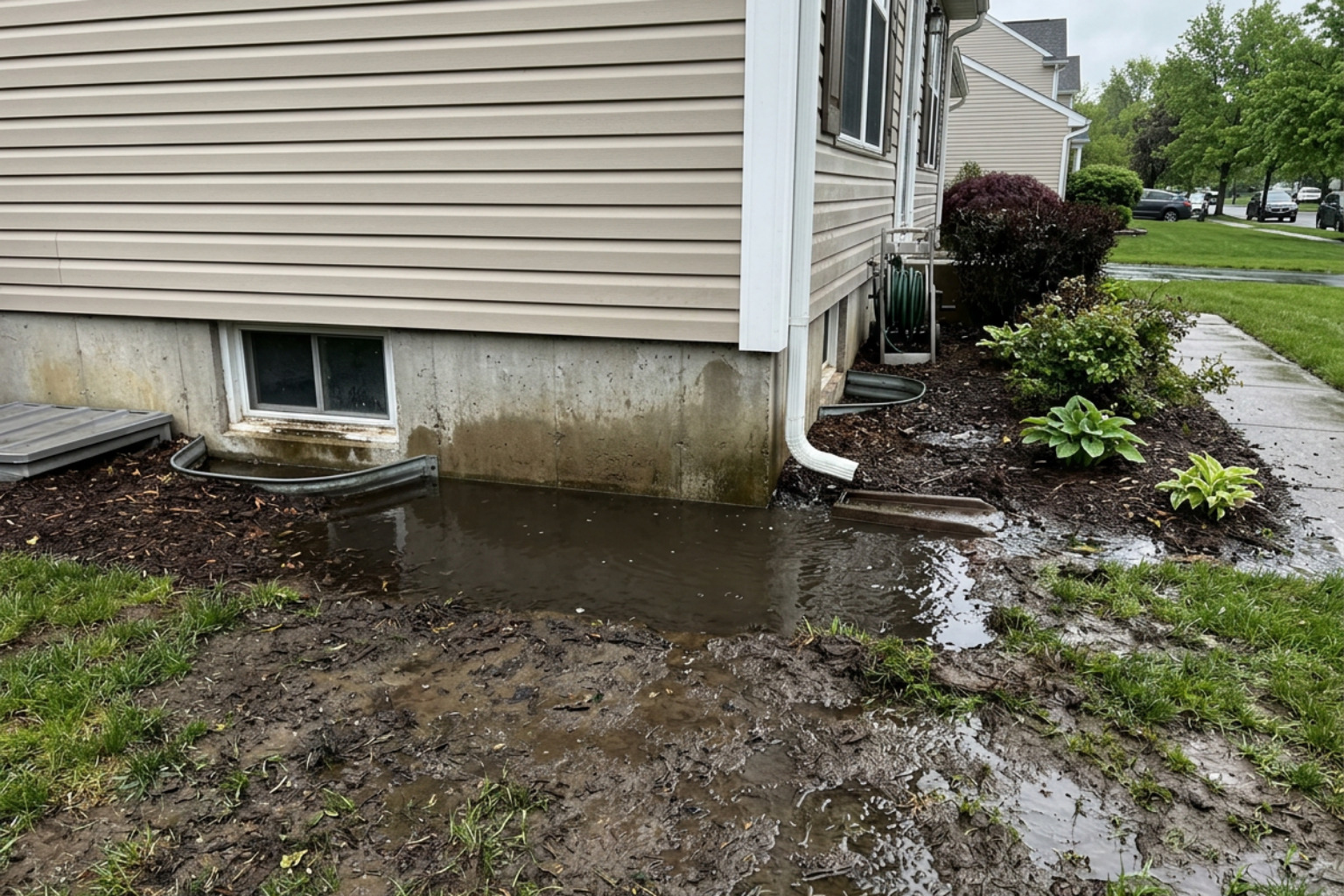
Rain gutters do one job — move water away from your home. But when they’re installed incorrectly, or not at all, that water has nowhere to go. It pools against your foundation, soaks into your fascia boards, and works its way into places you don’t want it.
In South Florida, this isn’t a minor inconvenience. Heavy seasonal rainfall and hurricane-level storms make a properly installed gutter system a genuine line of defense for your home.
I’m Oscar Perez, founder of Anchor Up Roofing, and I’ve helped homeowners across Miami-Dade, Broward, Palm Beach, and surrounding areas protect their homes through professional rain gutter installation as part of complete exterior upgrades. In this guide, I’ll walk you through everything you need to know — from choosing the right materials to getting the pitch exactly right.
Why Proper Rain Gutter Installation Matters for Your Home
When heavy Florida downpours hit cities like Fort Myers, Homestead, or Pembroke Pines, your roof sheds thousands of gallons of water. Without a reliable gutter system, that water drops directly next to your walls.
Over time, this unchecked runoff leads to serious, costly issues:
- Foundation Protection: When water consistently pools at the base of your home, it saturates the soil. This can cause the ground to expand and contract, leading to foundation cracks, shifting, and structural failure.
- Soil Erosion Prevention: Heavy runoff washes away your landscaping, ruins flowerbeds, and carves deep trenches into your lawn.
- Preventing Interior Water Damage: Water cascading off the roof can easily seep behind your home’s siding, under the stucco, or through window frames, leading to hidden rot.
- Mold and Mildew Prevention: Excess moisture near the walls and in crawlspaces creates the perfect breeding ground for toxic mold—a major health hazard in our humid climate.
Properly directing water away from your home keeps your structural foundation dry and stable. To learn more about how gutter slopes protect your property, read The Homeowner Guide to Residential Gutter Installation and Perfect Pitch.
Choosing the Right Gutter Materials and Lifespans
Selecting the right material for your rain gutter installation is a balance of durability, aesthetics, and maintenance needs. In South Florida’s coastal areas, such as Naples, Sarasota, and Miami Springs, salt air and intense UV rays are major factors in how long your gutters will last.
Here is how the most common gutter materials compare:
| Material | Lifespan | Maintenance Needs | Best For |
|---|---|---|---|
| Aluminum | ~20 Years | Low | Most residential homes; highly rust-resistant and lightweight. |
| Galvanized Steel | ~20 Years | Moderate | High-wind areas; very strong but can rust if the coating is damaged. |
| Copper | Up to 50 Years | Very Low | Historic or luxury homes; develops a beautiful patina and never rusts. |
| Vinyl | Shorter Lifespan | Low to Moderate | Budget-conscious projects; easy to handle but can warp or crack under intense South Florida heat. |
While vinyl is lightweight and easy to snap together, the extreme heat and humidity in cities like Hialeah and Miramar can cause it to become brittle and crack over time. Aluminum remains the industry standard for residential properties because it does not rust and can be easily customized.
For a deeper dive into residential options, check out our guide on the Types of Gutters for Residential Homes.
DIY vs. Professional Rain Gutter Installation
Many handy homeowners consider taking on rain gutter installation as a weekend DIY project. While it can save on upfront labor costs, there are several critical factors to consider before climbing the ladder:
- Time Commitment: A DIY installation for a standard-sized home can easily take an entire weekend or more, especially when factoring in planning, material runs, and precise measurements. Professionals can typically complete the job in a single day.
- Quality and Seamless Options: DIY gutters are sold in sectional pieces (usually 10-foot lengths) that must be joined together. Every seam is a potential leak point. Professional contractors use specialized roll-forming machines to create custom, seamless gutters on-site, eliminating joints entirely.
- Safety Precautions: Working on ladders is inherently dangerous. Professional teams are trained in ladder safety, use specialized scaffolding or harness systems, and carry comprehensive liability insurance.
- Homeowner Preparation: If you hire a professional, your preparation is simple. Clear the perimeter of your home, move vehicles out of the driveway, trim back low-hanging tree branches, and keep pets indoors.
If you are thinking about taking the DIY route, you can find a thorough breakdown of the tools and steps required in this guide on How to Install Gutters Yourself. However, for two-story homes or complex rooflines, hiring a licensed professional is always the safest and most reliable choice.
Step-by-Step Guide to the Rain Gutter Installation Process
If you are planning to install sectional gutters yourself, following a precise sequence is key to ensuring the system works correctly.
Here is the general process:
- Measure the Roofline: Carefully measure each eave to determine how many feet of guttering you need.
- Snap Layout Lines: Do not install gutters completely flat. You must snap a chalk line along the fascia board to establish a consistent slope toward your downspout locations.
- Attach Fascia Brackets: Secure heavy-duty hangers or brackets to the fascia board. They should be anchored directly into the rafter tails behind the fascia for maximum strength, spaced every 18 to 24 inches.
- Cut Gutter Sections: Cut your gutter runs to length using a hacksaw or heavy-duty tin snips.
- Attach End Caps: Install end caps on the open ends of your gutter runs, securing them with pop rivets or screws and sealing the inside with waterproof silicone.
- Cut Downspout Holes: Mark the location for your downspout outlets and cut the opening using a hole saw or tin snips.
- Mount the Gutters: Lift the gutter sections into place, secure them to the fascia brackets, and seal any joints with high-grade gutter sealant.
- Connect Downspouts: Attach elbows and downspout sections, securing them to the side of your home with wall straps spaced every 5 to 6 feet.
For a highly detailed walkthrough of this process, you can refer to the step-by-step guide on How to Install Rain Gutters in 8 Steps – This Old House.
Determining the Correct Pitch for Rain Gutter Installation
Getting the slope—or pitch—right is the most critical part of any rain gutter installation. If the gutters are too flat, water will pool in the troughs, creating a breeding ground for mosquitoes and causing the metal to corrode or sag under the weight. If the pitch is too steep, the water will rush toward the downspouts too quickly, overflowing the corners during heavy Florida downpours.
The standard rule of thumb is a ¼-inch drop for every 10 feet of gutter run toward the downspout. For long gutter runs (longer than 40 feet), it is best to pitch the gutters down from the middle in both directions, placing a downspout at each end to handle the volume.
Downspout Placement and Sizing in Rain Gutter Installation
Downspouts are the exit routes for your gutter system. If you do not have enough downspouts, or if they are too small, your gutters will back up and overflow during heavy storms.
- Spacing: A general rule is to place at least one downspout for every 30 to 40 feet of gutter.
- Sizing: Standard residential downspouts are 2×3 inches, but for South Florida homes that experience tropical storms, upgrading to oversized 3×4-inch downspouts is highly recommended.
- Water Diversion: Ensure your downspouts discharge water at least 3 to 5 feet away from your foundation using splash blocks, flexible extensions, or underground drainage pipes.
Gutter Maintenance, Inspections, and Gutter Guards
Even the best rain gutter installation will fail if it is neglected. Clogged gutters trap water, which rots your wooden fascia boards, damages your roofline, and pulls the gutters away from your home.
- Cleaning Frequency: You should clean and inspect your gutters at least twice a year—typically in the spring and fall. If your property is surrounded by heavy foliage, you may need to clean them more often.
- The Value of Gutter Guards: Installing high-quality gutter guards is an excellent way to minimize maintenance. Modern micro-mesh systems allow rainwater to flow freely into the gutter while blocking leaves, pine needles, and small debris.
To understand how high-performance gutter guards are fitted and maintained, you can read through this comprehensive Gutter Guard Installation Guide.
Frequently Asked Questions About Gutters
How do I know if my gutters need to be replaced instead of repaired?
Minor leaks at a joint can usually be fixed with a fresh bead of gutter sealant, but larger structural issues require a full replacement. You should plan on a replacement if you notice:
- Sagging or Pulling Away: If the gutters are bending or pulling away from the fascia, the metal may be warped, or the underlying wood might be rotten.
- Rust Spots or Cracks: Multiple cracks or rust spots throughout the system indicate the metal has reached the end of its lifespan.
- Rotten Fascia Boards: Water spilling over the back of the gutters will quickly rot the wood behind them.
If your fascia or roof edge is showing signs of severe water damage, it might be time to inspect your entire roofing system. Learn more by reading our article on the Signs Your Roofs Need a Replacement.
How do I choose the right gutter installation contractor?
When looking for a gutter contractor in South Florida, make sure you choose a company that is fully licensed, insured, and experienced with local building codes. Ask these key questions:
- Are you licensed to work in my specific county (e.g., Miami-Dade, Broward, or Collier County)?
- Do you offer seamless aluminum gutters fabricated on-site?
- Do you provide a warranty on both materials and labor?
For more tips on vetting local home service professionals, read our guide on How to Choose the Right Roofing Contractor: 5 Questions to Ask.
How often should I clean and inspect my gutters?
We recommend a minimum of two cleanings and inspections per year. In Florida, it is highly beneficial to schedule one inspection right before the start of the Atlantic hurricane season in June, and another in the late fall once the stormy season has passed and trees have shed their leaves.
Conclusion
A high-quality rain gutter installation is one of the smartest investments you can make to protect your home’s foundation, landscaping, and structural integrity. Whether you decide to tackle a sectional system yourself or hire a professional to custom-craft seamless gutters, getting the pitch, spacing, and materials right is essential.
At Anchor Up Roofing, we are proud to be a retired veteran-owned business with over 20 years of experience serving homeowners across South Florida—including Broward, Miami-Dade, Fort Myers, Homestead, Naples, and Sarasota. We back our work with 5-star service and offer flexible financing options to make your home improvement projects stress-free.
Ready to secure your home against the next heavy storm? Schedule Your Professional Gutter Installation with us today!