

Why Your Garage Soffit and Fascia Deserve More Attention Than You Think
Garage soffit and fascia are two of the most overlooked parts of any home exterior — yet they quietly protect your structure from moisture, pests, and heat buildup every single day.
Here’s a quick breakdown of what they are and why they matter:
| Term | What It Is | What It Does |
|---|---|---|
| Soffit | The panel covering the underside of your roof overhang | Covers exposed rafters, allows ventilation, blocks pests |
| Fascia | The vertical trim board running along the roofline edge | Supports gutters, seals the roof edge, improves appearance |
| Together | The complete roofline finishing system | Protects your garage from water damage, rot, and heat |
Most Florida homeowners focus on the roof itself — or the garage door — and forget about these two components entirely. That’s a costly mistake, especially in a climate where humidity, salt air, and hurricane-force winds put your exterior under constant stress.
Damaged or missing soffit and fascia can lead to rotted rafter tails, pest infestations, moisture damage inside your walls, and a garage exterior that looks worn down fast.
This guide walks you through everything you need to know: materials, installation, ventilation, repair signs, costs, and common mistakes to avoid.
I’m Oscar Perez, founder of Anchor Up Roofing and a retired veteran with years of hands-on experience helping South Florida homeowners protect and upgrade their exteriors — including garage soffit and fascia on everything from flat-roof detached garages to large attached garage additions. If you’re ready to get this right the first time, let’s start from the beginning.
What Garage Soffit and Fascia Are and Why They Matter
When you stand next to your garage and look straight up at the edge of the roof, you are looking at the roofline system. If your garage was built “open-eave” style, you might see the raw rafters and the underside of the roof deck. While some older structures were built this way, modern building standards and aesthetic preferences usually call for these areas to be enclosed.
What Is Garage Soffit and Fascia?
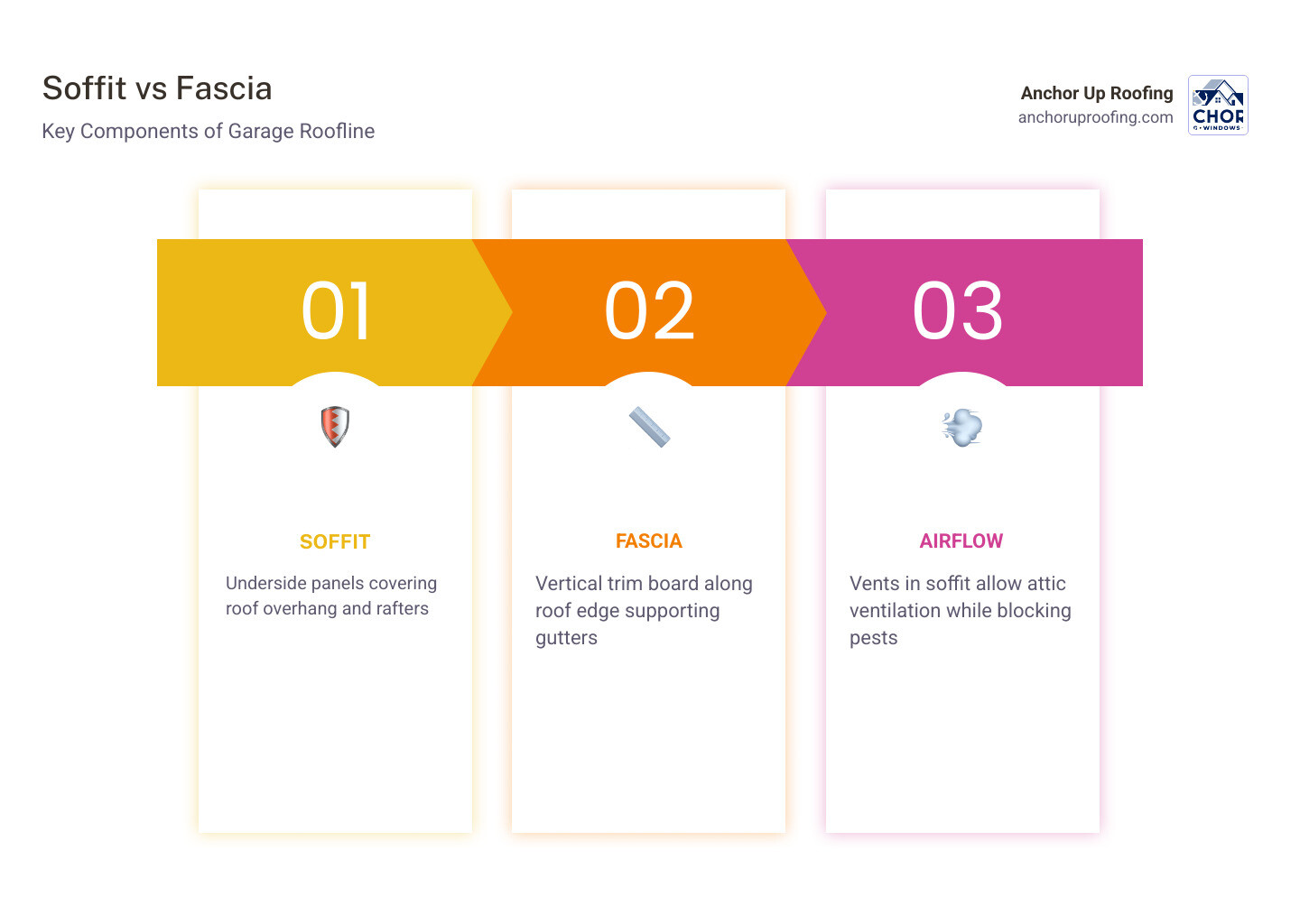
The garage soffit and fascia work as a team. The soffit is the underside panel that bridges the gap between the garage’s exterior wall and the edge of the roof. It’s the “ceiling” of your roof overhang.
The fascia is the vertical trim board that faces out toward the street. It is nailed directly to the ends of the roof rafters (the rafter tails). If you have gutters, they are almost always mounted directly onto the fascia board. Together, they create a finished box that protects the internal wood structure of your roof from the elements.
Why Garage Soffit and Fascia Are Important
In South Florida, these components aren’t just decorative; they are functional necessities.
- Ventilation: Properly vented soffits allow cool air to enter the garage attic space, pushing hot air out through roof vents. This prevents your garage from becoming a literal oven in July.
- Moisture and Rot Prevention: They seal off the rafter tails. Without them, wind-driven rain can soak into the wood, leading to wood rot that can spread deep into your roof structure.
- Pest Control: We’ve seen everything from squirrels to wasps try to make a home in garage eaves. A solid soffit keeps them out.
- Curb Appeal: A garage often makes up a large percentage of your home’s front-facing exterior. Clean, well-maintained trim makes the whole property look sharper.
Attached vs Detached Garage Roofline Considerations
If you have a detached garage, the roofline usually mimics the main house. However, with an attached garage addition, things get more complex. Often, the old exterior soffit of the house becomes an “interior” element where the new garage roof meets the old house wall.
In these cases, we often recommend “boxing in” the soffit to create a clean transition. This involves building a small wall or transition point to hide the old shingles and rafter tails inside the new garage space. For more technical projects like this, it’s often helpful to look at how others have handled an Attached Garage Addition – Soffit in new Garage.
Choosing the Best Materials for Garage Soffit and Fascia
The material you choose will determine how much time you spend on a ladder over the next twenty years. In our experience across Miami-Dade and Broward counties, durability against humidity and salt air is the top priority.
| Material | Maintenance | Durability | Best For |
|---|---|---|---|
| Vinyl | Very Low | High (No Rot) | Budget-friendly, coastal areas |
| Aluminum | Low | Very High | Modern looks, maximum ventilation |
| Wood | High | Low (Rot Risk) | Historic matching, DIY painting |
| Fiber Cement | Medium | High | Fire resistance, matching siding |
Vinyl Garage Soffit and Fascia Pros and Cons
Vinyl is a popular choice because it never rots and never needs paint. It comes in various colors and textures, including wood-grain finishes.
- Pros: It’s affordable, easy to clean, and available in fully vented panels.
- Cons: In the intense Florida sun, cheaper vinyl can fade or become brittle over decades. It can also rattle in high winds if not fastened correctly.
Aluminum Garage Soffit and Fascia Pros and Cons
Aluminum is the gold standard for many South Florida homes. Companies like Sell-Even offer aluminum panels in standard sizes like 16″ x 12′ and 12″ x 12′ that are perfect for garage overhangs.
- Pros: It is rust-resistant, fireproof, and provides excellent “Net Free Air” (NFA) for ventilation.
- Cons: It can dent if hit by a stray ladder or a heavy branch, and it is generally more expensive than vinyl.
Wood and Fiber Cement Pros and Cons for Garages
Wood (like pine or cedar) offers a classic look but requires constant vigilance. You must paint all sides of a wood fascia board before installing it to prevent peeling and rot. Fiber cement (like James Hardie) is a great middle-ground; it looks like wood but resists fire and insects. However, it is heavy and requires specialized tools for a clean installation.
How to Match the Garage to the House
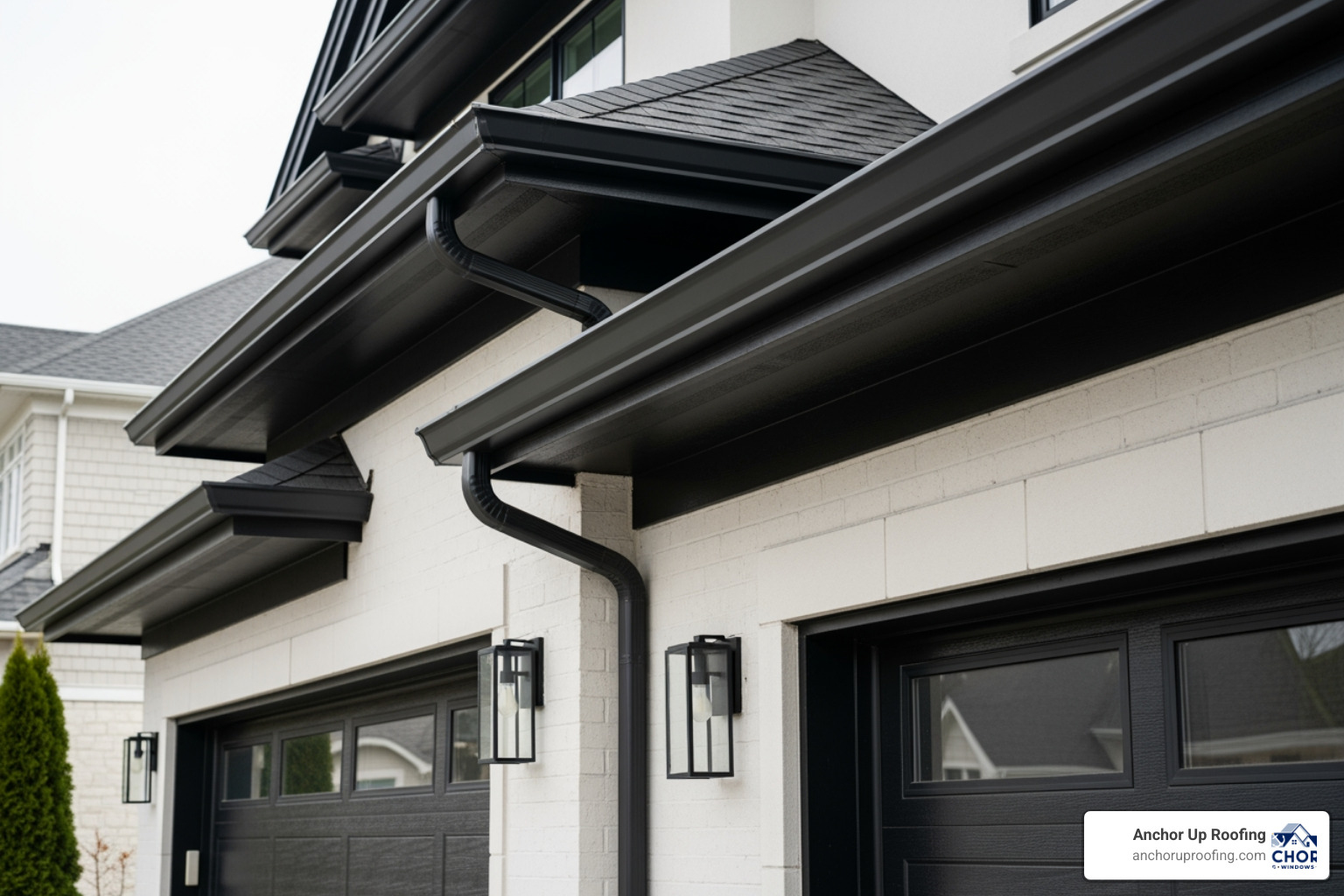
Your garage should look like it belongs to your home. We recommend matching the color of your garage soffit and fascia to your house’s trim or gutter color. Modern trends have seen a rise in “black-painted” or dark bronze soffits, which provide a high-end, contemporary look. Matching these features ensures that your garage adds to your home’s resale value rather than looking like an afterthought.
How to Install or Replace Garage Soffit and Fascia
Whether you are tackling a Garage Project: Soffits as a DIY enthusiast or hiring us to handle it, the process requires precision and the right tools.
Tools, Materials, and Prep Work
Before you start, gather your gear:
- Safety: Sturdy ladder, safety glasses, and gloves.
- Cutting: Tin snips (for aluminum/vinyl) or a circular saw with a fine-tooth blade.
- Fastening: Stainless steel or galvanized nails (to prevent rust streaks).
- Channels: J-channels and F-channels to hold the soffit panels in place.
- Coil Stock: If you are custom-bending fascia covers.
Step-by-Step Garage Soffit and Fascia Installation
- Remove Damage: Pull down old, rotted wood or sagging panels. Inspect the rafter tails for rot.
- Install Receiving Channels: Nail F-channels to the garage wall and J-channels to the fascia board (or vice versa depending on your system).
- Cut Soffit Panels: Measure the distance between the channels and subtract about 1/4 inch to allow for material expansion in the Florida heat.
- Insert Panels: Slide the soffit panels into the channels. If using vented panels, ensure they are placed according to your ventilation plan.
- Install Fascia: Nail the fascia board (or aluminum cover) over the rafter tails.
- Seal and Finish: Apply a high-quality exterior sealant to joints and re-install your gutters.
For a visual guide, you can find many tutorials on How To Install Soffit And Fascia to see the movement of the panels into the channels.
Special Tips for Flat Roof and Low-Overhang Garages
Flat-roofed garages, common in older parts of Homestead and Miami, present a unique challenge. On these roofs, the roofing felt often wraps over the edge. Prying off the old fascia can tear the felt, leading to leaks.
In these cases, we often recommend “over-cladding.” This involves using a thinner (9-10mm) cover board that tucks under the existing roof lip. It’s a cleaner way to refresh the look without risking the integrity of the roof. You can learn more about this specific Garage & Porch Felt Roofline technique to avoid common pitfalls.
DIY vs Hiring a Pro for Garage Projects
DIY is great for small repairs, like a single sagging panel. However, full replacement involves working on ladders for hours and potentially using a “brake” to bend custom aluminum. If you find hidden rot in your rafters, a DIY project can quickly become overwhelming.
We’ve seen many homeowners start a project only to realize the “simple” repair is actually a structural issue. If you’re unsure, it’s always safer to look into professional Soffit and Fascia Replacement to ensure the job meets local Florida building codes.
Garage Soffit and Fascia Ventilation, Maintenance, and Repair Signs
Ventilation is the “secret sauce” of a long-lasting roof. Without it, heat and moisture get trapped, cooking your shingles from the inside out.
Ventilation Options for Garage Soffits
You have a few choices for airflow:
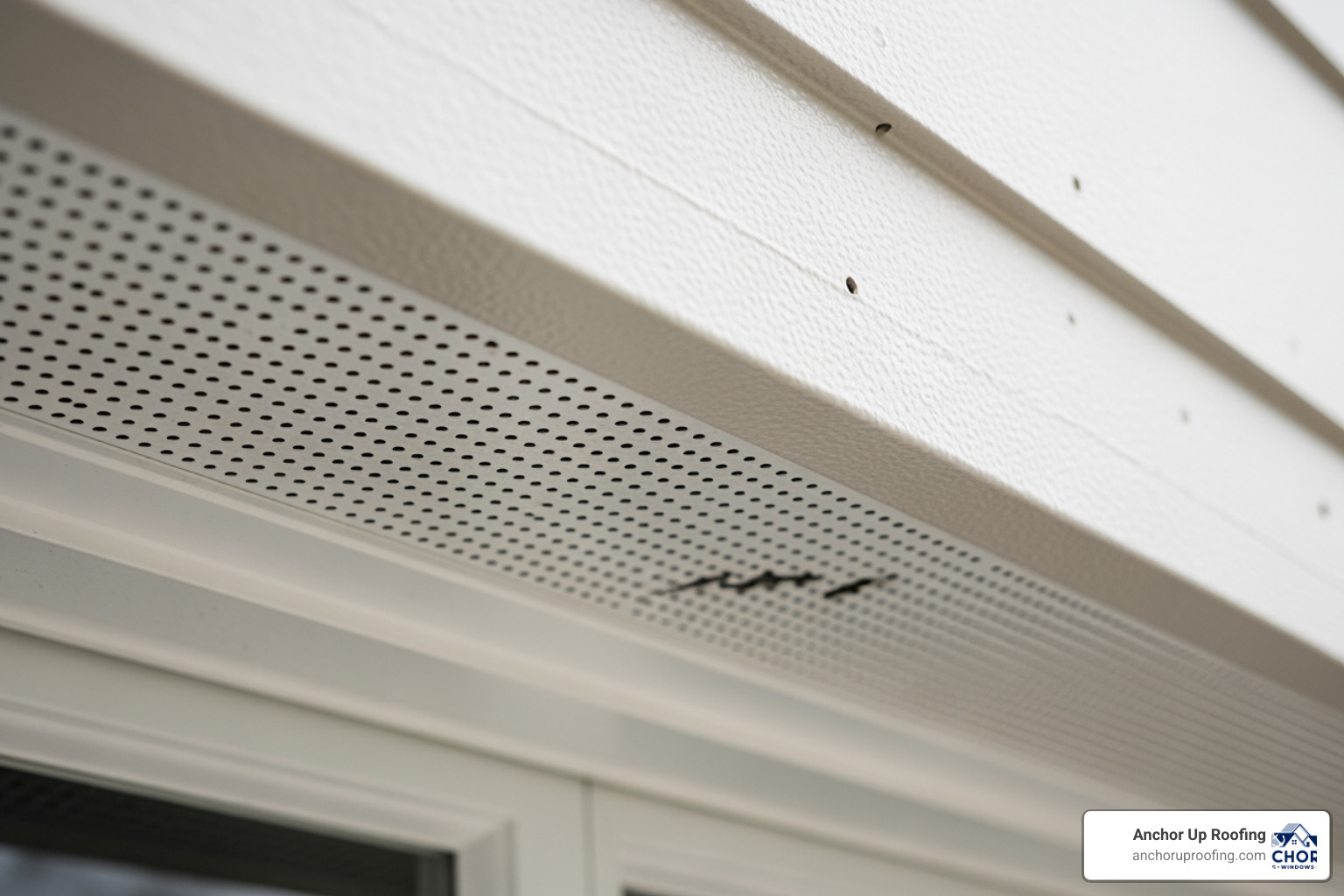
- Continuous Vented Soffit: Every panel has tiny perforations. This provides the maximum Net Free Air (NFA).
- Perforated Panels: Alternating between solid and vented panels.
- Individual Vents: Cutting holes into solid wood or plywood soffits and installing “louvered” vents.
Proper venting is crucial because it creates a “chimney effect,” drawing air in at the eaves and exhausting it at the ridge.
Signs Your Garage Soffit or Fascia Needs Repair
Don’t wait for a collapse. Look for these red flags:
- Peeling Paint: This is often the first sign that moisture is trapped in the wood.
- Sagging Soffit: This usually means the fasteners have rusted out or the wood nailer has rotted.
- Animal Activity: If you hear scratching or see nests, your roofline has a breach.
- Mold or Dark Stains: This indicates water is running behind the fascia instead of into the gutters.
Maintenance Tips to Extend Service Life
We recommend a quick inspection every spring and fall.
- Clean Your Gutters: Clogged gutters are the #1 cause of fascia rot. When water backs up, it soaks the fascia board.
- Wash the Panels: Use a garden hose and mild soap to remove salt spray and dirt from vinyl or aluminum.
- Check the Caulk: Ensure the seals around the corners and where the fascia meets the wall are still intact.
Common Mistakes to Avoid
- Blocking Vents with Insulation: If you insulate your garage ceiling, make sure you don’t shove the batts all the way into the eaves, or you’ll kill your airflow.
- Mixing Materials: Don’t use copper gutters with aluminum fascia; the dissimilar metals will cause rapid corrosion.
- Ignoring the Subfascia: If you just cover up rotted wood with new aluminum, the rot will continue to spread. Always fix the underlying wood first.
For a look at a real-world DIY process, check out this Garage Makeover: DIY Painted Soffit and Fascia to see how prep work makes all the difference.
Garage Soffit and Fascia Cost Guide for 2026
As of May 2026, pricing for garage soffit and fascia projects varies based on the size of your garage and the materials used.
What Affects the Final Price
Several factors can push your estimate up or down:
- Linear Footage: The total distance around your garage roof.
- Height: Two-story garages require more ladder work and safety equipment, increasing labor costs.
- Existing Damage: If we have to replace rotted rafter tails or subfascia wood, the labor and material costs will rise.
- Gutter Integration: If we have to remove and re-install your gutters, that adds time to the project.
How to Budget Smart Without Cutting Corners
The best way to save money is to choose low-maintenance materials like aluminum or high-quality vinyl. While wood might be cheaper upfront, the cost of repainting it every 3-5 years in the Florida sun will quickly exceed the cost of a one-time aluminum installation.
Frequently Asked Questions About Garage Soffit and Fascia
Do all garages need vented soffit?
If your garage has a finished ceiling and an attic space, yes, it absolutely needs ventilation to prevent heat buildup and mold. If it is an open-rafter “pole barn” style garage, ventilation is less critical but still helpful for cooling.
Can you replace fascia without replacing the soffit?
Yes, it is possible. However, since they are connected, you often have to remove the gutters and the outer edge of the soffit to get to the fascia. If your fascia is rotted, there’s a high chance the soffit has moisture damage too.
How long do garage soffit and fascia last?
- Vinyl/Aluminum: 20 to 40 years with basic cleaning.
- Wood: 10 to 15 years, but only if you are diligent about painting.
- Fiber Cement: 30+ years.
Conclusion
Your garage soffit and fascia are the unsung heroes of your home’s exterior. They keep your garage cool, dry, and free of uninvited pests while making the whole structure look finished and well-maintained. Whether you’re in Miami, Fort Myers, or anywhere along the Sun Coast, keeping an eye on these components is a vital part of homeownership.
At Anchor Up Roofing, we’ve spent over 20 years helping our neighbors in South Florida protect their homes from the unique challenges of our climate. As a retired veteran-owned business, we take pride in doing the job right — no shortcuts, just honest work and 5-star service.
If your garage eaves are looking a little “bare” or if you’ve spotted signs of rot and sagging, don’t wait for the next hurricane season to test your roofline. For expert advice and professional Soffit and Fascia Replacement, give us a call today. We’re here to help you anchor up and protect your investment.