

Why Florida Homeowners Are Turning to Heat Proof Tiles for Roof Cooling
Heat proof tiles for roof surfaces are one of the most effective ways to cut indoor temperatures, lower energy bills, and make your home more comfortable in a hot climate like Florida’s.
Here’s a quick answer if that’s all you need:
| What You Want to Know | Quick Answer |
|---|---|
| What are heat proof roof tiles? | Tiles engineered to reflect sunlight and emit heat, keeping roof surfaces cooler |
| How much cooler can they keep a roof? | Up to 28°C (50°F) cooler than a conventional dark roof |
| Key performance metric | Solar Reflectance Index (SRI) — look for SRI 78 or higher |
| Best materials | Ceramic, porcelain, vitrified, or terracotta with heat-reflective glazing |
| Where can they be installed? | Residential roofs, terraces, balconies, commercial and industrial buildings |
| Are they certified? | Yes — look for LEED, IGBC, or ASTM-rated products |
| How long do they last? | 15+ years with minimal maintenance |
Think about what happens on a typical Florida afternoon. The sun hammers your roof for hours. Conventional dark-colored roofing materials absorb that energy and push heat straight down into your living spaces — forcing your air conditioner to work harder and your energy bill to climb higher. It’s a familiar problem for anyone who has touched a dark roof tile on a July afternoon in Miami.
Heat proof tiles work differently. Instead of absorbing sunlight, they reflect it — and release any absorbed heat back into the air rather than into your home.
I’m Oscar Perez, founder of Anchor Up Roofing and a South Florida roofing specialist with hands-on experience installing tile roofing systems designed to stand up to the region’s heat, humidity, and hurricane conditions. In my work with homeowners across Miami-Dade, Broward, and Palm Beach counties, I’ve seen how choosing the right heat proof tiles for roof projects can make a real difference in both comfort and long-term energy costs.
What Are Heat Proof Tiles for Roof and How Do They Work?
To understand how heat proof tiles for roof protection work, we have to look at the physics of “cool roofs.” In the roofing industry, we focus on two main properties: solar reflectance and thermal emittance.
Solar reflectance is the ability of a material to bounce sunlight (including visible, infrared, and ultraviolet rays) back into the atmosphere before it can turn into heat. Thermal emittance is the ability of the tile to shed any heat it does absorb by radiating it away. When a tile does both of these things well, we call it a “cool roof” product.
What makes heat proof tiles for roof different from regular tiles?
Standard roof tiles, especially dark-colored ones, act like a giant thermal battery. They soak up the sun’s rays all day and slowly leak that heat into your attic throughout the evening.
In contrast, heat proof tiles for roof applications are engineered with specialized surface coatings or high-reflectance glazes. These tiles often use “cool-colored” pigments that look like traditional colors but are chemically designed to reflect near-infrared radiation—which accounts for about half of all solar energy. They are also crafted to have low thermal conductivity, meaning heat struggles to travel through the body of the tile and into your roof deck.
The science behind lower roof and indoor temperatures
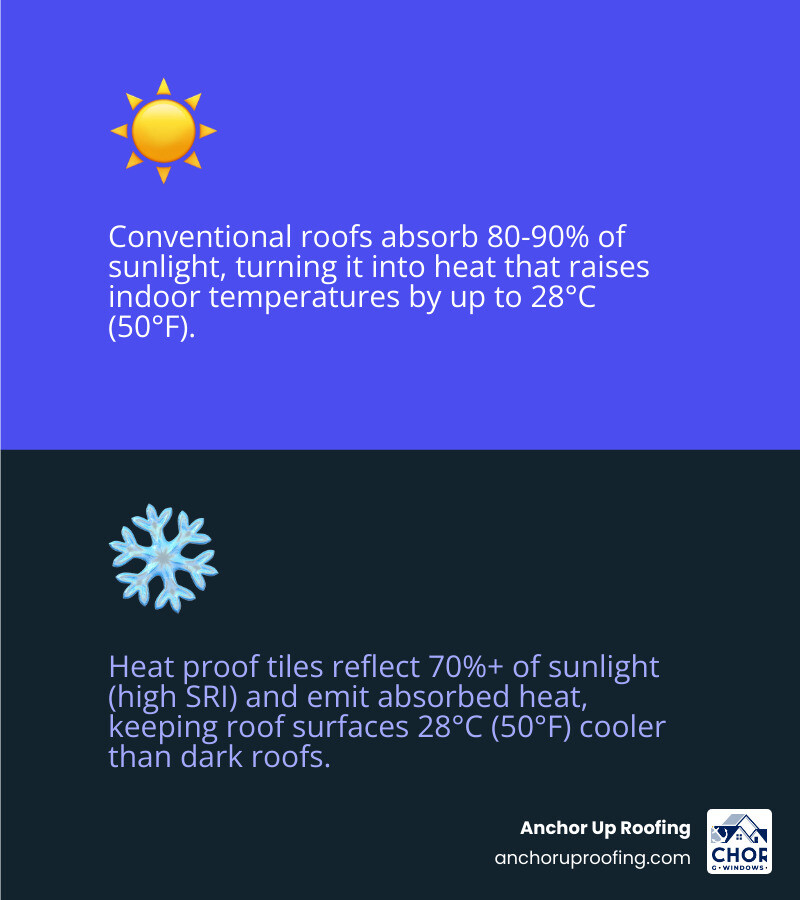
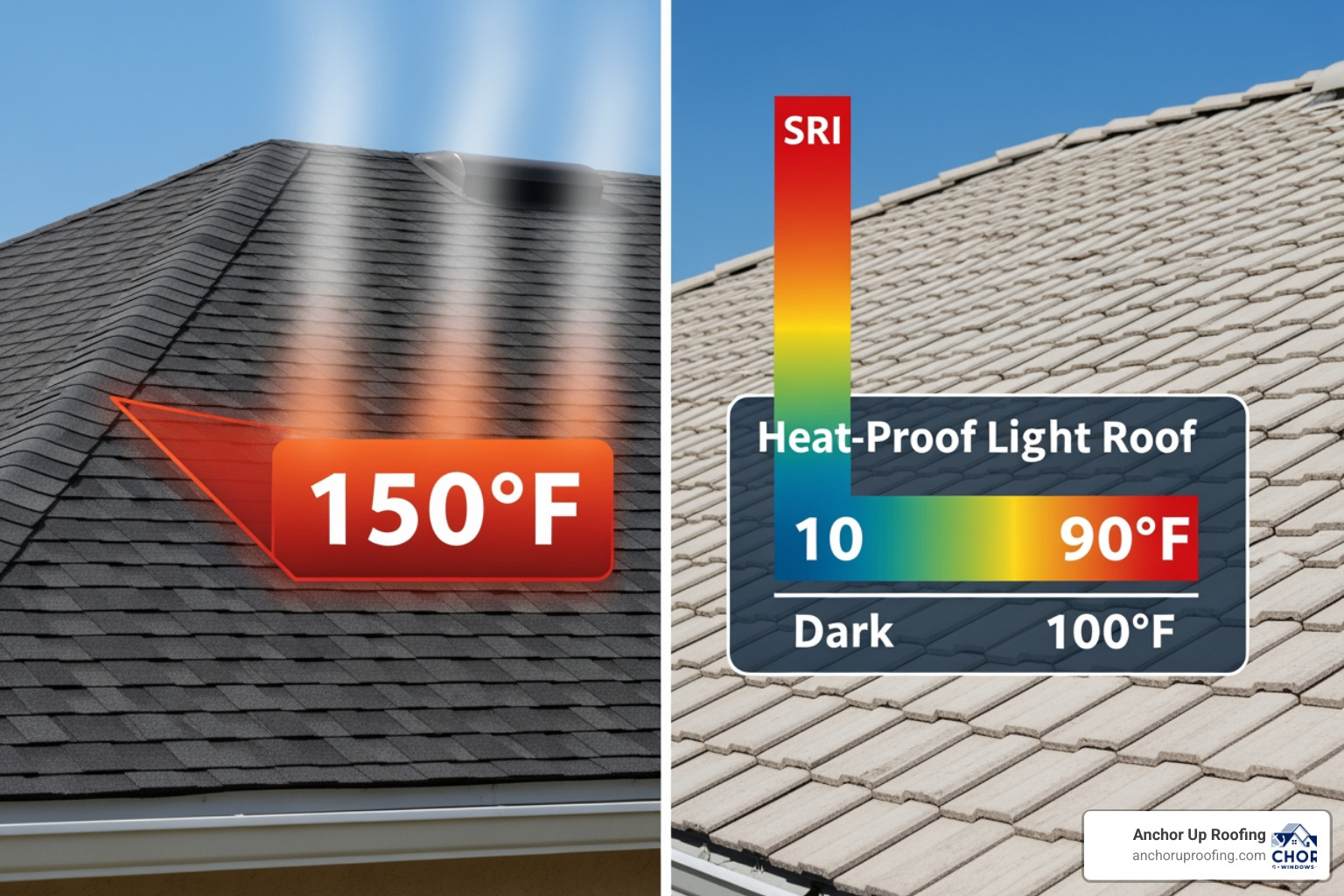
According to the Department of Energy, a conventional roof can reach temperatures of 150°F or more on a sunny summer afternoon. Under the same conditions, a cool roof can stay more than 50°F (28°C) cooler.
By reflecting up to 75% of sunlight, these tiles prevent the “slab heating” effect. When the outer shell of your home stays cool, the temperature of the air inside naturally drops. In many cases, homeowners see a reduction in indoor temperatures of 10-15%, which significantly eases the load on the HVAC system. You can learn more about how the government views these systems in this Cool roofs overview.
Why Solar Reflectance Index matters more than marketing claims
When you are shopping for heat proof tiles for roof installation, you’ll see a number called the Solar Reflectance Index (SRI). This is the most important metric to watch. SRI is a scale from 0 to 100 (though some exceptional products exceed 100) that combines reflectance and emittance into one score.
- Standard Dark Roof: SRI of 0 to 20.
- LEED Benchmark: SRI of 78 or higher for steep-sloped roofs.
- High-Performance Tiles: Many modern cool tiles achieve an SRI above 90.
A high SRI means the tile is doing its job of keeping your home cool. If a salesperson can’t give you an SRI value, they’re just selling you a pretty tile, not a heat-proof one.
Benefits of Heat Proof Tiles for Roof in Homes and Commercial Buildings
Installing heat proof tiles for roof areas isn’t just about science; it’s about making your life better and your wallet thicker. In South Florida, where the sun is relentless, the benefits are magnified.
Lower cooling loads, better comfort, and usable roof spaces
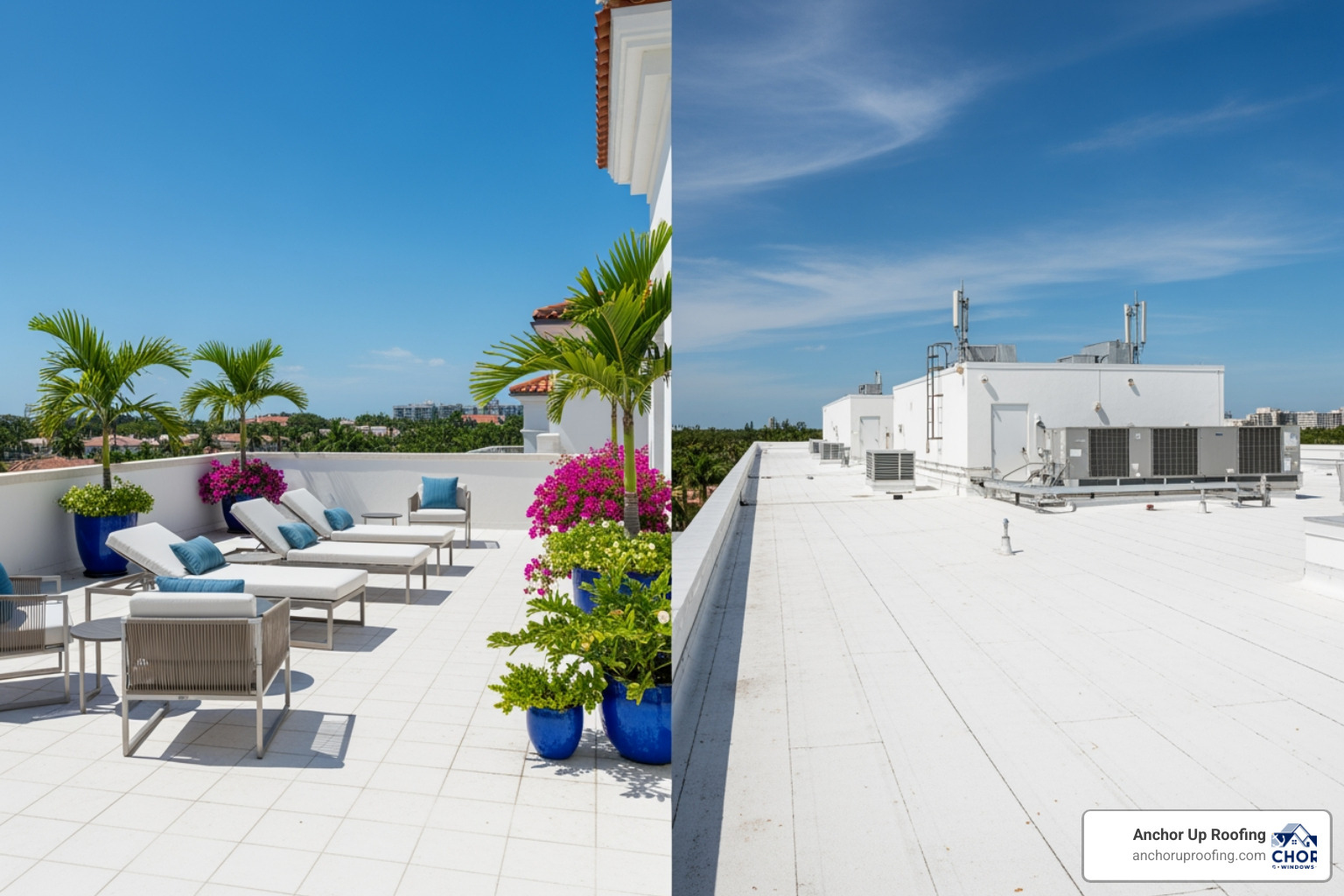
The most immediate benefit is comfort. If you have a flat roof or a terrace, standard tiles can become so hot they are impossible to walk on barefoot. Heat-reflective tiles remain significantly cooler to the touch, turning a scorching rooftop into a usable balcony or seating area.
Inside the home, the reduced heat gain means your AC doesn’t have to cycle as often. This not only saves on electricity but also extends the life of your air conditioning unit. For maximum efficiency, we often recommend pairing these tiles with proper roof insulation.
Environmental and long-term performance advantages
Beyond your own home, cool roofs help the community. Over 90% of roofs in the United States are dark-colored, which contributes to the “Urban Heat Island Effect”—where cities are significantly hotter than surrounding rural areas. By installing heat proof tiles for roof surfaces, you help lower the local ambient temperature and reduce the demand on the power grid.
Furthermore, these tiles are built for longevity. They are typically non-combustible, UV-stable, and resistant to the chemical wear that often plagues standard materials in humid coastal environments.
Where these tiles can be installed
One of the best things about these tiles is their versatility. We install them on:
- Residential Homes: Perfect for the Mediterranean and modern styles common in Miami and Naples.
- Terraces and Balconies: Allowing for “barefoot comfort” in outdoor living spaces.
- Commercial Warehouses: Reducing the massive cooling costs associated with large industrial footprints.
- Exterior Facades: Used as wall cladding to prevent heat from entering through the sides of the building.
Materials, Specifications, and Certifications to Compare Before You Buy
Not all heat proof tiles for roof projects use the same materials. Depending on your budget and aesthetic goals, you have several high-performance options.
Best materials for heat proof roof tiles
- Ceramic and Porcelain: These are often the gold standard. They are fired at incredibly high temperatures, making them dense, strong, and naturally resistant to heat. Modern ceramic tiles often feature a heat-reflective glaze that can achieve SRI values over 100.
- Terracotta and Clay: Traditional clay tiles are naturally better at managing heat than asphalt or metal, but when treated with reflective coatings, they become true cooling powerhouses.
- Vitrified Tiles: These are extremely durable and have very low water absorption (often <0.5%), making them ideal for Florida’s heavy rains as well as its heat.
Typical specs: size, thickness, weight, SRI, absorption, strength
When reviewing product data sheets, here is what you should look for to ensure you’re getting a quality product:
| Feature | High-Performance Target | Why It Matters |
|---|---|---|
| Size | 300×300 mm (approx. 1 sqft) | Standard for easy installation and replacement. |
| Thickness | 20 mm | Provides thermal mass and durability. |
| Weight | 3-4 kg per tile | Important for structural load calculations. |
| SRI Value | 90+ | Higher is better for heat reflection. |
| Water Absorption | <0.5% | Prevents mold, algae, and structural damage. |
| Compressive Strength | >350 kg/cm² | Ensures the tile can be walked on for maintenance. |
Certifications and standards worth looking for
In the US, and specifically in Florida, look for certifications like:
- LEED: Products that contribute to Green Building credits.
- CRRC (Cool Roof Rating Council): Verified performance data for reflectance and emittance.
- Miami-Dade NOA: This is critical for our local customers. It ensures the tile system can withstand hurricane-force winds.
- Florida Building Code (FBC): Ensures the product is legal and safe for use in our state.
Why underlayment and assembly matter in hot, storm-prone climates
A roof is a system, not just a layer of tiles. In Florida, the intense heat can cause “thermal cycling,” where materials expand and contract rapidly. This can stress the layers beneath the tile. We recommend using a high-quality, self-adhered underlayment that can handle high temperatures. A great example is the Westlake Royal™ TileSeal™ HT | High-Temp Roof Underlayment , which provides a secondary water barrier that won’t degrade under the intense heat trapped beneath the tiles.
Installation, Maintenance, and Lifespan of Heat Proof Tiles for Roof
Installing heat proof tiles for roof protection requires a bit more finesse than standard shingles. Because these tiles are often used on flat terraces or high-visibility slopes, the preparation must be perfect.
How heat proof tiles for roof are installed properly
- Surface Prep: The roof deck must be clean, level, and properly sloped for drainage.
- Waterproofing: A high-temp underlayment is applied to protect the structure.
- Adhesive/Fastening: Depending on the pitch, tiles are either set in a specialized foam adhesive or mechanically fastened.
- Grouting and Joints: For flat terraces, expansion joints are essential to prevent the tiles from cracking as they expand in the sun.
Maintenance tips to keep reflective performance high
The “cool” in a cool roof comes from its surface. If the surface gets covered in dirt, soot, or algae, the SRI will drop.
- Gentle Cleaning: Use water and mild soap to keep the tiles bright. Avoid harsh pressure washing which can damage glazes.
- Algae Control: Florida’s humidity loves to grow algae. Choose tiles with anti-fungal properties.
- Inspection: Check grout lines and expansion joints annually to ensure no water is seeping underneath. You can find more on this in our guide to roof coating and waterproofing.
Expected lifespan in sun, rain, humidity, and storms
A well-installed set of heat proof tiles for roof surfaces can easily last 15 to 30 years. Unlike reflective paints or coatings that may peel or chip within 5 years, the heat-reflective properties of a ceramic or porcelain tile are baked into the material itself. They are built to survive Category 4+ hurricanes and the daily “thermal shock” of a Florida afternoon rainstorm.
Heat Proof Roof Tiles vs Other Roof Cooling Strategies
Is a heat-proof tile better than just painting your roof white? Usually, yes, but it depends on your goals.
Heat proof tiles vs reflective roof coatings
Reflective coatings (cool roof paints) are a cheaper upfront option. However, they require frequent re-application—often every 3 to 7 years. Heat proof tiles for roof applications offer a permanent solution. They don’t peel, they don’t fade as easily, and they provide much better impact resistance against hail or debris. If you’re interested in the painting route, check out our page on roof painting.
How heat proof tiles work alongside insulation and tile roofing systems
In many Florida homes, we see a “layered” approach. The heat-proof tiles reflect the majority of the energy, while high-quality insulation (like spray foam) catches whatever heat manages to get through. This combination is the ultimate defense against the Miami heat. When deciding between materials, it’s worth comparing Metal vs Tile Roofing: Which is Best for Florida Homes and seeing how each impacts home energy efficiency.
Limitations, costs, and when heat proof tiles may not be the best fit
The main limitation is the upfront cost. These tiles are a premium product. Additionally, they are heavy. If you are switching from a shingle roof to a tile roof, we may need a structural engineer to verify your home can handle the load. Also, in very cold climates (which isn’t an issue for our friends in Broward or Lee County!), cool roofs can actually increase heating costs in the winter—but in South Florida, the summer savings always outweigh the winter “penalty.”
Frequently Asked Questions About Heat Proof Tiles for Roof
How much do heat proof roof tiles cost?
Pricing varies based on the material (ceramic is usually more expensive than concrete), the SRI rating, and the complexity of your roof. While the initial investment is higher than shingles, the energy savings and 20-year+ lifespan often lead to a lower “total cost of ownership.”
Do heat proof tiles work in cold or mixed climates?
They do, but the benefits are most pronounced in areas with long, hot summers. In mixed climates, you have to balance the summer cooling savings against the loss of “solar gain” during the winter. In South Florida, this is a non-issue; we want to keep the heat out year-round!
Are heat proof tiles environmentally friendly?
Absolutely. Most are made from natural minerals and are 100% recyclable. By reducing your AC usage, you are also lowering the carbon emissions from local power plants.
Conclusion: Are Heat Proof Tiles the Right Upgrade for Your Roof?
If you are tired of a “hot” second floor, sky-high electric bills, or a terrace that you can’t enjoy during the day, heat proof tiles for roof installation are a game-changer. They combine the classic beauty of a Florida tile roof with cutting-edge material science to create a home that is cooler, more efficient, and more valuable.
At Anchor Up Roofing, we specialize in these high-performance systems. Whether you are in Miami, Pembroke Pines, or Naples, our team can help you select a tile that fits your home’s style and meets the strict Miami-Dade hurricane standards.
Ready to cool down your home? Check out our main page on tile roofs or contact us today for a free estimate. We’re a retired veteran-owned business with over 20 years of experience, and we’re ready to help you “anchor up” against the Florida sun.