

What Are the Different Flat Roof Types?
Understanding flat roof types is the first step to making a smart roofing decision — especially in Florida, where storms, heat, and humidity put every material to the test.
Here is a quick overview of the most common flat roof types:
| Flat Roof Type | Best For | Lifespan |
|---|---|---|
| TPO | Energy efficiency, hot climates | 15-20 years |
| PVC | Waterproofing, chemical resistance | 30-40 years |
| EPDM | Cold climates, long durability | Up to 50 years |
| Modified Bitumen | Budget installs, residential | 10-20 years |
| Built-Up Roof (BUR) | Commercial, heavy-duty use | 20-30 years |
| Metal Standing Seam | Maximum longevity | 30-50+ years |
Despite the name, flat roofs are not actually flat. As general contractor Tom Silva puts it, a flat roof “really isn’t flat — and it shouldn’t be.” Every properly built flat roof has a slight slope — typically 1/4 inch per foot — to push water toward drains and prevent pooling.
That drainage detail matters more than most homeowners realize. Standing water left on a roof for more than 48 hours can force its way through even tiny cracks in a membrane, void manufacturer warranties, and cause serious structural damage over time.
In 2026, flat roofs are more popular than ever — not just on commercial buildings and warehouses, but on modern Florida homes, additions, garages, and porches. The right material can mean the difference between a roof that shrugs off a hurricane and one that fails after a single storm season.
The 4 Most Popular Flat Roof Types for Modern Buildings
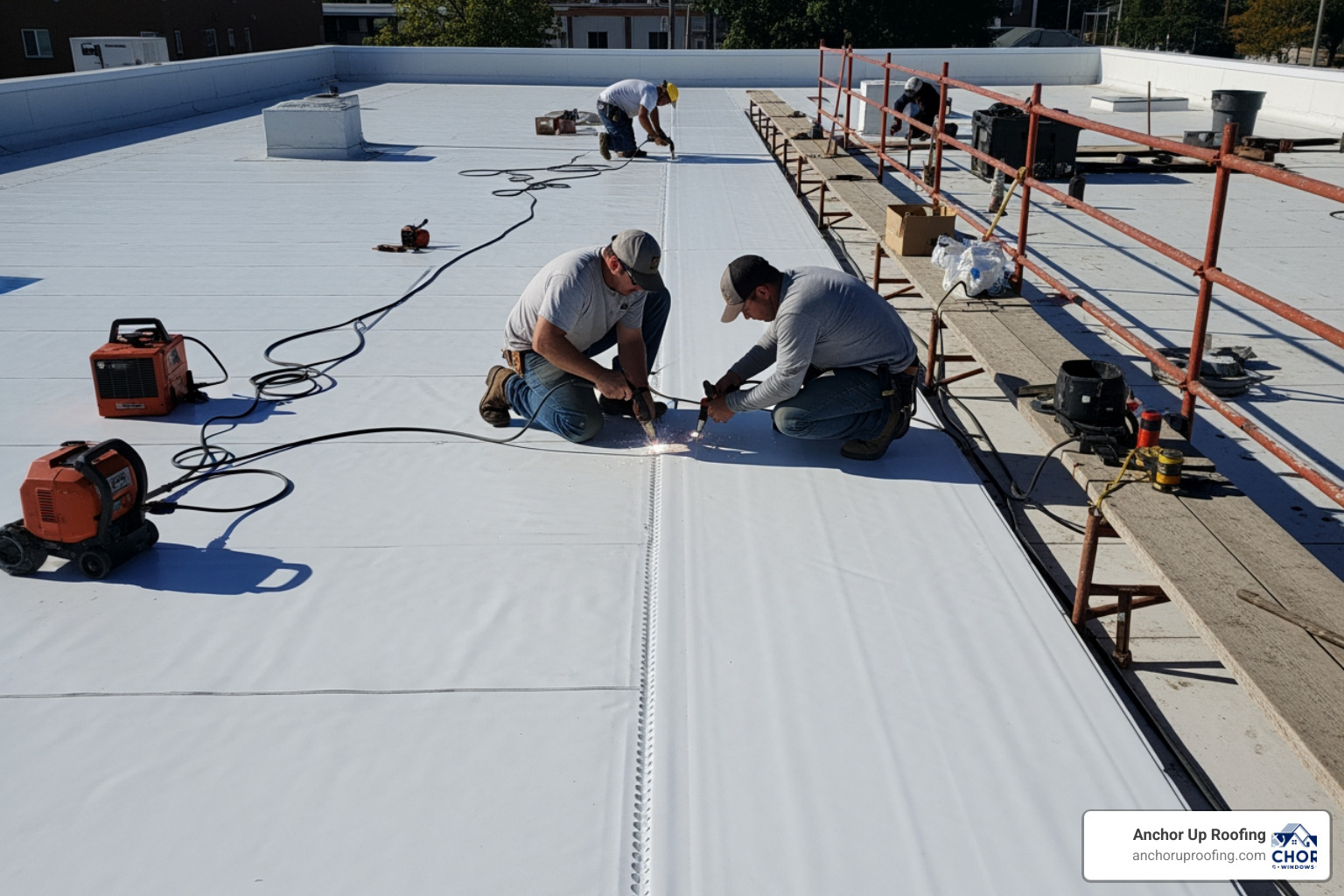
When we talk about modern flat roof types, we are usually referring to “single-ply membranes.” These are high-tech sheets of synthetic material that are rolled out and sealed to create a monolithic, waterproof barrier. In the roofing world, we divide these into two main chemical families: Thermoplastics (like TPO and PVC) and Thermosets (like EPDM).
The main difference is in the seams. Thermoplastics can be melted and re-melted, which allows us to use a hot-air welder to fuse the sheets together. This creates a bond that is often stronger than the membrane itself. Thermosets, on the other hand, are “cured” like a car tire; they can’t be melted, so their seams are sealed with high-strength adhesives or specialized tapes.
Choosing between these Types of Roof Membranes for Flat or Low-Slope Roofs depends on your specific needs, whether you are looking for a residential porch cover or a massive commercial warehouse. At Anchor Up Roofing, we specialize in helping South Florida property owners navigate these Flat Roofs to find the perfect match for our unique tropical climate.
TPO (Thermoplastic Polyolefin) Flat Roof Types
TPO is currently the heavyweight champion of the flat roofing market, holding roughly a 40% share in new construction. It consists of three layers: a polymer base, a reinforced polyester scrim (the “backbone”), and a thermoplastic polyolefin top ply.
Why is it so popular in places like Miami, Naples, and Fort Myers? Energy efficiency. Most TPO is installed in a brilliant white color that reflects UV rays and solar heat. Instead of your roof absorbing 150 degrees of heat, a white TPO membrane stays significantly cooler, which can drastically lower your monthly AC bills. It is also highly resistant to punctures and bacterial growth, though it is worth noting that TPO formulas have evolved over the years, and choosing a high-quality manufacturer is key to ensuring it lasts its full 15-20 year lifespan.
PVC (Polyvinyl Chloride) Flat Roof Types
If TPO is the budget-friendly athlete, PVC is the premium, heavy-duty veteran. PVC has been around much longer and is widely considered the top-tier option for flat roof types. It is incredibly flexible, which makes it much easier for us to install around complex roof features like chimneys, vents, and HVAC curbs.
PVC is the gold standard for Flat Roof Installation when waterproofing is the number one priority. It is naturally resistant to chemicals, greases, and oils—making it the go-to for restaurants—and it boasts a lifespan of 30 to 40 years. In high-wind areas like Broward or Miami-Dade, PVC’s reinforced fiberglass mesh gives it the structural integrity needed to withstand intense pressure during a storm.
EPDM (Ethylene Propylene Diene Monomer)
EPDM is essentially a high-performance rubber roof. It is famous for its incredible durability—some EPDM roofs installed in the 1970s are still going strong today! It can stretch up to 300%, allowing it to handle “thermal shock” (the rapid expansion and contraction caused by Florida’s afternoon rain showers hitting a hot roof) without cracking.
While EPDM is often black, which isn’t ideal for the Florida sun, white versions are available. It is a very cost-effective material to repair, as punctures can often be fixed with simple patch kits. However, because it relies on adhesives rather than welded seams, it requires a very experienced hand during installation to ensure those seams don’t pull apart over time.
Modified Bitumen (Mod-Bit)
Modified Bitumen is the modern evolution of the old-school “tar and gravel” roof. It combines asphalt with plastic (APP) or rubber (SBS) modifiers to make it more flexible and durable. As we see in the 3 Types of Flat Roofs: Pros and Cons, Mod-Bit is a favorite for residential additions and porches.
It is typically installed in multiple layers, providing “redundancy”—meaning if the top layer is nicked, you still have layers of protection underneath. We often install this using a “torch-down” method, where a blowtorch is used to melt the asphalt as it’s rolled out, creating a permanent bond to the roof deck.
Comparing Performance: Cost, Lifespan, and Durability
When you are deciding between different flat roof types, the “best” roof is usually the one that balances your budget with your long-term goals. If you plan on living in your home for 30 years, a cheaper roof that needs replacing in 12 years is actually the more expensive choice.
One major difference you’ll find in the Flat Roof vs Pitched Roof for Residential Buildings debate is maintenance. While a shingle roof might just need the occasional gutter cleaning, flat roofs require a more proactive approach. Because they lack a steep slope, debris like leaves and twigs can trap moisture against the membrane. We recommend a professional inspection at least twice a year—ideally in the spring and fall—to ensure your drainage systems are clear and your seams are tight.
Specialized Flat Roofing Systems and Materials
Beyond the “Big Four” membranes, there are several specialized systems used in South Florida for specific architectural or industrial needs.
- Built-Up Roofing (BUR): This is the classic “hot mop” roof. It consists of alternating layers of bitumen and reinforcing fabrics, topped with a layer of gravel or river stone. The gravel isn’t just for looks; it provides fire resistance and protects the underlying asphalt from UV degradation.
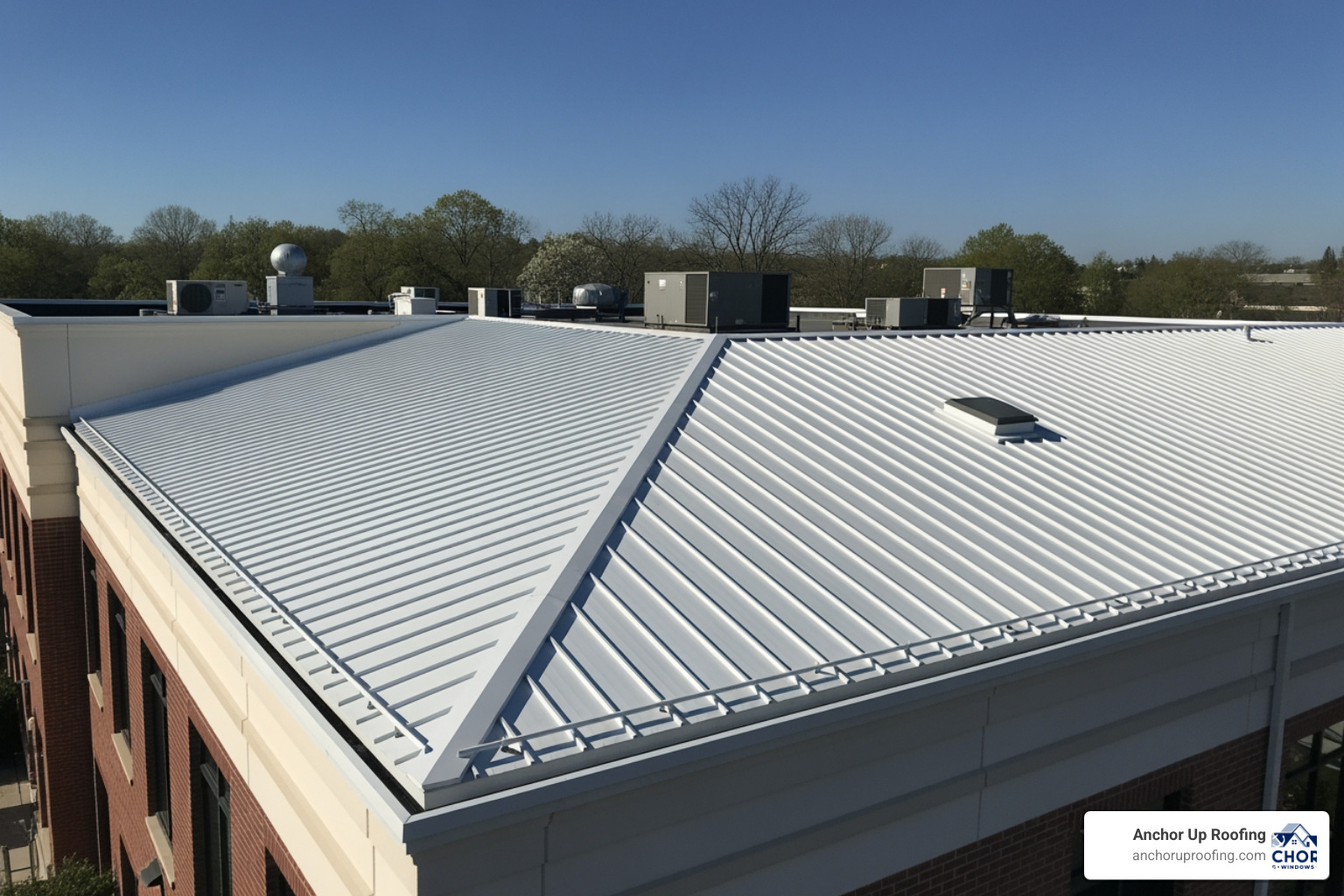
- Metal Standing Seam: While we usually think of metal for pitched roofs, “low-slope” metal panels are a fantastic, high-end option. They offer the greatest longevity—often 50 years or more—and are 100% recyclable.
- Spray Polyurethane Foam (SPF): This is a “strange but cool” process where a liquid is sprayed onto the roof and expands into a solid, seamless foam. It provides incredible insulation, but it must be coated with a protective layer to prevent UV damage.
- Liquid-Applied Membranes: These are becoming increasingly popular for roofs with complicated shapes. We apply them like a thick paint that cures into a rubbery, seamless shield. They are a great option for Roof Coating and Waterproofing existing roofs to extend their life without a full tear-off.
- Green Roofing: Also known as “living roofs,” these involve a waterproof membrane topped with soil and vegetation. They are excellent for managing rainwater and reducing the “urban heat island effect” in crowded city centers like Miami or Hialeah, though they require a very strong building structure to support the weight of the wet soil.
Key Considerations for Choosing Your Flat Roof
Choosing from the various flat roof types in Florida isn’t just about aesthetics; it’s about survival. Our weather is some of the most demanding in the world, and your roof needs to be engineered to match.
- Florida Building Code & Miami-Dade NOA: In our service areas—from Pembroke Pines to Doral and down to Naples—compliance is everything. Many areas require materials with a Miami-Dade “Notice of Acceptance” (NOA), which proves the material has been tested against hurricane-force winds.
- Wind Uplift: When a hurricane blows across a flat roof, it creates negative pressure (like an airplane wing) that tries to suck the roof off. This is called “fluttering.” We prevent this by using reinforced perimeters and specific fastening patterns that meet high-velocity hurricane zone (HVHZ) standards.
- Ponding Water Prevention: If your roof doesn’t have a proper “fall” or slope, water will pool. This is the #1 cause of flat roof failure. Whether you are doing residential or Commercial Roofing, we often use “tapered insulation” to create a slope where one didn’t exist before.
- Building Use: Is your roof going to host a patio? Will you have heavy HVAC units or solar panels? A roof that will see a lot of foot traffic needs a thicker, more durable membrane like a 60-mil or 90-mil PVC to prevent accidental punctures.
Frequently Asked Questions about Flat Roofs
What is the longest-lasting flat roof material?
If longevity is your primary goal, Metal Standing Seam and EPDM rubber are the champions. Both have the potential to last 50 years with proper care. Metal is a “fix-and-forget” system that handles the sun incredibly well, while EPDM’s natural rubber composition allows it to stay flexible for decades. However, the lifespan of any material is only as good as its installation; even a 50-year material will fail in five years if the seams aren’t sealed correctly.
Are flat roofs prone to leaking?
Flat roofs have a reputation for leaking, but that reputation mostly comes from poor installations or neglected maintenance. Most leaks occur because of “ponding water”—water that sits for more than 48 hours. When we engineer a roof with proper slopes, scuppers, and drains, and when the owner keeps those drains clear of debris, a flat roof is just as watertight as a pitched one. Seam integrity is the other factor; choosing heat-welded TPO or PVC provides a much higher level of security than older glued systems.
Which flat roof is best for hot climates like Florida?
For the intense heat of South Florida, TPO and PVC are the clear winners. Their white, reflective surfaces act like a “cool roof,” bouncing solar energy back into the atmosphere instead of letting it bake your home. This not only keeps you more comfortable but also extends the life of your AC system by reducing its workload. When installed to Miami-Dade standards, these membranes also provide the hurricane resistance necessary for our coastal locations.
Conclusion
At Anchor Up Roofing, we know that your roof is the only thing standing between your family and the next big storm. As a retired veteran-owned business with over 20 years of experience, we take that responsibility seriously. Whether you are in Miami, Fort Lauderdale, Naples, or anywhere across South Florida, we are here to provide the expert craftsmanship and honest advice you deserve.
From high-efficiency TPO to the “fix-and-forget” durability of metal, we specialize in all flat roof types and offer 100% financing to ensure you get the protection you need today. Don’t wait for the next rainy season to find out if your roof is up to the task.
Ready to protect your property? Request a Flat Roof Inspection today and let our family take care of yours.