

Why Terracotta Roofing Tile Has Protected Homes for Over 3,000 Years
Terracotta roofing tile is a kiln-fired clay tile used to protect and finish the exterior of a roof. Here’s a quick snapshot of what you need to know:
- Material: Natural clay, fired at high heat for a hard, dense finish
- Color: Earthy red-orange tones baked through the tile — not painted on, so they won’t fade
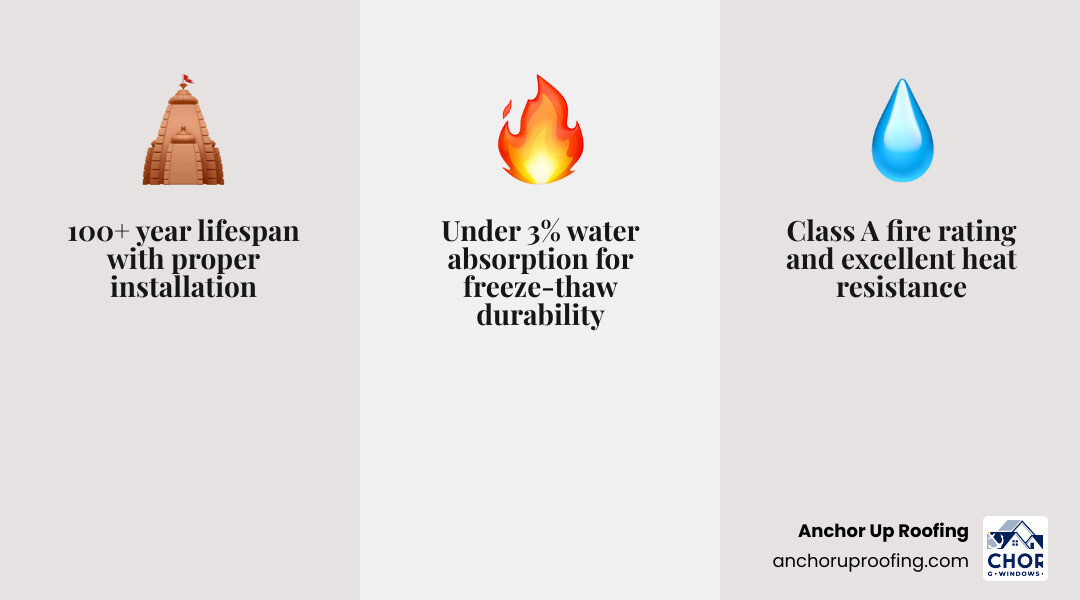
- Lifespan: 100 years or more with professional installation
- Styles: S-type, barrel, flat/plain, interlocking, and mission profiles
- Best for: Mediterranean, Spanish, colonial, and tropical architectural styles
- Climate fit: Performs well in heat, coastal exposure, and freeze-thaw cycles (water absorption under 3%)
- Weight: Heavy — typically requires a structural check before installation
Few roofing materials have stood the test of time quite like terracotta. Ancient Greeks used it to protect their temples. Roman cities relied on it to stop the spread of fire. Today, terracotta covers 80% of all roofs in France and is found on roughly 90% of homes on the island of Java in Indonesia. In South Florida, it defines the look of neighborhoods like Coral Gables and Coconut Grove — and it routinely survives Category 4+ hurricanes when installed correctly.
If you’re a Florida homeowner weighing your roofing options, terracotta is worth understanding in full. The beauty is obvious. But so are the trade-offs: it’s heavy, it requires skilled labor, and the upfront cost is higher than most alternatives. This guide walks you through everything — from how the tiles are made, to which profiles suit which homes, to what it actually costs and how to maintain it.
I’m Oscar Perez, founder of Anchor Up Roofing, and I’ve helped homeowners across South Florida install, repair, and evaluate terracotta roofing tile systems built to handle our demanding coastal climate. In the sections ahead, I’ll share what I’ve learned from real projects so you can make a confident, informed decision.
What Is a Terracotta Roofing Tile?
A terracotta roofing tile is a ceramic roof covering made from natural clay that is shaped, dried, and fired in a kiln until it becomes hard and weather-resistant. “Terracotta” literally refers to fired earth, which is exactly what it is: clay transformed by heat into a durable roofing material.
What makes it different from many modern roofing products is that the color is part of the tile itself. The familiar red, orange, rust, and weathered brown tones are typically baked through the material rather than painted on top. That matters because color retention is one of terracotta’s biggest strengths.
Terracotta also performs well as a water-shedding roof system. The tiles overlap in courses, creating channels that move rain off the roof. Clay tile is also naturally noncombustible, which is why it has been prized for fire resistance for centuries.
How terracotta roofing tile is made
The basic process has not changed much, even though manufacturing has become far more precise.
- Clay is sourced and refined.
- The clay is molded or extruded into a profile.
- The tile is dried to remove excess moisture.
- It is fired in a kiln at very high temperatures.
- It cools into a hard ceramic product ready for installation.
Some tiles are left natural, while others may be glazed or finished for specific colors or textures. High-quality clay tiles can have water absorption below 3%, which is one reason they can perform well in wet conditions and even freeze-thaw environments.
That dense makeup also helps explain their strength. High-grade clay tiles can reach breaking strengths of about 700 to 1,500 pounds, depending on profile and manufacturer.
A brief history of terracotta roofing tile
Terracotta roofing has deep roots. Ancient Greece and Rome popularized clay tiles because they were more fire-resistant than thatch or wood. Over time, the material spread throughout the Mediterranean and later into colonial and mission-style architecture.
Its long history still shows up in modern roofing design:
- Barrel and mission tiles reflect Spanish and Mediterranean traditions.
- Flat and plain tiles suit colonial and European-inspired architecture.
- Interlocking tiles bring old material into more engineered modern systems.
Globally, clay tile remains a major roofing choice. It covers about 80% of roofs in France, and around 90% of homes on Java use clay roof tiles. That kind of staying power is not a trend. It is proof of performance.
Main Types and Profiles of Terracotta Roof Tiles
Terracotta is not one look. The profile of the tile changes both the appearance of the roof and how it sheds water.
S-type, pantile, and interlocking profiles
S-type tiles have a wave-shaped profile that creates the classic rolling roofline many homeowners picture first. They are sometimes called pantiles depending on the design. These profiles give you strong visual texture with fewer pieces than a flat tile system.
Interlocking clay tiles are designed with edges that fit together. That improves coverage efficiency and can help with weather performance when properly installed. Some interlocking profiles are also suitable for lower roof slopes than traditional plain tiles. In some cases, interlocking clay tiles are recommended for minimum slopes around 3:12, depending on the manufacturer and system details.
Interlocking systems are popular when homeowners want the durability of clay with a cleaner, more engineered installation pattern.
Barrel, mission, and pan-and-cover styles
Barrel tile is the classic Mediterranean and Spanish look. These tiles create deep shadow lines and a dramatic roof texture. In traditional two-piece systems, one tile forms the pan and another forms the cover, which is why these roofs are often called pan-and-cover or mission tile roofs.
These styles are visually stunning, but they can be labor-intensive and heavy. They are often chosen for homes where architectural authenticity matters as much as roof performance.
If you want to compare profile styles and installation approaches for your home, our Tile Roofs page is a helpful place to start.
Flat, plain, and shingle-style terracotta roofing tile
Flat and plain clay tiles create a more restrained look. Instead of bold curves, they deliver straight lines and a tighter pattern. That can work beautifully on colonial, European, and some transitional homes.
Plain tiles often require steeper roof pitches. Some plain clay tile systems are intended for roof slopes of 35 degrees or more, which is a good reminder that not every tile fits every roof.
If you are comparing broader tile options for your home, our Tile Roofs page is a helpful starting point.
Terracotta vs Other Roofing Materials: Pros, Cons, and Performance
Not every roof should be terracotta. We always tell homeowners to compare appearance, structure, climate demands, and long-term maintenance before falling in love with the color.
| Material | Typical Lifespan | Weight | Color Retention | Maintenance |
|---|---|---|---|---|
| Terracotta clay tile | 100+ years | Heavy | Excellent | Low to moderate |
| Concrete tile | Long-lasting, but shorter color life than clay | Heavy | Fair to good | Moderate |
| Metal roofing | Long-lasting | Light | Good | Low |
| Slate | Very long-lasting | Very heavy | Excellent | Low |
| Asphalt shingles | Shortest of this group | Light | Fair | Moderate |
Advantages of terracotta roofing tile
Terracotta has a lot going for it:
- Long lifespan: A professionally installed clay tile roof can last 100 years or more.
- Fire resistance: Clay tile is noncombustible and commonly associated with Class A fire-rated roof assemblies.
- Excellent color stability: The color is kiln-fired into the material, so it does not rely on surface paint.
- Recyclability: Clay tiles are 100% recyclable at the end of their service life.
- Curb appeal: Few roofing materials match its architectural character.
- Pest resistance: Clay does not attract termites or rot like wood products can.
- Thermal performance: Tile roofs create air space beneath the tile, which can help reduce heat transfer into the attic.
In hot South Florida conditions, that last point matters. A properly designed tile roof assembly can help a home handle strong sun better than many low-mass roofing materials.
Drawbacks to consider before choosing terracotta roofing tile
Terracotta is not carefree perfection in roof form.
The main trade-offs are:
- Heavy weight, which may require structural review
- Higher upfront material and labor costs
- Greater breakage risk during shipping and handling
- Need for skilled installation
- Underlayment and flashing still age before the tile does
The tile may last a century, but the full roof system depends on underlayment, flashings, fasteners, and installation details. In real life, those components usually need attention long before the clay itself wears out.
And yes, tiles can crack if someone walks on them carelessly. Terracotta is durable, but brittle under point impact. It is strong in service and delicate in the wrong hands, which is a funny combination for a product that can outlive its owner.
How terracotta compares with concrete, metal, slate, and shingles
Compared with concrete, clay usually wins on water absorption and color stability. Research in your source set notes high-quality clay under 2% to 3% absorption, while concrete tile is closer to 13%. Lower absorption usually means better resistance to moisture-related issues. Concrete can also require periodic resealing every 3 to 7 years in some applications.
Compared with metal, terracotta is much heavier and usually more expensive to install, but many homeowners prefer the look and sound of tile. If you are weighing those systems, see our Metal Roofing page and our guide to Metal vs Tile Roofing: Which is Best for Florida Homes.
Compared with slate, terracotta is often less expensive and offers a warmer, more Mediterranean appearance. Slate is beautiful, but it is also extremely heavy and expensive.
Compared with asphalt shingles, terracotta costs far more upfront, but shingles typically have a much shorter service life. You can explore that broader comparison in our Shingle Roof and Types of Residential Roofing Compared resources.
Durability, Climate Performance, Cost, and Installation Basics
Lifespan, frost resistance, and weather performance
Terracotta’s headline number is impressive: 100 years or more with professional installation. But the better way to think about it is this: the tile itself can last generations, while the components beneath it may need replacement first.
High-quality clay tile with water absorption below 3% is considered frost resistant, because it takes in less water that could freeze and expand. That is useful in freeze-thaw climates, but it also signals density and quality more generally.
For South Florida homeowners, the more relevant performance questions are heat, humidity, salt air, and hurricanes. Terracotta performs very well in heat, and when installed to current code requirements and applicable product approvals, tile roofs are trusted in high-wind zones. Proper installation is everything here. Fastening methods, ridge details, underlayment, and flashing all matter. Homeowners who want a broader technical overview of clay roof tiles can also review general background information from Wikipedia’s roof tiles article.
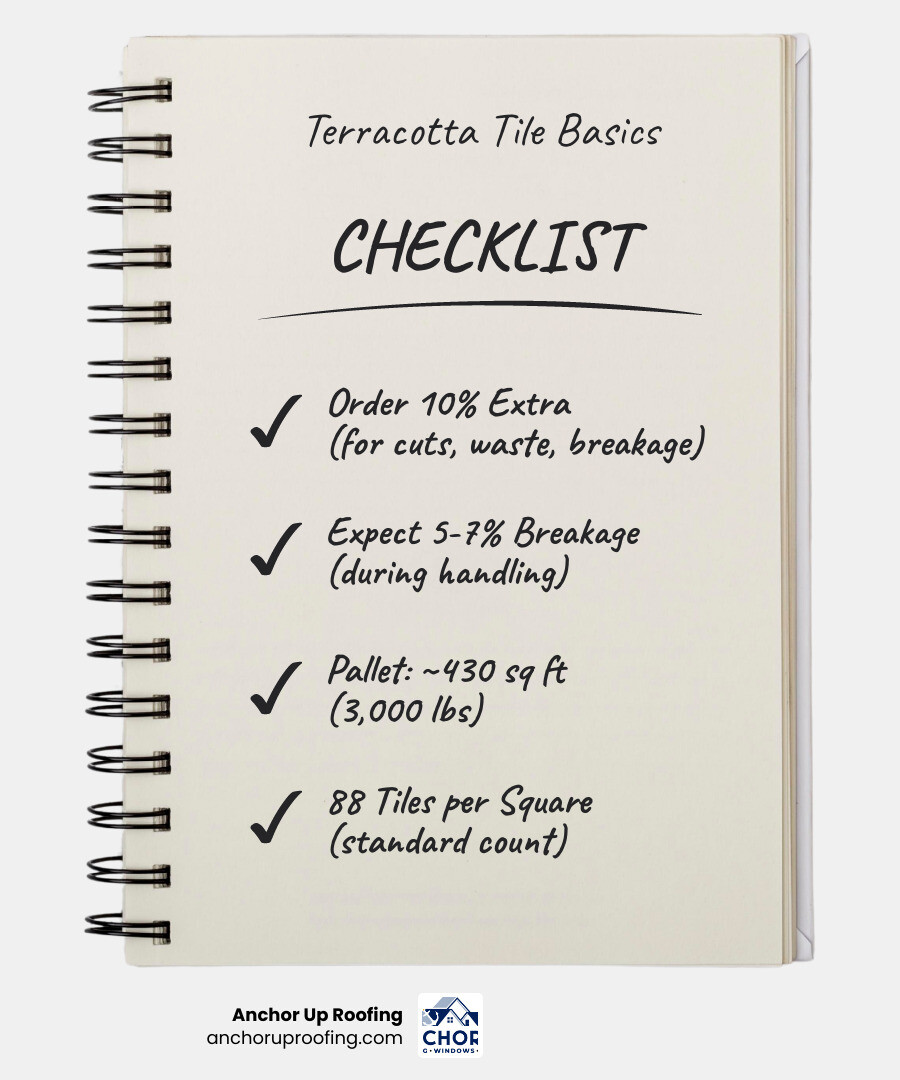
Those numbers matter because clay tiles are freight products, not toss-it-in-the-trunk products. You also should plan for waste. A common recommendation is to order at least 10% extra for cuts, layout waste, and breakage. Some suppliers also warn to expect 5% to 7% breakage during handling on certain tile styles.
Roof pitch, loading, and shipping considerations
Terracotta tile needs the right roof pitch and the right structure.
Some interlocking clay tiles can be used on slopes as low as 3:12, while some plain clay tiles require 35 degrees or more. That is a major difference. Always match the tile profile to the roof design. Manufacturer specifications show clearly why plain tiles are often chosen for steeper roofs.
Weight is the next big issue. Some interlocking clay tile systems weigh around 800 pounds per square. Many tile systems weigh more than shingles or metal by a wide margin, so if a home is being converted from a lighter roof system, a structural review may be needed.
Shipping also deserves respect:
- Confirm whether the delivery site needs a lift gate
- Have equipment available for unloading heavy pallets
- Inspect tiles on arrival
- Note any freight damage on the delivery receipt immediately
That last part is not glamorous, but it can save a major headache later.
Design Styles, Regional Preferences, and Sustainability
Why terracotta suits Mediterranean, Spanish, mission, and colonial homes
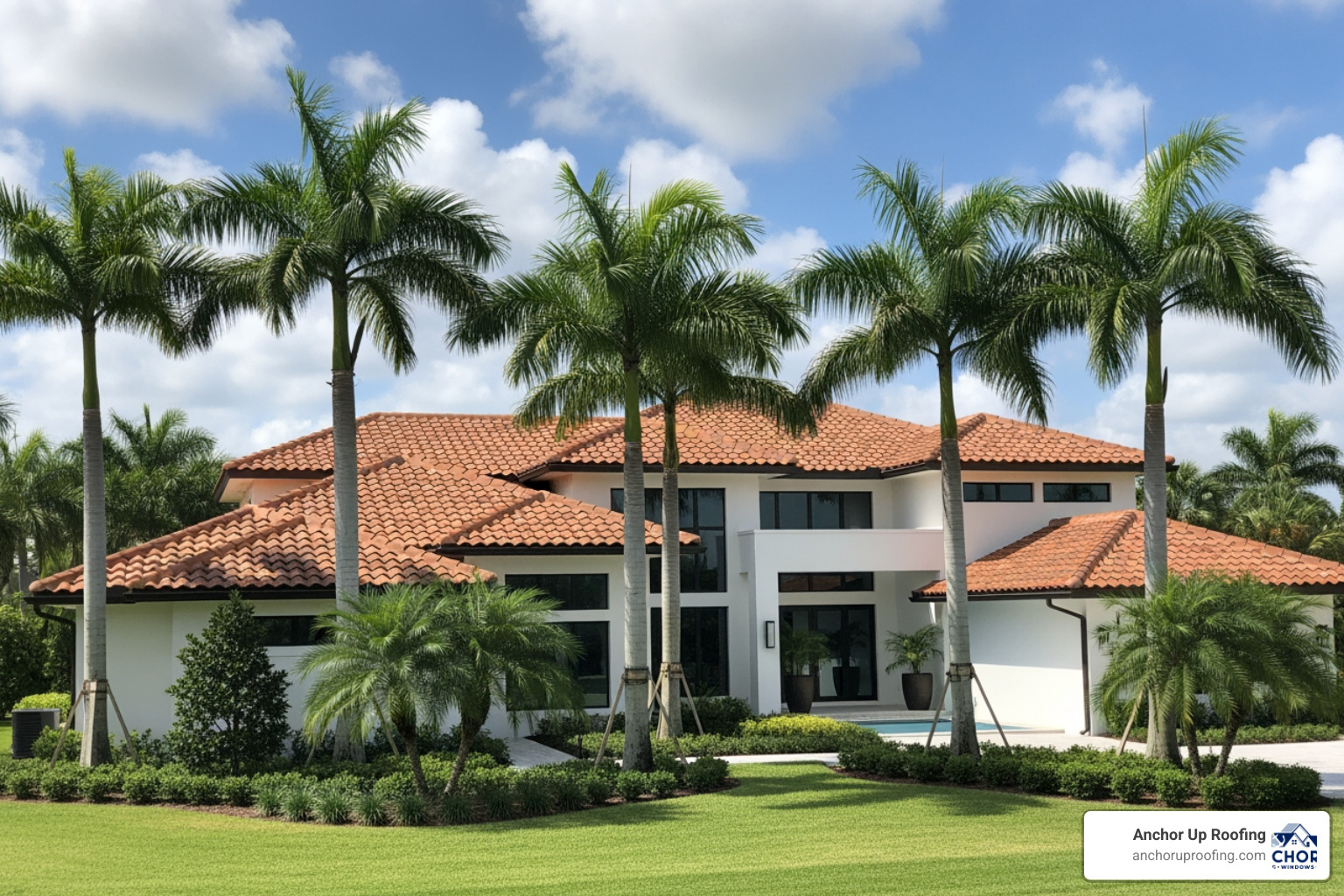
Terracotta is one of those materials that can make a house look “right.” On Mediterranean, Spanish Colonial, mission, and tropical-style homes, the curves, shadows, and earthy tones feel natural rather than forced.
Barrel and mission tiles create dramatic shadow lines. S-tiles add movement. Flat clay tiles feel more formal and orderly. Weathered terracotta finishes can soften a newer home and make it feel established.
In South Florida, this matters because so much local architecture already speaks this language. Terracotta complements stucco, arches, courtyards, warm-toned masonry, and lush landscaping in a way few roofing materials can.
Regional preferences in France, Spain, the US, and beyond
Terracotta roofing choices often follow climate and architectural tradition:
- France: Terracotta covers 80% of roofs, with regional use of plain tiles and over-and-under profiles.
- Spain: Long associated with classic curved clay roof forms and production traditions.
- The US: Popular in areas influenced by Spanish, Mediterranean, and mission architecture.
- Java: About 90% of homes use clay roof tiles.
For Florida, especially South Florida, terracotta remains a natural fit because the style aligns with many existing neighborhoods and because tile roofing has a long local history.
Environmental benefits and energy efficiency
Terracotta’s sustainability story is stronger than many homeowners realize.
Benefits include:
- Made from natural clay
- Very long service life
- 100% recyclable at end of life
- Does not need frequent coating cycles like some alternatives
- Supports passive cooling through air space beneath the tiles
Some tile products also publish reflectance and emissivity data. Homeowners and designers can review manufacturer technical information to compare solar performance, weight, and profile options when selecting a clay tile system.
Maintenance, Repairs, and Common Questions Homeowners Ask
Routine maintenance and what usually wears out first
Terracotta roofs are relatively low maintenance, but they are not maintenance-free.
Routine care usually includes:
- Removing leaves and debris from valleys
- Checking flashings and penetrations
- Keeping gutters and drainage paths clear
- Inspecting ridge and hip areas
- Watching for slipped or cracked tiles after major storms
What usually ages first is not the tile. It is the underlayment, flashing, or fastening components. That is why a tile roof can still need significant service even when the field tiles look great.
And one important rule: do not let just anyone walk on a clay tile roof. Poor foot placement can crack tiles quickly.
Weathering, fading, moss, and repairability
One of terracotta’s biggest strengths is color stability. Because the color is fired into the clay, it typically does not fade the way surface-coated products can. Natural weathering may soften or enrich the appearance over time, which many homeowners actually like.
Painting clay tiles is generally a bad idea. It adds maintenance, can affect moisture behavior, and takes away one of the main benefits of authentic terracotta.
Moss or algae can grow in damp, shaded conditions, especially if debris is allowed to collect. Usually, the solution is careful cleaning and improving drainage, not aggressive pressure washing.
Repairs are often straightforward if matching tile is available. A cracked tile can usually be replaced without tearing off the whole roof. The trick is color and profile matching, which is why we recommend keeping spare tiles from the original installation whenever possible.
Frequently Asked Questions about terracotta roofing tile
How much extra tile should we order?
Plan on at least 10% overage for cuts, waste, and breakage. That is one of the most consistent recommendations across suppliers.
Can tiles break in shipping?
Yes. Clay is durable on the roof but can chip or crack in transport. Inspect deliveries right away and note damage on the receipt.
Is terracotta roofing suitable for Florida?
Yes, when the system is properly designed and installed for our climate and code requirements. Terracotta handles heat well and is widely used on Florida homes.
Will our house support the weight?
Maybe, maybe not. If the home was built for tile, often yes. If you are switching from a lighter roof like shingles, a structural check may be needed.
Does the tile last longer than the roof system?
Often, yes. The tile can outlast underlayment and flashing by decades.
What if our roof is low slope?
Some clay profiles, especially interlocking systems, can work on lower slopes than traditional plain tile. Profile selection matters.
If you are comparing low-slope roof options separately, our Flat Roofs, Flat Roof Installation, and Flat Roof vs Pitched Roof for Residential Buildings guides can help.
For additional general reading on terracotta tile products and homeowner questions, manufacturer resources and local code guidance can also be useful when evaluating options.
Conclusion
A terracotta roofing tile roof is one of the best long-term choices for homes that can support the weight and that benefit from its timeless style. It offers exceptional longevity, strong fire resistance, reliable performance in harsh sun and coastal conditions, and unmistakable curb appeal. It also asks more from the homeowner upfront: more planning, more structural awareness, and more skilled installation.
For many homes across South Florida, that trade is worth it.
If you want a roof that matches Mediterranean, Spanish, mission, or colonial architecture while delivering decades of value, terracotta belongs on your shortlist. And if you want help deciding whether tile is right for your property, explore our Tile Roofs page to learn more.