

Is Roof Painting Worth It? What Florida Homeowners Need to Know
Roof painting is one of the most cost-effective ways to protect, restore, and refresh your home’s exterior — without the expense of a full roof replacement.
Here’s a quick snapshot of what you need to know:
| Question | Quick Answer |
|---|---|
| Can you paint a roof? | Yes — metal, tile, concrete, and asphalt shingles can all be painted |
| How long does it last? | 10–15 years with professional application |
| Average cost? | $1,000–$3,000 vs. $10,000+ for full replacement |
| Best paint type? | 100% acrylic or elastomeric coatings |
| DIY or professional? | Professional recommended for safety and longevity |
| Best colors for Florida? | Light, reflective tones — white, light gray, tan |
If your roof is fading, absorbing heat, or just looking worn, a fresh coat of the right paint can extend its life, lower your energy bills, and add real curb appeal — all without tearing anything off.
That matters even more in South Florida, where intense UV rays, humidity, salt air, and hurricane season put roofs under constant stress. The right coating isn’t just cosmetic — it’s a layer of protection your home genuinely needs.
I’m Oscar Perez, founder of Anchor Up Roofing, a veteran-owned roofing company serving homeowners across Miami-Dade, Broward, Palm Beach, and the West Coast of Florida. Through hundreds of roofing projects across South Florida, I’ve seen how proper roof painting and coating can add years to a roof’s life when done correctly — and how quickly a poorly executed job can fail in our climate.
The Benefits and Feasibility of Roof Painting
As we move through May 2026, many homeowners in areas like Miami, Fort Myers, and Sarasota are looking for ways to maximize their home’s value without breaking the bank. Roof painting is no longer just a cosmetic “face-lift”; it has evolved into a sophisticated maintenance strategy.
Energy Efficiency and Thermal Reflectance
In the South Florida heat, your roof is a giant solar collector. Darker, aged roofs absorb massive amounts of heat, forcing your AC to work overtime. By using specialized heat-reflective paints, you can significantly reduce attic temperatures. Lighter colors and reflective coatings act as a thermal barrier, bouncing UV radiation away from your home. This translates directly into lower monthly energy bills—a major win during our long tropical summers.
Protection Against the Elements
Beyond aesthetics, roof painting provides a vital moisture barrier. High-quality acrylic and elastomeric coatings seal small cracks and prevent water infiltration. This is especially important for preventing mold and mildew growth, which thrive in our humid climate. Furthermore, specialized coatings can bind asphalt shingles together, providing increased resistance to wind lift-up—a critical benefit when hurricane season rolls around.
Environmental Impact
Choosing to paint your roof is also a “green” decision. It keeps tons of roofing debris out of Florida landfills. By extending the life of your existing materials by 10 to 15 years, you reduce the demand for new manufacturing and the waste associated with total tear-offs.
Choosing Materials and Colors for Your Roof
Not all paints are created equal, especially when they have to survive the salt air of the Sun Coast or the intense sun of Homestead. Selecting the right material is the difference between a job that lasts a decade and one that peels in six months.
The Best Paint Types
For most residential applications, we recommend 100% water-based acrylic coatings. These are preferred for their flexibility; they expand and contract with the roof as temperatures change, which prevents cracking. For flat roofs or areas prone to minor ponding, elastomeric coatings are superior because they are thicker and provide enhanced waterproofing.
Table: Recommended Paint Types by Roof Material
| Roof Material | Recommended Coating | Why? |
|---|---|---|
| Metal | Acrylic Latex or Oil-based Alkyd | Prevents rust; excellent adhesion to smooth surfaces. |
| Concrete Tile | Acrylic or Elastomeric | Breathable to prevent moisture buildup; fills porous surfaces. |
| Asphalt Shingle | Specialized 100% Acrylic | Specifically formulated to not trap moisture or cause rot. |
| Flat Roofs | Silicone or Elastomeric | Superior waterproofing and resistance to standing water. |
Color Selection for the Florida Climate
While you might love the look of a dark charcoal roof, it’s rarely the best choice for Florida. Neutral tones like Monterey, Sand, Mist Grey, or Dove Grey are highly recommended. These colors complement almost any landscape and offer better heat reflection than darker shades. If you are looking for maximum efficiency, a bright white roof is the gold standard for reflecting sunlight, though it may require more frequent cleaning to maintain its brilliance.
The Role of Titanium Dioxide
High-quality roof primers often contain titanium dioxide. This isn’t just a pigment; it’s a powerful UV blocker that protects the underlying roofing material from “sunburn,” which is the primary cause of material degradation in the South Florida sun.
Step-by-Step Guide to Roof Painting
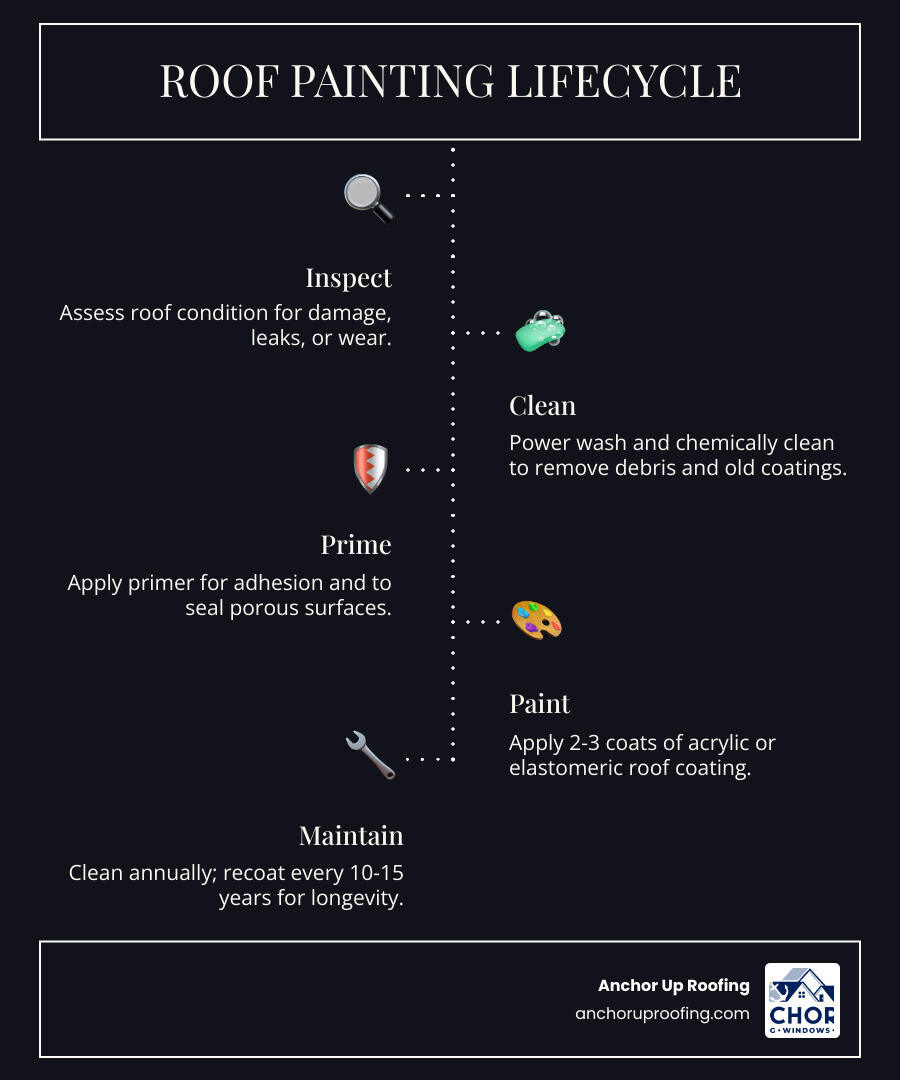
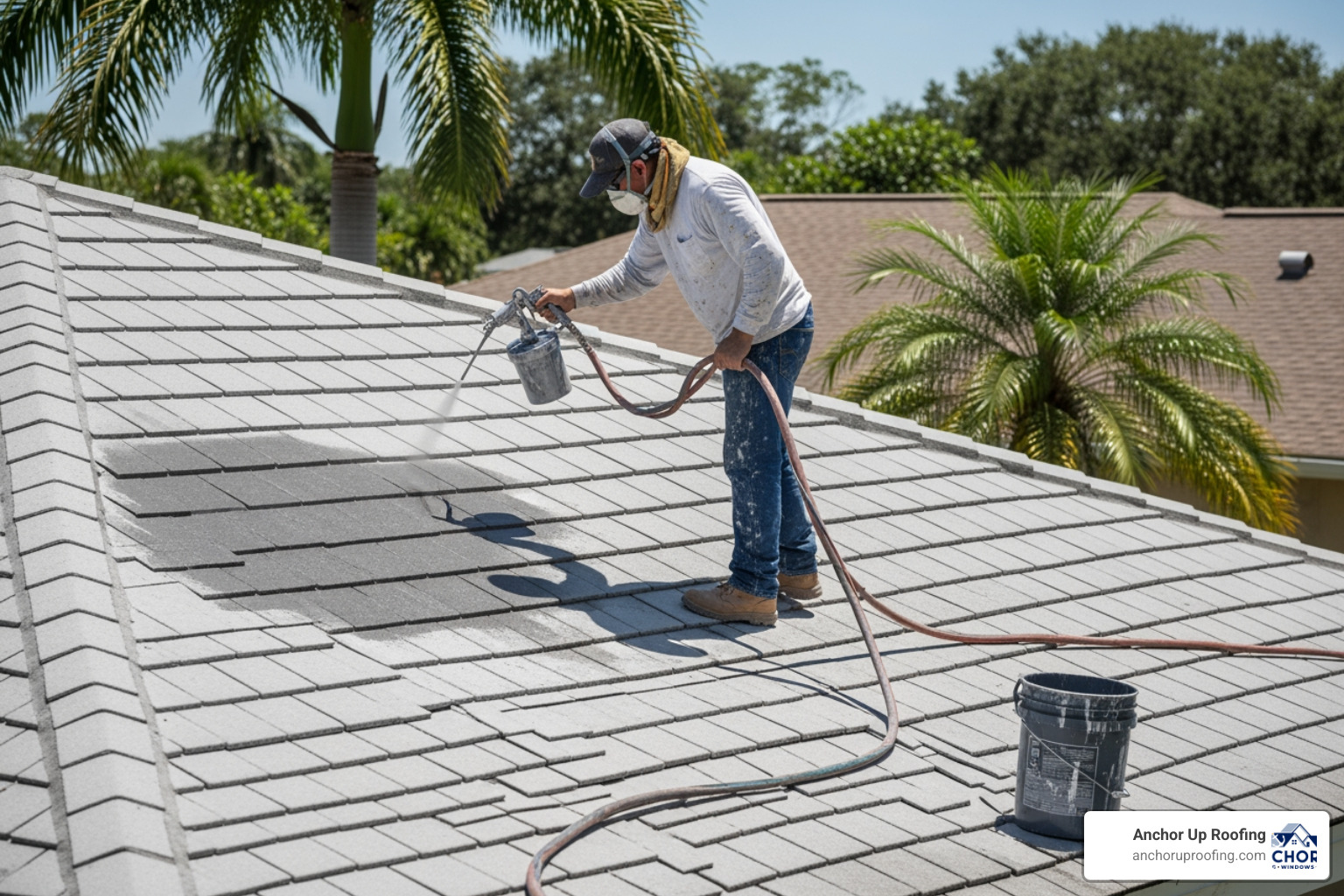
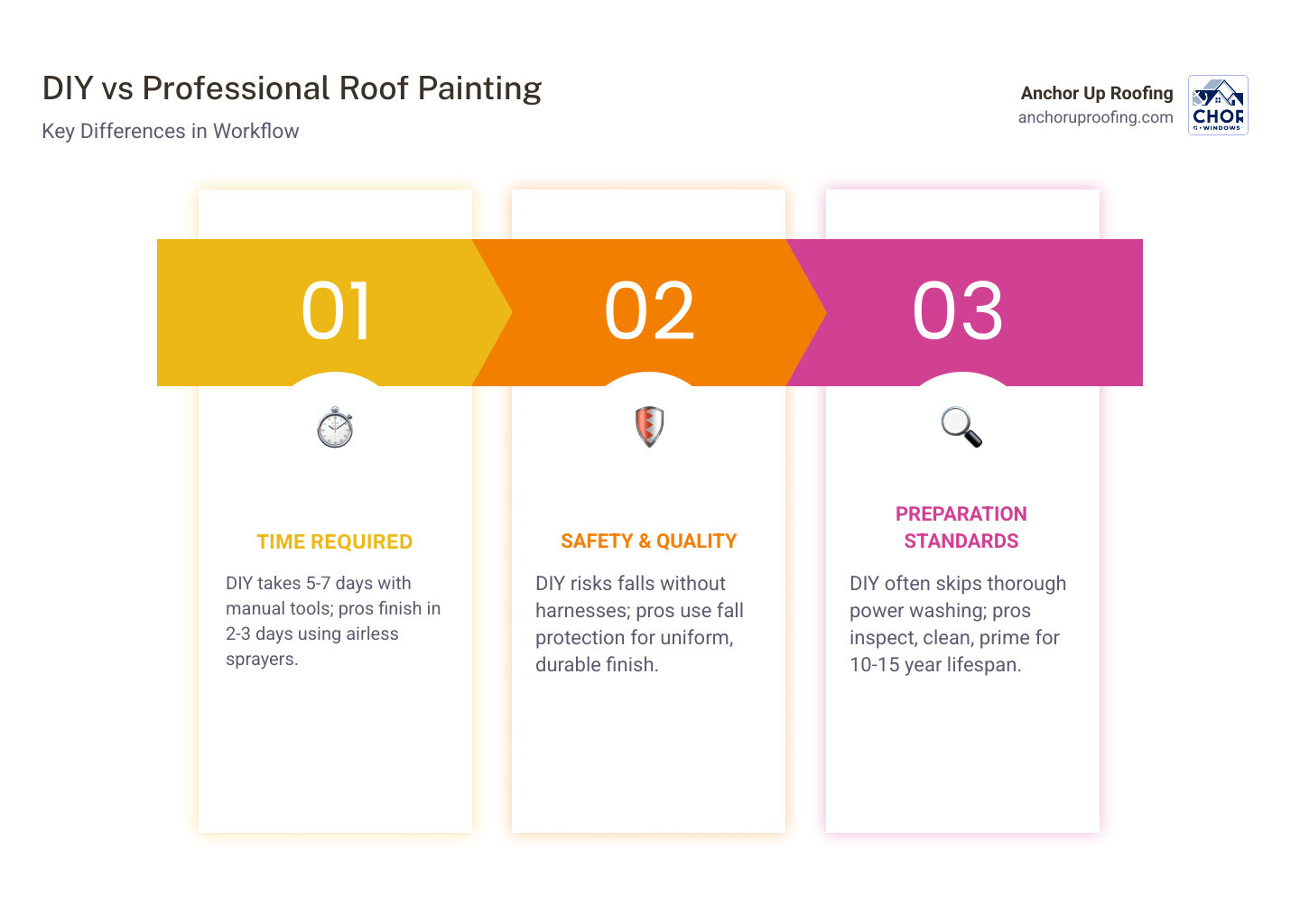
Achieving a professional-grade finish requires more than just a bucket of paint and a brush. In fact, using an airless paint sprayer is the industry standard, as it can complete a project in 2-3 days, whereas manual methods can take nearly a week.
1. Inspection and Repair
Before a single drop of paint is applied, we must ensure the “bones” of the roof are solid. We inspect for cracked tiles, rusted metal, or loose shingles. Painting over damage is a recipe for disaster, as it can trap moisture and accelerate rot.
2. Thorough Cleaning
Preparation is 90% of the job. We typically hire professional power washers to remove dirt, moss, lichen, and old flaking paint. A common cleaning solution involves mixing 1 quart of bleach with 1 gallon of water and a heavy-duty cleaner to kill mold spores. The roof must be rinsed and allowed to dry completely—usually for at least 24 hours.
3. Priming
Once the surface is clean and dry, we apply a primer compatible with both the roof material and the topcoat. This creates a stable base and ensures the paint adheres properly. For more technical details on this stage, you can read about roof coating and waterproofing.
4. Application of Topcoats
Using an airless sprayer, we apply at least two coats of paint. We start at the peak and work downward, overlapping strokes by 3-4 inches to ensure uniform coverage. It is vital to work on sunny, non-windy days to prevent overspray and ensure proper drying. Most professional coatings require at least 2 hours of dry time between layers.
5. Edge Detailing and Sealing
After the main areas are sprayed, we use brushes for touch-ups around vents, skylights, and chimneys. Finally, a clear sealant may be applied to provide an extra layer of protection against salt-air corrosion and UV fading.
Essential Safety Precautions for Roof Painting
We cannot stress this enough: roof work is dangerous. If you are attempting a DIY project, you must use a safety harness secured to a roof bracket. Non-slip shoes are mandatory, as even a dry roof can be slick once paint or cleaning solutions are applied. Always monitor the weather; a sudden Florida afternoon thunderstorm can turn a safe project into a life-threatening situation in minutes. Professional crews use specialized fall protection and are trained to navigate steep slopes safely.
When you factor in the 10–15 year lifespan of a professional application versus the potential 3–5 year life of a DIY job (due to common prep mistakes), the professional option often pays for itself. Professionals also identify structural weaknesses during the process that a homeowner might miss.

Maintenance, Warranties, and Common Mistakes
Once your roof is painted, a little maintenance goes a long way. We recommend a gentle cleaning with mild detergent twice a year to remove salt deposits and organic growth. This is especially critical for homes in coastal areas like Venice or Pembroke Pines.
Common Mistakes to Avoid
- Using Latex Paint: Never use standard house latex paint on a roof. It traps moisture and can lead to mold or rot. Always use specialized roof coatings.
- Skipping the Primer: Without primer, paint will peel and flake within a year.
- Painting in High Humidity: If the humidity is too high, the paint won’t bond correctly.
- Ignoring Repairs: Painting over a leak doesn’t fix the leak; it just hides it until the damage becomes catastrophic.
Warranties and Insurance
Does painting your roof affect your insurance? Generally, it’s seen as a positive maintenance step that can even help with policy renewals by showing the roof is well-cared for. However, always check with your manufacturer; some specific shingle warranties may be affected by certain coatings. Most professional jobs come with a workmanship warranty, and high-quality products often offer a 10-year manufacturer warranty against fading or peeling. For more on how painting fits into your overall home care, see our guide on house painting.
Frequently Asked Questions about Roof Painting
How long does roof paint last?
With professional application and high-quality materials, you can expect a roof painting job to last between 10 and 15 years. Factors like extreme UV exposure in Miami or heavy salt spray in the Florida Keys may shorten this slightly, while regular maintenance can extend it.
Does painting a roof void the warranty?
In most cases, no—provided you use a coating specifically designed for that material (like the “Colored Shingle” acrylics for asphalt). However, we always recommend reviewing the fine print of your existing roof warranty before proceeding. Using the wrong type of paint (like oil-based on certain shingles) can definitely cause issues.
What are the best alternatives to painting?
If your roof isn’t a candidate for paint, you might consider silicone coatings for flat roofs or rejuvenation treatments for asphalt shingles. Shingle rejuvenation can extend the life of your roof by up to 5 years per application by restoring the essential oils in the asphalt. If you’re unsure which path is right for you, we recommend you schedule a roof inspection to get an expert opinion.
Conclusion
At Anchor Up Roofing, we believe your roof is your home’s first line of defense. Whether you are in Hialeah, Doral, or Naples, roof painting is a smart, veteran-approved way to protect your investment, slash your energy bills, and make your neighbors jealous of your home’s fresh new look.
With over 20 years of experience and a commitment to 5-star service, our team is ready to help you decide if a roof coating is the right move for your property. We offer 100% financing to make your home improvement goals a reality today.
Ready to transform your home? Schedule your professional roof painting with the experts at Anchor Up Roofing today!