

Why Impact Window Replacement Is One of the Smartest Investments a Florida Homeowner Can Make
If you’re weighing the cost of impact window replacement, here’s a quick summary of what you need to know:
| Question | Quick Answer |
|---|---|
| How much can you save on insurance? | 15–45% in premium discounts after a Wind Mitigation Inspection |
| Do they save energy? | Yes — up to 25–30% reduction in cooling costs |
| How long do they last? | 20–30 years with basic maintenance |
| Are they required in Florida? | Yes, in wind-borne debris regions like Miami-Dade and Broward |
| Do they add home value? | Yes — up to 10% increase in resale value |
Living in South Florida means hurricane season is never far from your mind. But impact window replacement does far more than protect your home during a storm — it quietly works year-round to lower your energy bills, block UV rays, reduce noise, deter break-ins, and potentially cut your insurance premiums by thousands of dollars.
The challenge? It’s a significant investment, and the costs, codes, and choices can feel overwhelming. Window sizes, frame materials, glass packages, permits, contractor quality — there’s a lot to sort through before you sign anything.
This guide breaks it all down in plain language so you can make a confident, informed decision.
I’m Oscar Perez, founder of Anchor Up Roofing, a veteran-owned exterior construction company serving homeowners across South Florida — and impact window replacement is one of our core specialties. With years of hands-on installation experience across Miami-Dade, Broward, Palm Beach, and beyond, I’ve helped hundreds of Florida homeowners navigate this exact decision.
What Impact Windows Are and Why Impact Window Replacement Matters
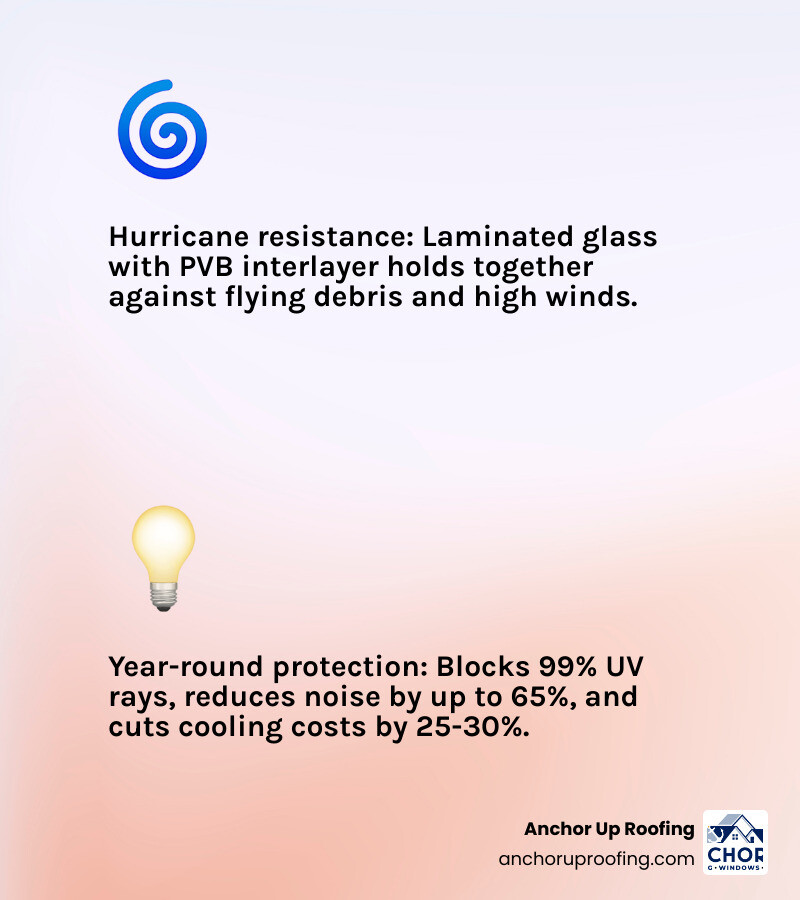
Impact windows are specially engineered window systems built to stay in place when severe weather hits. Unlike standard windows, they are designed around laminated glass, a tough interlayer, stronger frames, and installation methods that help preserve the home’s protective shell.
In simple terms: a regular window may shatter and leave a dangerous opening. An impact window may crack under extreme force, but the glass is designed to remain bonded together and anchored in the frame.
That matters in South Florida, where wind, debris, rain, salt air, sun, and code requirements all put more stress on windows than in many other parts of the country.
What makes impact windows different from standard windows
The biggest difference is the glass package.
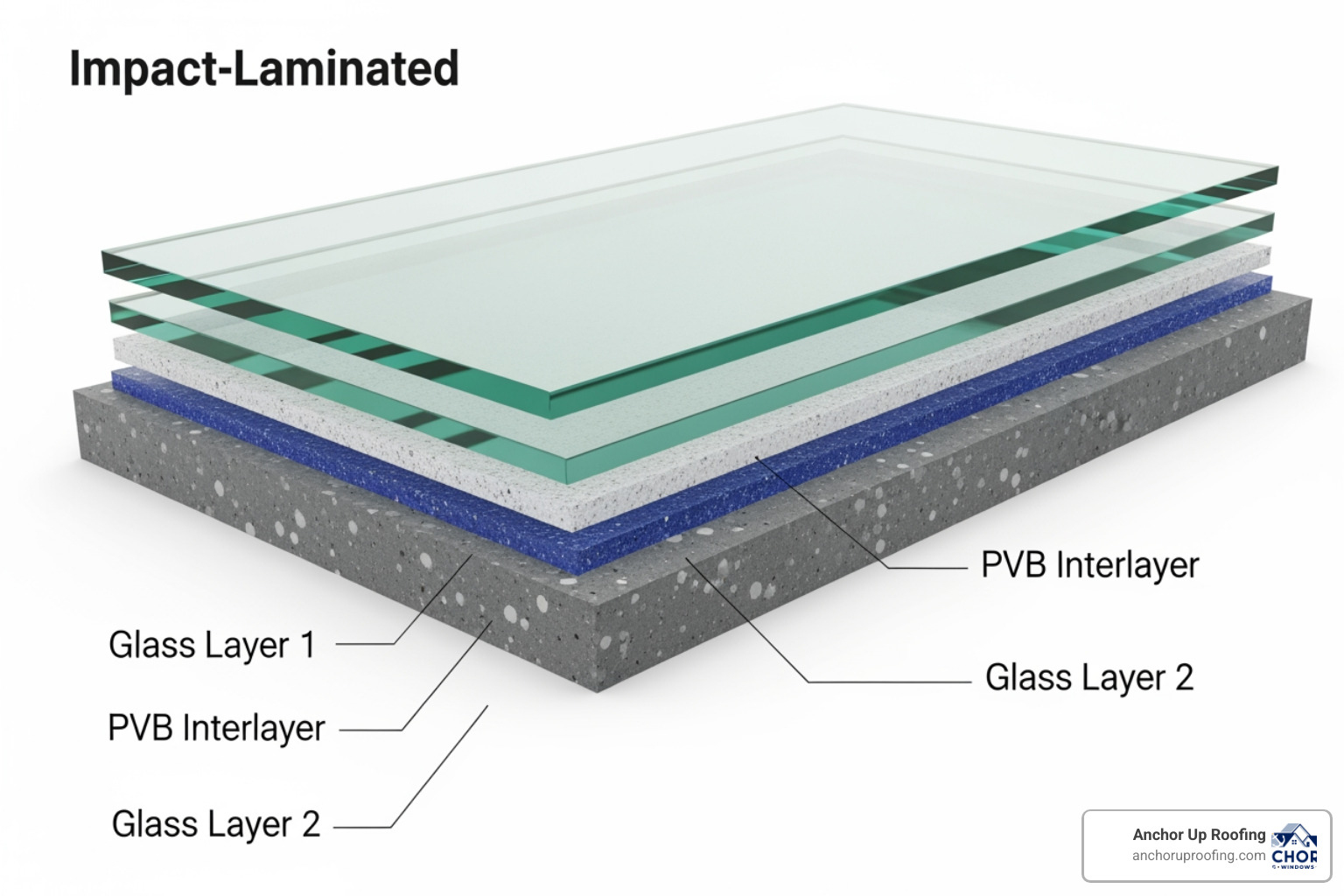
Standard windows usually use basic annealed or tempered glass. Impact windows use laminated glass made from multiple layers bonded together with an interlayer, commonly PVB. That interlayer helps hold the glass together even after impact.
Other differences include:
- Reinforced frames, often vinyl or aluminum
- Stronger anchoring systems
- Better seals against air and water
- Testing for wind pressure and debris impact
- Product approvals for Florida code compliance
Many impact windows also include extras like low-E coatings, insulated glass, and argon gas fills for better efficiency.
How impact window replacement protects the home’s envelope
During a hurricane, the goal is not just to stop broken glass. It is to keep the home’s envelope intact.
If a window fails completely, wind can rush inside, pressure can build, rain can enter, and interior damage can escalate fast. That is why impact windows are so valuable. Even if the outer layer cracks, the laminated system helps prevent a full breach.
This helps reduce:
- Flying debris penetration
- Sudden pressure changes inside the house
- Wind-driven rain intrusion
- Damage to walls, flooring, and furnishings
- Risk of structural failure caused by breached openings
For many homeowners, this is the heart of impact window replacement: keeping the home sealed when conditions get ugly.
Where impact window replacement makes the biggest difference
Almost any home can benefit, but we see the biggest improvements in:
- Older homes with original aluminum or builder-grade windows
- First-floor openings, where about 23% of break-ins are accessed through a first-floor window
- Coastal homes exposed to stronger winds and salt air
- Rooms that stay hot, drafty, or noisy
- Homes with fading floors, furniture, or artwork from UV exposure
If you want a deeper overview of products and options, see our impact window services.
Benefits of Impact Window Replacement Beyond Hurricane Protection
Most people start researching impact windows because of storms. Fair enough. Hurricanes are persuasive. But the day-to-day benefits are what make the investment feel worthwhile all year.
Energy savings, indoor comfort, and lower HVAC strain
Windows are one of the biggest weak spots in a home’s thermal performance. Research shows about 25% of home heating and cooling energy use can be lost through windows.
A quality impact window replacement can help by combining:
- Laminated insulated glass
- Low-E coatings
- Better frame insulation
- Tighter seals
- Reduced solar heat gain
Some products can reduce solar heat gain by about 70%, and replacement impact windows may cut cooling costs by at least 25% in hot climates like South Florida. That can make rooms feel more even, reduce hot spots near windows, and ease the workload on your AC system.
In a Florida summer, that is not a luxury. That is survival with a thermostat.
Noise reduction, UV protection, and everyday security
Impact windows are also great at filtering the world when the world is being a little too loud.
Laminated glass helps absorb and reduce outside sound, with estimates around 65% reduction in exterior noise in many residential settings. If you live near traffic, schools, airports, or busy neighborhood streets, that difference is very noticeable.
They also block most harmful UV rays. Research commonly cites 95% to 99% UV blockage, which helps protect:
- Flooring
- Furniture
- Curtains
- Artwork
- Cabinets
Then there is security. Because the glass is harder to break through and remains adhered to the interlayer, impact windows can slow or discourage forced entry. That matters when first-floor windows are a common access point in break-ins.

Home value, insurance savings, and long-term ROI
Impact windows can improve resale appeal, especially in South Florida markets where buyers understand storm risk. Research suggests homes may see up to a 10% increase in value from this type of upgrade, though actual results depend on neighborhood, product quality, and overall home condition.
Insurance savings can also be substantial. In Florida, premium discounts after installation and documentation may range from 15% to 45%, especially when impact protection is paired with other wind-mitigation features.
And because quality impact windows often last 20 to 30 years or more, the value builds over time through:
- Lower cooling costs
- Insurance credits
- Reduced maintenance compared with aging windows
- Better security
- Improved resale marketability
If budget is the main question, our financing options can help make the timing more manageable.
This is usually the first question, and understandably so.
In 2026, most homeowners in South Florida can expect impact window replacement to cost about 20% to 40% more than standard window replacement.
Retail browsing may show some impact-resistant products at much lower prices, but that usually reflects product-only pricing, not full replacement with labor, permit handling, trim work, sealants, inspections, and disposal.
Factors that affect the cost of impact window replacement
Pricing varies because no two homes are exactly alike. The biggest cost drivers are:
- Window size
- Number of openings
- Custom shapes like arches or circles
- Frame material
- Glass package and energy upgrades
- Second-story or difficult access
- Removal of old frames and interior/exterior repairs
- Permit fees and inspections
- Code-related anchoring or buck work
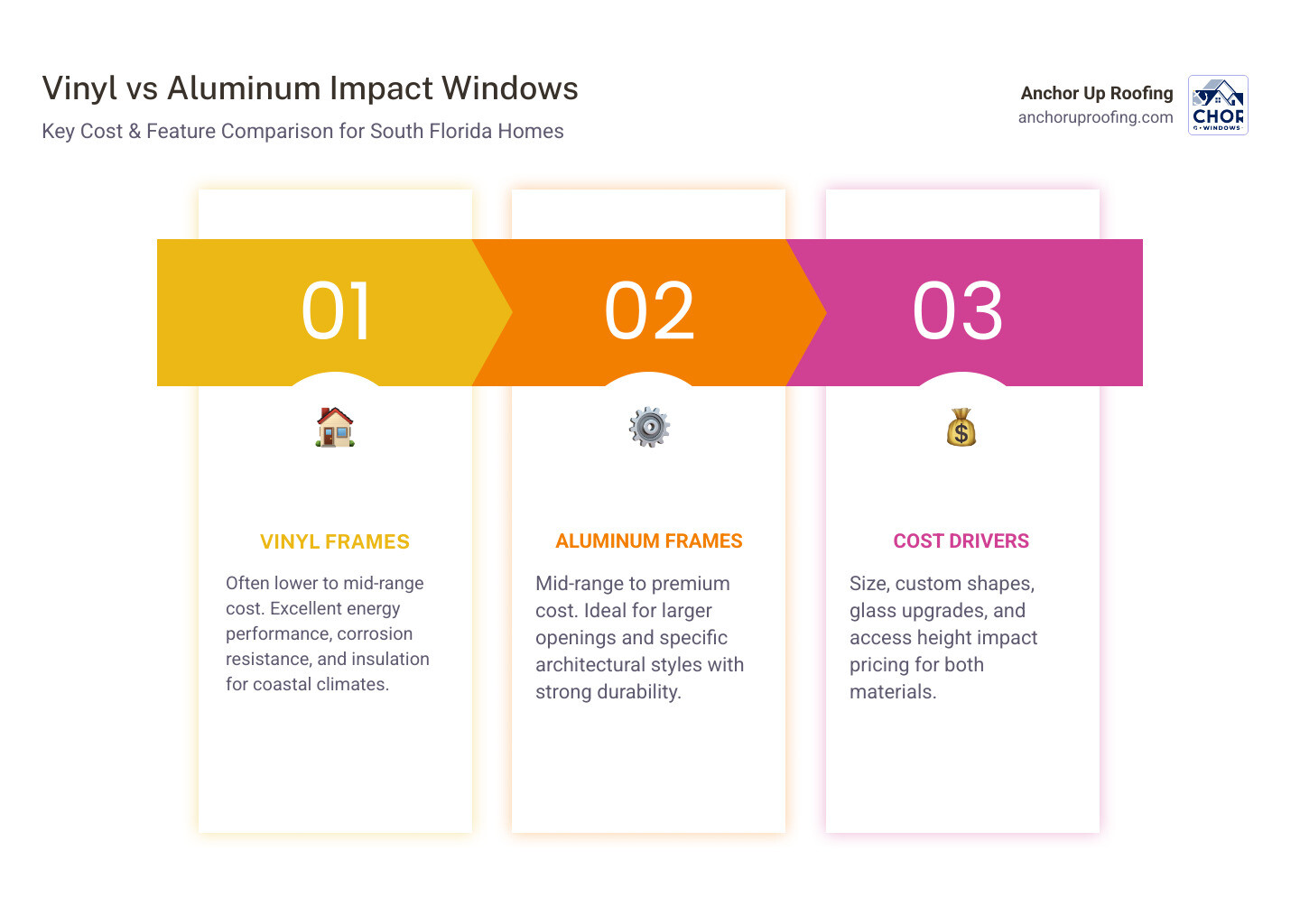
In general, vinyl often offers strong energy performance and corrosion resistance, while aluminum can be a good fit for certain architectural styles and larger openings.
A simple comparison:
| Feature | Vinyl Impact Windows | Aluminum Impact Windows |
|---|---|---|
| Typical cost | Often lower to mid-range | Often mid-range to premium |
| Energy efficiency | Excellent | Good, varies by thermal design |
| Coastal corrosion resistance | Very good | Good with proper finish, but maintenance matters |
| Appearance | Thicker frame profile | Slimmer frame profile |
| Common use | Residential replacement | Modern homes, larger openings |
Insurance discounts, tax credits, and financing options
Insurance discounts are one of the biggest cost offsets. In Florida, insurers often require proof such as:
- Product approvals
- Permit records
- Final inspection
- Wind Mitigation Inspection report
That report is usually what helps trigger credits on the policy.
Tax credits are more limited and depend on current federal or local rules tied to energy-efficient products. Some impact windows with qualifying efficiency ratings may help, but homeowners should confirm current 2026 eligibility with a tax professional before counting on it.
Financing can bridge the gap if you want protection now rather than after the next named storm already has a cute title and a bad attitude. We offer solutions designed to help homeowners move forward without delaying needed improvements.
How to Choose the Right Impact Windows for Your Home
Not all impact windows are equal. The right choice depends on your home’s location, exposure, design, and budget.
Best frame and glass options for Florida homes
For South Florida homes, we usually recommend focusing on durability, efficiency, and code approval first.
Key choices include:
- Vinyl frames: energy efficient, low maintenance, and resistant to corrosion
- Aluminum frames: strong and often slimmer-looking, good for certain modern styles
- Double-pane laminated glass: common for efficiency and impact resistance
- Low-E coatings: help reduce heat transfer
- Argon-filled insulated glass: can improve thermal performance
- Laminated insulated glass: combines storm protection with better comfort and noise control
In coastal areas like Miami-Dade, Broward, Naples, Fort Myers, Sarasota, and Homestead, salt exposure matters too. Materials and finishes should be selected with coastal durability in mind.
Certifications, warranties, and approvals to look for
This part is easy to overlook and expensive to ignore.
Look for products with:
- Miami-Dade Notice of Acceptance where applicable
- Compliance with Florida Building Code
- HVHZ approvals for Miami-Dade and Broward when required
- ASTM testing for impact, pressure, and forced entry resistance
- NFRC labels for thermal performance
- Energy Star labeling when relevant to the product and climate zone
- Transferable manufacturer warranties
- Clear workmanship warranties from the installer
Miami-Dade approvals are especially important in South Florida because they are widely viewed as one of the strictest benchmarks for hurricane performance. For homeowners who want to review broader information on efficient window labeling and ratings, the ENERGY STAR residential windows guide is a useful non-competitor reference.
Impact windows vs shutters, plywood, and other storm protection
Shutters and plywood can still play a role, but they are not the same as replacing the window system itself.
Impact windows offer:
- Protection 24/7, not just when deployed
- Natural light during storm prep
- No hauling, storing, or ladder-climbing
- Daily energy, noise, and security benefits
- Better resale appeal
Shutters can be useful as an added layer, but they do not improve comfort, reduce fading, or help nearly as much with noise and convenience. Plywood is the most temporary option and offers none of the year-round value.
For a deeper comparison, read our guide on impact windows vs hurricane shutters.
The Installation Process, Building Codes, and Contractor Selection
Even the best window can underperform if installed poorly. Product quality matters, but installation quality is what makes the system work as designed.
How impact window replacement is installed from estimate to final inspection
A professional installation usually follows these steps:
- In-home consultation and measurements
- Product selection and quote
- Permit application
- Ordering and scheduling
- Removal of old windows
- Prep of the opening
- Anchoring and setting the new window
- Sealing, flashing, and finishing
- Cleanup
- Final inspection
Most residential projects are completed in one to three days once materials are ready, though larger homes can take longer.
Important installation details include:
- Correct fasteners
- Structural attachment to the opening
- Proper sealants
- Water management
- Code-compliant spacing and anchoring
Where impact windows are required by code
In Florida, code requirements depend on location and exposure. In wind-borne debris regions, opening protection is required for many new construction and replacement situations.
For our service areas, this is especially relevant in:
- Miami-Dade
- Broward
- Other coastal South Florida jurisdictions
Miami-Dade and Broward are in the High-Velocity Hurricane Zone, where requirements are particularly strict. Replacement work may need approved products, permits, inspections, and documented compliance with local codes.
If you want a side-by-side look at how code and performance differ from conventional products, see impact window installation vs regular windows.
How to hire a reliable contractor for impact window replacement
Choosing the installer is just as important as choosing the window.
We recommend looking for a contractor who can show:
- Proper Florida licensing
- General liability and workers’ comp insurance
- Experience with South Florida code requirements
- Clear written estimates
- Permit handling
- Product approval documentation
- Strong local reviews
- Warranty support after the job
- Lead-safe practices where older homes are involved
As a veteran-owned company with more than 20 years of experience in exterior construction, we believe homeowners deserve clear answers, honest pricing, and professional workmanship from start to finish.
Frequently Asked Questions about Impact Window Replacement
Are impact windows worth the higher upfront cost?
For many Florida homeowners, yes.
They cost more upfront, but they can repay that investment over time through lower cooling costs, insurance discounts, better protection, less noise, improved comfort, stronger security, and higher resale appeal.
If you plan to stay in your home for years, the lifecycle value is usually much better than standard windows plus temporary storm protection.
How long do impact windows last and what maintenance do they need?
Most quality impact windows last 20 to 30 years or more with routine care.
Maintenance is straightforward:
- Clean glass and frames regularly
- Rinse salt residue in coastal areas
- Lubricate hardware annually
- Inspect seals and caulking
- Check tracks and weep holes
- Schedule service if operation becomes difficult
They are durable, but they are not magical. A little upkeep goes a long way.
Can I buy impact windows from a retailer and have them professionally installed?
Yes, in some cases. Retailers do carry impact-resistant window categories, including replacement sizes and certain in-stock options.
That said, many South Florida homes need:
- Custom sizing
- Specific code approvals
- Proper anchoring details
- Permit coordination
- Professional inspection signoff
So even if you source the product elsewhere, professional installation is still critical.
Conclusion
Impact window replacement is not just a storm upgrade. It is a comfort upgrade, a security upgrade, an efficiency upgrade, and often a smart long-term financial move for homes across Miami-Dade, Broward, Naples, Fort Myers, Homestead, Sarasota, and the rest of South Florida.
When done right, impact windows help protect your home during severe weather while also making everyday life quieter, cooler, safer, and easier.
At Anchor Up Roofing, we bring veteran-owned service, South Florida expertise, and financing options that help homeowners move forward with confidence. If you’re ready to explore pricing, product options, and code-compliant installation, learn more about our Hurricane Impact Windows or contact us for a free estimate.