

What You Need to Know Before Starting a Metal Roof Construction Project
Metal roof construction is one of the smartest long-term investments a Florida homeowner can make — but getting it right requires knowing the steps before you start.
Here is a quick overview of how a metal roof is built:
- Inspect and prep the roof deck — fix soft spots, remove protruding nails, and clean the surface
- Install underlayment — lay synthetic or high-temp ice-and-water shield from eave to ridge
- Set eave trim and starter details — establish a square, level reference line
- Lay and fasten the first panel — use the 3-4-5 method to ensure alignment
- Install remaining panels — follow manufacturer fastener patterns; check alignment every few panels
- Flash valleys, walls, and penetrations — seal every transition point against wind-driven rain
- Install ridge caps — use foam closures and sealant for a weather-tight finish
Metal roofs last 50 to 70 years, resist winds up to 140 mph, and can cut cooling costs by 10 to 25% — all critical advantages in Florida’s harsh climate.
But a metal roof installed incorrectly leaks at fasteners, buckles at seams, and can fail inspection. This guide walks you through every stage of the process in plain language, so you know exactly what a quality installation looks like — whether you hire a contractor or want to understand the work being done on your home.
I’m Oscar Perez, founder of Anchor Up Roofing and a retired veteran with years of hands-on experience in metal roof construction across Miami-Dade, Broward, Palm Beach, and Florida’s West Coast. I’ve seen what separates a 50-year roof from one that fails in five, and I’m sharing everything I know in this guide.
Why Homeowners Choose Metal Roof Construction
In May 2026, we are seeing more homeowners than ever trade in their traditional shingles for metal. The reason is simple: durability. While asphalt shingles might need replacement every 15 to 20 years in the Florida sun, metal roof construction provides a legacy solution.
The biggest benefits of metal roof construction
When we talk about the benefits of a metal roof, we aren’t just talking about looks.
- Lifespan: These systems last 50 to 70 years.
- Energy Savings: Because metal reflects solar heat, you can see a 10-25% reduction in cooling costs. Some studies by Florida Power & Light (FPL) show that a painted metal roof can save about 23% annually compared to dark shingles.
- Wind Resistance: Properly installed systems can withstand wind gusts up to 140 mph, which is a game-changer during hurricane season in Miami-Dade or Naples.
- Sustainability: Most panels contain 25-95% recycled content and are 100% recyclable at the end of their life.
- Low Weight: Metal is up to 50% lighter than asphalt, weighing only 40 to 135 pounds per 100 square feet.
| Feature | Metal Roofing | Asphalt Shingles |
|---|---|---|
| Lifespan | 50–70 Years | 15–25 Years |
| Recyclability | 100% | Very Low |
| Wind Rating | Up to 140+ mph | 60–110 mph |
| Weight | Very Light | Heavy |
| Cooling Savings | 10–25% | Minimal |
Main drawbacks and tradeoffs to know first
It’s not all sunshine and rainbows; there are trade-offs. The upfront cost is significantly higher than shingles. You also need to navigate metal roof HOA approval in many South Florida communities, as some associations have strict rules about “industrial” looks. There are also myths about noise—while a metal roof can be louder during a rainstorm, proper insulation and solid decking usually make the sound difference negligible.
Best metal roof types for homes and patios
Choosing the right panel is the first major decision in metal roof construction.
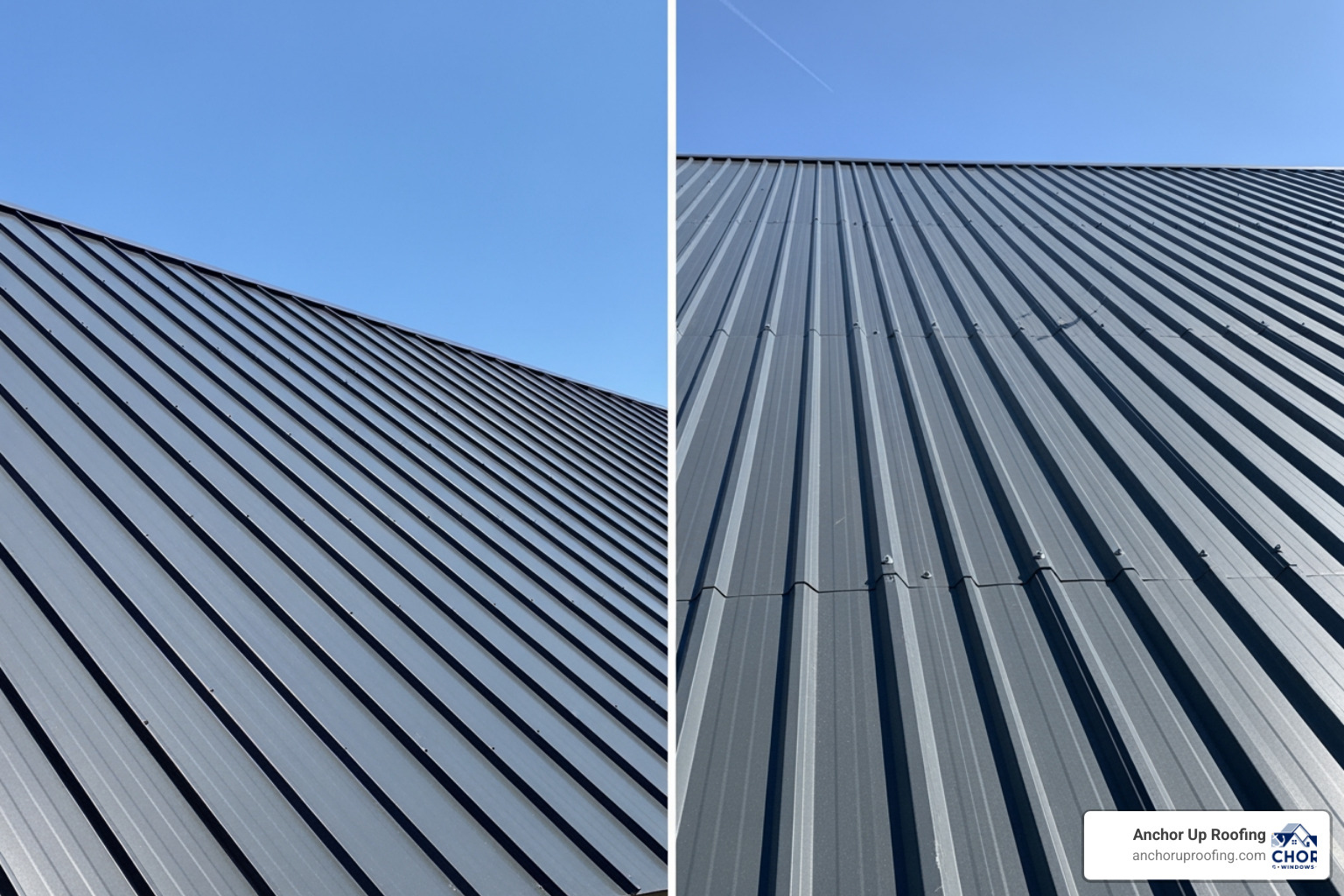
- Standing Seam: The gold standard. The fasteners are hidden (concealed), meaning fewer holes in your roof and better leak protection.
- Corrugated/Ribbed Panels: These use “exposed fasteners” (screws you can see). They are more affordable and popular for metal roof covered patios.
- Modular Panels: These are designed to look like clay tiles or wood shakes but offer the strength of steel.
Planning a Metal Roof Construction Project the Right Way
Success in metal roof construction is 90% planning. If you mismeasure by even an inch, you might end up with a “cumulative error” where your panels look crooked by the time you reach the other side of the house.
How to measure for metal roof construction without costly mistakes
We use the “3-4-5 triangle method” to ensure the first panel is perfectly square. You also need to calculate the “slope factor” based on your roof pitch.
- Squares: Roofing is measured in “squares” (100 square feet).
- Waste Factor: Always order 10-15% extra for cuts and overlaps.
- Panel Length: Order panels in full-length runs from eave to ridge to avoid horizontal seams, which are notorious for leaking.
Can you install metal roofing over shingles?
Can you switch from shingles to metal roofing without a tear-off? Usually, yes—if there is only one layer of shingles and the underlying wood deck is in good shape. We often use 1×4 furring strips to create an airspace between the old shingles and the new metal. However, if the deck is rotting, a full tear-off is mandatory to ensure the fasteners actually have something to grip.
Codes, permits, and standards that matter
In Florida, you cannot skip the permit. High-velocity hurricane zones (HVHZ) like Broward and Miami-Dade have the strictest codes in the country. You should always follow MCA roofing installation guidelines to ensure the system meets “Cool Roof” ratings and insurance requirements.
Materials and Tools You Need Before Installation
Choosing the best metal roofing material for your climate
When deciding metal vs tile roofing, material choice is key for longevity.
- Galvalume Steel: Offers 30-50 years of protection. Great for inland homes.
- Aluminum: The best choice for coastal areas like Fort Myers or Sarasota because it doesn’t rust in salt air.
- Copper & Zinc: Premium options that can last 100-200 years but come with a much higher price tag.
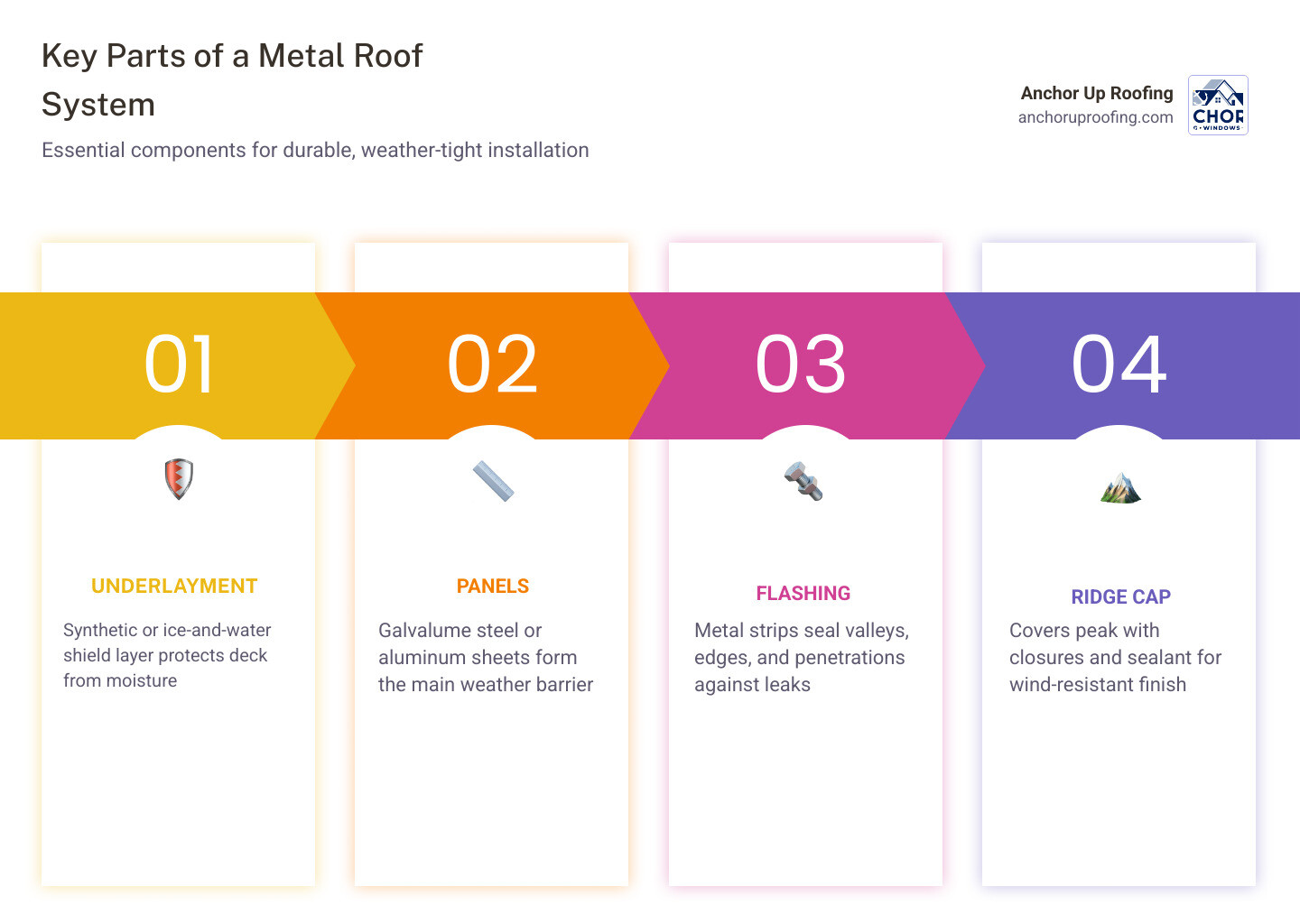
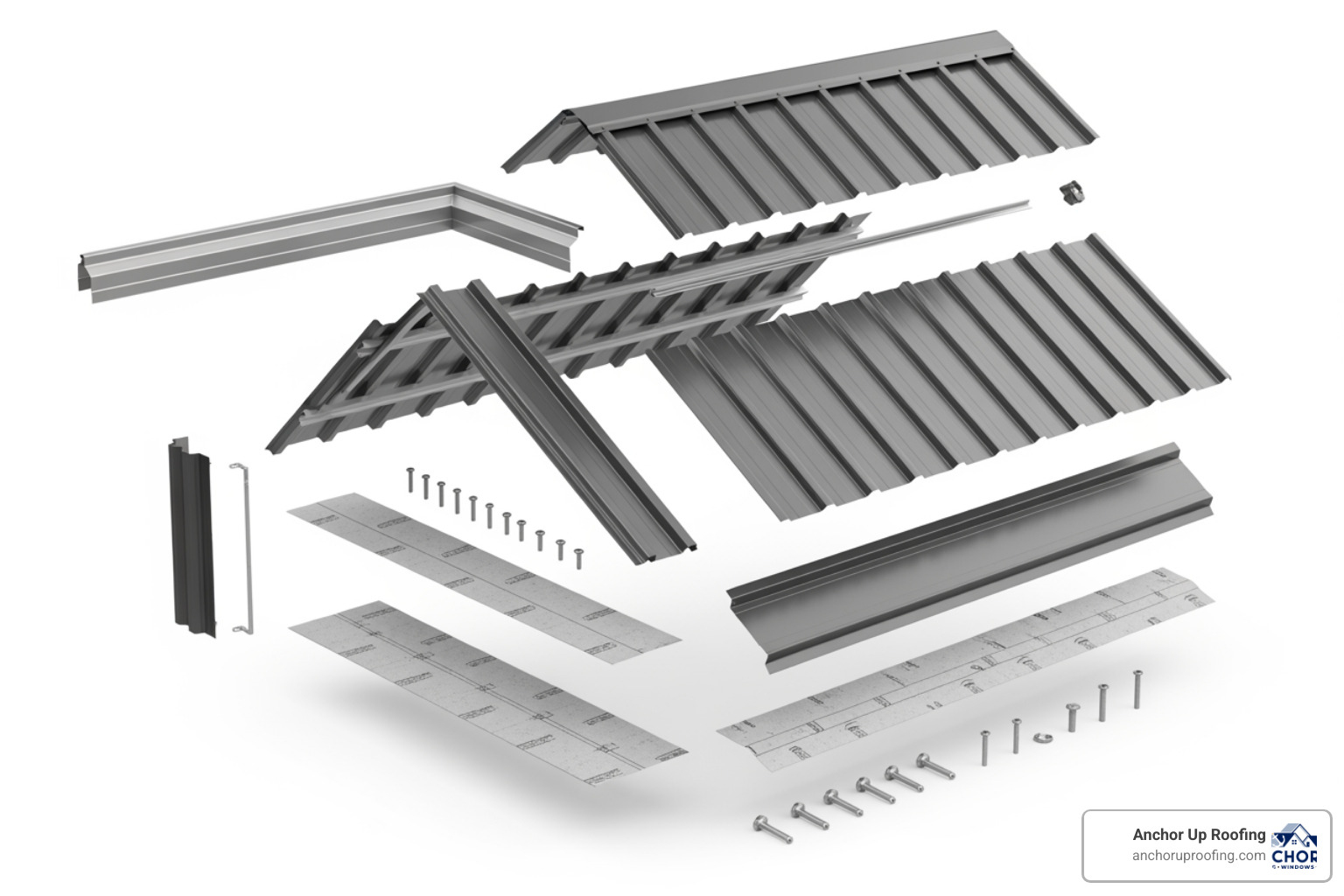
Essential parts of a complete metal roof system
A roof is more than just panels. You need:
- Synthetic Underlayment: A breathable, water-resistant barrier.
- High-Temp Ice and Water Shield: Critical for valleys and eaves.
- Closure Strips: Foam inserts that block bugs and wind-driven rain from getting under the ribs.
- Butyl Tape/Sealant: For sealing laps and transitions.
Must-have tools and safety equipment
Don’t reach for an angle grinder! The heat from a grinder damages the protective coating on the metal, leading to rust. Use aviation snips or a circular saw with a dedicated metal-cutting blade. You’ll also need a magnetic sweeper to pick up metal shavings, which can cause rust stains on your new roof within 24 hours if left behind.
Step-by-Step Metal Roof Construction and Installation
Prepare the roof deck and underlayment
Before the first panel goes down, the deck must be pristine. We inspect for soft spots and “telegraphing” (where bumps in the wood show through the metal). Install your synthetic underlayment starting at the eave and overlapping by at least 6 inches as you move up. You can find more details on how to install metal roofing at major retailers, but the key is a wrinkle-free surface.
Install trim, starter details, and the first panel
The eave trim (drip edge) goes on first. In warm climates like South Florida, we typically install the eave trim under the underlayment. Once the trim is set, snap a chalk line to ensure your first panel is perfectly square.
Fasten panels correctly and allow for expansion
This is where most DIYers fail. Metal expands and contracts with the Florida heat.
- Fastener Torque: Screws should be snug, with the neoprene washer slightly “mushroomed.” If you crush the washer, it will crack and leak in 2-3 years.
- Pattern: Follow the manufacturer’s specific screw pattern (usually every 24 inches).
Flash valleys, walls, penetrations, and ridge caps
Valleys are the most vulnerable part of any roof. We recommend “open valleys” for easier cleaning. For pipe boots and chimneys, always use custom metal flashing rather than generic rubber boots whenever possible. Finally, apply a continuous bead of sealant on top of your foam closure strips before setting the ridge cap. For a deeper technical dive, check out this contractor’s guide to metal panels.
How to build a metal roof covered patio
With the 55% surge in patio demand we’ve seen recently, many homeowners are building their own. The process involves framing the structure with a slight slope (at least 3:12 pitch), attaching a ledger board to the house, and using corrugated panels for a lightweight, durable cover.
Common Metal Roof Construction Mistakes, Safety Rules, and Maintenance
The most common installation mistakes and how to avoid them
- Overdriving Screws: Crushing the washer is the #1 cause of leaks.
- Incompatible Metals: Never let copper touch steel or aluminum; it causes “galvanic corrosion.”
- Skipping Closures: Without foam closures, your attic becomes a hotel for bats and bees.
Safety precautions for roof work
OSHA requires fall protection for any work over 6 feet. Always use a harness and never work on a metal roof when it’s wet—it becomes as slippery as an ice rink.
DIY vs professional installation: when to call an expert
If you are using exposed fastener panels for a shed or patio, it’s a great DIY project. However, best residential metal roofing options like standing seam require specialized seaming tools and experience. A mistake on a standing seam system can cost thousands to fix.
How to maintain a metal roof for 50+ years
We recommend low maintenance metal roofs in South Florida because they don’t require much work. Simply:
- Clean gutters twice a year.
- Remove debris (leaves/branches) that trap moisture.
- Inspect fasteners every 5-10 years to ensure washers haven’t dried out.
Costs, Energy Efficiency, and Frequently Asked Questions
How metal roofing improves energy efficiency and sustainability
Does metal roofing improve home energy efficiency? Absolutely. By reflecting solar heat, these roofs can reduce cooling energy by up to 40% in some buildings. This is why they are often referred to as “Cool Roofs.”
Is metal roof construction worth it in hurricane-prone climates?
Yes. Between the wind resistance and the potential for insurance premium discounts, metal is the gold standard for Florida’s East and West Coasts.
What is the minimum roof pitch for metal roofing?
Most ribbed panels require a minimum pitch of 3:12. If your roof is flatter than that, you must use a standing seam system with mechanical seaming to prevent water from backing up under the laps.
Conclusion
Metal roof construction is a complex but rewarding process. Whether you’re building a new patio in Hialeah or reroofing a coastal home in Naples, understanding these steps ensures your home stays protected for decades.
At Anchor Up Roofing, we bring over 20 years of experience to every project. As a retired veteran-owned business, we pride ourselves on precision, 5-star service, and helping our neighbors across South Florida navigate the roofing process with 100% financing options.
Ready to upgrade? Explore our metal roofing services today and let’s build something that lasts.