
What You Need to Know About Florida East Coast Storm Repair
Florida East Coast storm repair is urgent work — and the clock starts the moment a hurricane or tropical storm clears your area.
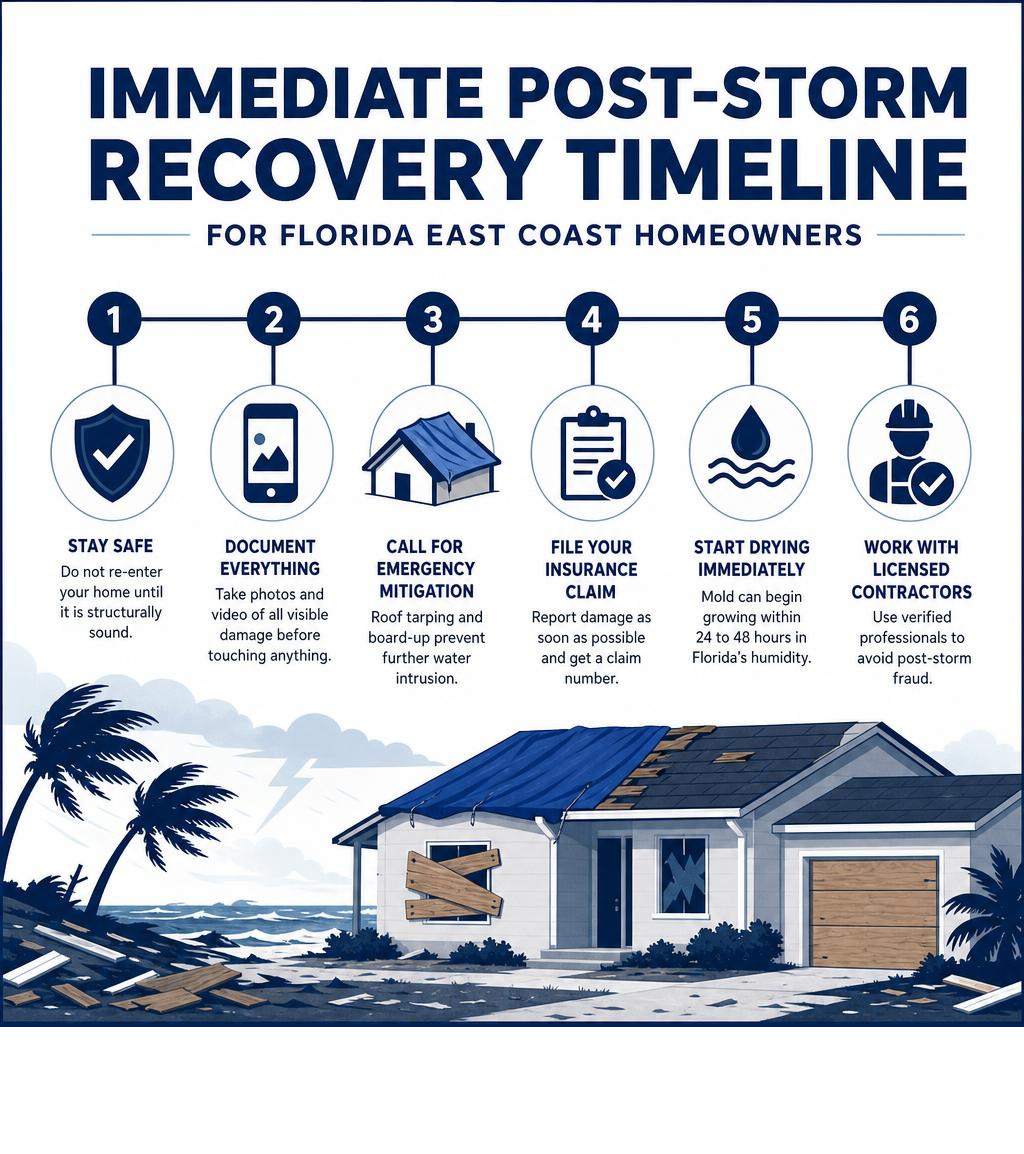
Here’s what to do immediately after a storm damages your property:
- Stay safe — Do not re-enter your home until it is structurally sound
- Document everything — Take photos and video of all visible damage before touching anything
- Call for emergency mitigation — Roof tarping and board-up prevent further water intrusion
- File your insurance claim — Report damage as soon as possible and get a claim number
- Start drying immediately — Mold can begin growing within 24 to 48 hours in Florida’s humidity
- Work with licensed contractors — Use verified professionals to avoid post-storm fraud
Florida’s hurricane season runs from June through November, and storms along the East Coast can cause a wide range of damage — from missing roof shingles and wind-driven rain intrusion to full structural failure from storm surge. After major events like Hurricanes Ian, Helene, and Milton, hundreds of thousands of homeowners faced the same overwhelming question: where do I even start?
This guide walks you through the full recovery process clearly and simply.
I’m Oscar Perez, founder of Anchor Up Roofing and a retired veteran with years of hands-on experience in Florida East Coast storm repair, roofing, and exterior construction across Miami-Dade, Broward, Palm Beach, and surrounding areas. I’ve helped countless homeowners navigate the chaos after a storm — from emergency tarping to full roof replacement — and this guide reflects what I’ve seen work in the field.
Common Types of Damage and Florida East Coast Storm Repair

Storm damage in South Florida rarely shows up as one neat problem. More often, it is a chain reaction.
A hurricane may lift shingles, crack tiles, push rain under flashing, flood the attic, soak insulation, stain drywall, and create conditions for mold. A tropical storm may not make national headlines, but it can still leave a flat roof holding water, gutters twisted, soffit panels missing, and windows leaking around the frame.
Along Florida’s East Coast, the most common damage we see includes:
- Lifted, missing, or cracked shingles
- Broken clay or concrete roof tiles
- Metal roof panel movement or fastener damage
- Flat roof membrane punctures, ponding, and seam failures
- Wind-driven rain entering through roof edges, vents, windows, and doors
- Damaged fascia, soffit, gutters, and downspouts
- Fallen tree limbs and flying debris impacts
- Interior ceiling leaks, wet insulation, and drywall damage
- Window and door failures from pressure, debris, or poor sealing
- Mold growth after water intrusion
- Flooding from storm surge, heavy rain, or drainage backup
Florida’s coast has spent years rebuilding and hardening after major storms. Coverage such as A decade of rebuilding along Florida’s east coast shows how long recovery can last after a major hurricane. The lesson for homeowners is simple: fast emergency action matters, but long-term resilience matters just as much.
Wind Damage and Roof Vulnerabilities
Wind is the most obvious villain in most hurricane stories. It rips, lifts, twists, and throws things that were never meant to fly. Patio chair? Missile. Loose branch? Missile. Neighbor’s old screen enclosure panel? Unfortunately, also missile.
Roof systems are especially vulnerable because wind does not just push down. It creates uplift pressure. That means it can pull at roof edges, corners, ridge caps, vents, flashing, and any weak connection point.
Common wind-related roof problems include:
- Missing shingles or shingles creased by uplift
- Loose or cracked tile pieces
- Exposed underlayment
- Damaged ridge caps
- Lifted metal panels
- Bent or missing flashing
- Damaged roof vents
- Fascia and soffit failure
- Gutter separation
- Fastener pull-out on older systems
The tricky part is that not all wind damage is visible from the ground. A roof can look “mostly fine” and still have compromised waterproofing. That is why we recommend a professional inspection after strong wind events, especially if your home has an older roof or you notice ceiling stains.
If you are trying to decide whether damage is repairable or whether the roof has reached the end of its service life, our guide on signs your roof needs a replacement explains the red flags to watch for.
Roof type matters too:
- Shingle roofs often show missing tabs, curling, granule loss, and lifted edges.
- Tile roofs may have cracked, displaced, or broken tiles, but the deeper issue is often damage to the underlayment below.
- Metal roofs can perform very well in storms when installed correctly, but fasteners, seams, flashing, and panel edges must be checked.
- Flat roofs are vulnerable to punctures, ponding water, clogged drains, and seam separation.
A good storm repair provider should not just replace the visible broken piece. They should evaluate the whole system: decking, underlayment, flashing, ventilation, drainage, edges, and attachment points.
Water Intrusion and Flooding
Water damage is where a bad storm becomes a costly recovery project.
On the coast, water can enter from above, below, and sideways. We see wind-driven rain forced under roof coverings and through weak window seals. Heavy rainfall can overwhelm gutters and roof drains. Storm surge and street flooding can push water into garages, living spaces, and commercial buildings.
The biggest water-related threats are:
- Wet roof decking
- Saturated attic insulation
- Ceiling and wall staining
- Electrical hazards
- Warped flooring
- Cabinet and baseboard swelling
- Mold growth
- Odor problems
- Hidden moisture behind walls
- Structural weakening over time
Flat and low-slope roofs deserve special attention after storms because water can sit on the surface. Ponding water adds weight, finds tiny weaknesses, and can turn a minor membrane issue into an interior leak. If you own a home or commercial building with a flat roof, our guide on how to handle flat roof repairs is a helpful starting point.
Flooding is different from wind-driven rain in one major way: insurance treatment. Wind damage is usually handled under the wind portion of a homeowners policy, while flood damage usually requires separate flood insurance through the NFIP or a private flood policy. More on that below, because yes, insurance can be more confusing than assembling patio furniture in the dark.
The Step-by-Step Storm Damage Recovery Process
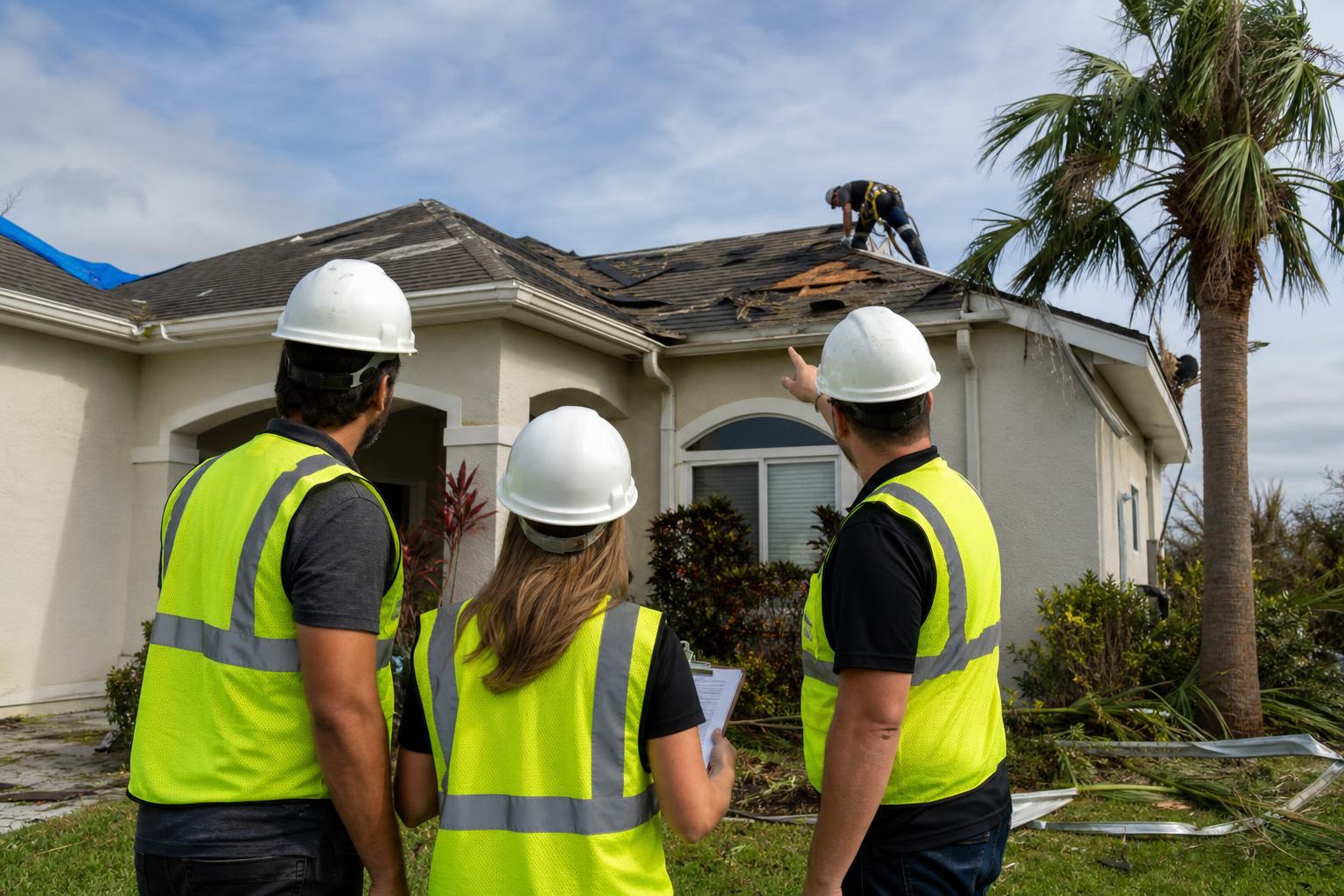
A smooth recovery usually follows a predictable sequence. The exact timeline depends on storm severity, access, insurance approvals, material availability, permitting, and whether the home needs drying or reconstruction.
Here is the general process:
- Emergency stabilization
- Safety inspection
- Damage documentation
- Temporary roof tarping or board-up
- Water extraction and drying
- Debris removal
- Mold prevention or remediation
- Insurance estimate and claim coordination
- Permanent roof, window, gutter, soffit, fascia, or structural repairs
- Final inspection and closeout
For small roof leaks, the process may take days or weeks. For major hurricane damage involving water intrusion, structural repairs, window failures, insulation replacement, and interior restoration, recovery can take much longer. The important thing is to avoid skipping the early mitigation steps.
Immediate Steps for Florida East Coast Storm Repair
Right after a storm, your first job is not to fix everything. Your first job is to stay alive and prevent the damage from getting worse.
Take these steps in order:
Wait until conditions are safe Do not inspect your roof during active winds, lightning, or flooding. Emergency crews generally wait until conditions are safe enough to work.
Check for immediate hazards Look for downed power lines, gas smells, unstable ceilings, standing water near outlets, broken glass, and shifting structural elements.
Do not climb on the roof Wet roofs, cracked tiles, loose decking, and hidden damage can make a roof extremely dangerous. Even if you are “pretty good on a ladder,” this is not the time to audition for a stunt movie.
Document visible damage Take photos and video of the roof from the ground, interior leaks, damaged windows, wet flooring, fallen trees, gutters, personal belongings, and debris impact.
Protect undamaged belongings Move furniture, electronics, documents, and valuables away from active leaks if it is safe.
Call your insurance carrier Report the damage quickly and ask for a claim number. Keep a record of every call, email, and document.
Call licensed contractors for emergency mitigation Tarping, board-up, and temporary dry-in work help prevent additional damage.
Save receipts If you pay for temporary repairs, emergency lodging, supplies, or cleanup, keep receipts and photos.
Preparation before the storm makes recovery easier. We strongly recommend reviewing your roof condition before hurricane season, trimming trees, cleaning gutters, and saving trusted contractor contacts. Our resource on preparing your roof for hurricane season can help you get ahead of the next storm.
Water Extraction and Mold Prevention
If water enters your home, speed matters. In Florida’s humidity, mold can begin developing within 24 to 48 hours after water intrusion. That does not mean your house turns into a science experiment overnight, but it does mean delays can make the project more complex.
A qualified water mitigation team should use professional drying methods such as:
- Moisture meters
- Thermal imaging cameras
- Air movers
- Commercial dehumidifiers
- HEPA filtration where needed
- Containment barriers
- Antimicrobial treatments when appropriate
- Daily moisture monitoring
- Proper removal of unsalvageable materials
For water mitigation and structural drying, look for crews trained in accepted industry standards, including IICRC-based practices. IICRC is widely recognized in the restoration industry for water damage, drying, and remediation training.
The goal is not just to make the room look dry. The goal is to dry the structure. That means checking drywall cavities, baseboards, subflooring, cabinets, insulation, and attic spaces.
If wet materials are sealed up too soon, the home may look repaired while moisture remains trapped. That is how odor, mold, and hidden deterioration begin.
Full Reconstruction and Structural Restoration
Once the property is stabilized and dry, permanent repairs can begin.
Depending on the damage, full restoration may include:
- Roof repair or roof replacement
- Decking replacement
- Underlayment replacement
- Flashing repair
- Tile, shingle, metal, or flat roof system installation
- Hurricane-impact window and door replacement
- Garage door replacement
- Gutter replacement
- Soffit and fascia repair
- Insulation replacement
- Drywall, flooring, and interior restoration
- Structural framing repairs
- Exterior envelope upgrades
At Anchor Up Roofing, we focus on the exterior systems that protect the home from the next storm: roofing, hurricane-impact windows and doors, gutters, soffit and fascia, and insulation. The goal is not just to make the property look normal again. The goal is to make it stronger, drier, and better prepared.
If your home has already been hit, our post-storm repairs resources can help you understand what comes next.
Emergency Mitigation: Tarping, Board-Up, and Contents Restoration
Emergency mitigation is the bridge between the storm and the permanent repair.
It is temporary, but it is not optional. Most insurance policies require homeowners to take reasonable steps to prevent further damage after a covered loss. That means if your roof is open and rain continues to enter, you are expected to mitigate the damage when safe and possible.
Emergency Roof Tarping and Board-Up Services
Roof tarping is used when the roof covering, underlayment, or decking has been compromised. Board-up is used when windows, doors, walls, or other openings are damaged.
You should request emergency tarping or board-up if you have:
- Active ceiling leaks
- Missing roof sections
- Exposed decking
- Fallen tree impact
- Broken skylights
- Wind-lifted shingles or tile
- Damaged roof vents
- Broken windows or doors
- Open wall sections
- Interior water entering through exterior openings
A proper tarp job should be secure, documented, and installed safely. Thin plastic thrown over a roof may not hold through the next rain band. Professional-grade tarping is typically fastened in a way that reduces further water intrusion until permanent repairs can be completed.
Good mitigation should also include photo documentation. Those photos can support your insurance claim and show that you acted responsibly to protect the property.
After emergency tarping, schedule a full inspection. Our guide on when to schedule a residential roofing inspection explains why timing matters after severe weather.
Contents Restoration and Pack-Out Services
When storm water affects belongings, contents restoration becomes part of the recovery plan.
Contents may include:
- Furniture
- Clothing
- Electronics
- Artwork
- Documents
- Rugs
- Appliances
- Business inventory
- Office equipment
- Family keepsakes
A pack-out service typically includes photographing, inventorying, labeling, removing, cleaning, drying, and storing belongings while the building is repaired. For severe losses, contents may be moved to climate-controlled storage to prevent additional humidity damage.
Important steps include:
Document before moving items Take photos and video of damaged belongings in place.
Separate salvageable and unsalvageable items Some items can be cleaned and restored. Others may need to be discarded after documentation.
Protect important documents If paperwork is wet, do not throw it away immediately. Some documents can be dried or digitally preserved.
Ask how inventory is tracked A professional contents process should include item lists, room location, condition notes, and photos.
Coordinate with insurance Your carrier may ask for proof of ownership, condition, and damage.
For businesses, contents restoration can also affect reopening. Damaged equipment, wet records, and unsafe interiors can delay operations even after the roof is patched. That is why commercial storm repair should prioritize both building stabilization and business continuity.
Navigating Insurance Claims and Infrastructure Resiliency
Insurance is one of the most stressful parts of storm recovery. The best approach is to be organized, document everything, and understand the difference between emergency mitigation, covered repairs, exclusions, deductibles, and supplemental claims.
Here is a simple comparison:
| Damage Type | Common Cause | Often Covered By | Important Notes |
|---|---|---|---|
| Wind roof damage | Hurricane or tropical storm winds lift shingles, tile, metal panels, or flashing | Homeowners wind coverage | Many Florida policies include a separate hurricane deductible |
| Wind-driven rain | Rain enters through storm-created roof, window, or exterior damage | Often tied to wind coverage | Coverage depends on policy language and proof of storm-created opening |
| Storm surge flooding | Coastal water pushed inland by a hurricane | Flood insurance, not standard homeowners insurance | Usually requires NFIP or private flood policy |
| Rising water or street flooding | Heavy rain overwhelms drainage and enters from ground level | Flood insurance | Standard homeowners policies commonly exclude flood |
| Interior mold after covered water intrusion | Moisture from roof or exterior storm damage | May be limited or conditional | Fast mitigation and documentation are critical |
| Tree impact | Wind knocks tree or limb onto roof | Often homeowners policy | Coverage varies based on resulting damage and policy terms |
Coordinating with Insurance Providers
Start your claim as soon as possible after damage occurs. Ask for a claim number and write it down. From that point forward, keep everything organized.
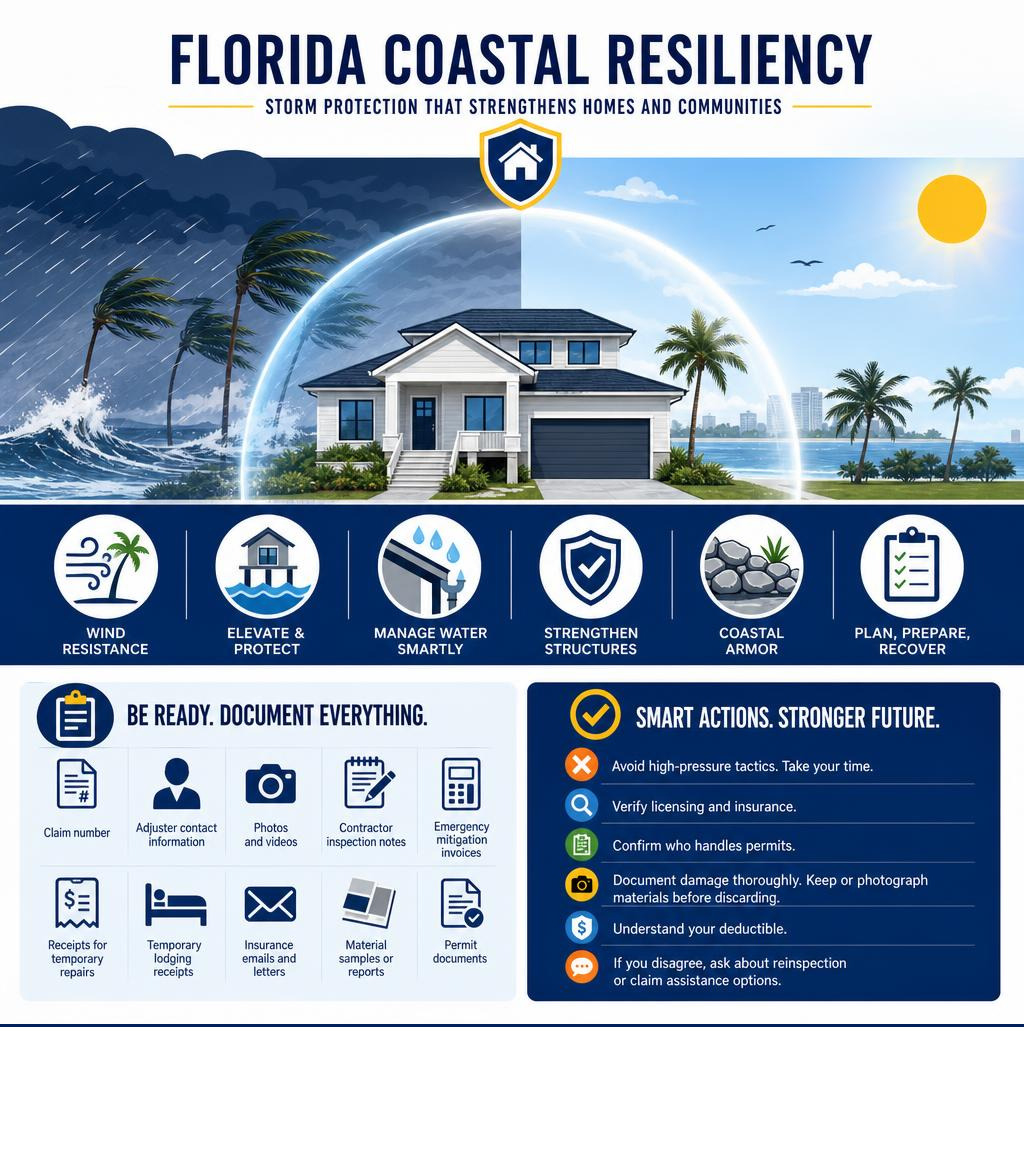
We recommend creating a storm claim folder with:
- Claim number
- Insurance adjuster contact information
- Photos and videos
- Contractor inspection notes
- Emergency mitigation invoices
- Receipts for temporary repairs
- Receipts for temporary lodging if needed
- Emails and letters from the insurance company
- Material samples or reports when available
- Permit documents if repairs require permitting
Many restoration contractors and roofing professionals use estimating platforms commonly accepted in the insurance world, such as Xactimate-style estimating, to help align scopes of work with claim documentation. The key is accuracy: the estimate should reflect the actual damage, code requirements, materials, labor, and hidden conditions discovered during repair.
Sometimes additional damage is found after work begins. For example, a roof may look like it only needs tile replacement, but once tiles are removed, wet decking or failed underlayment may appear. In those cases, a supplemental claim may be needed.
A few insurance tips:
- Do not sign blank contracts.
- Do not let anyone pressure you at the door.
- Verify licensing and insurance.
- Ask who handles permits.
- Ask how storm documentation is prepared.
- Keep damaged materials until your adjuster says they can be discarded, or photograph them thoroughly first.
- Understand your hurricane deductible before work begins.
- If you disagree with the insurance decision, ask about your options, including reinspection or professional claim assistance.
If a storm creates a larger project than expected, financing can also help homeowners move forward while claim details are being finalized. Anchor Up Roofing offers full financing options, and our guide on how to finance your roof replacement explains what to consider.
Applying Infrastructure Resiliency to Residential Properties
Big infrastructure projects can teach homeowners a lot.
After Hurricane Ian damaged the Sanibel Causeway, emergency repairs reopened access in 15 days, and permanent roadway reconstruction reached substantial completion in 105 days. Engineering reports noted major resilience improvements, including steel sheet pile systems, elevated seawalls, large quantities of stone armoring, and better drainage. The project is discussed in detail in How Sanibel Turned Disaster into an Infrastructure Blueprint.
Homeowners are not installing causeway-scale steel sheet pile walls in the backyard, of course. If you are, please invite us over because we have questions. But the principle is the same: rebuild in a way that reduces future failure.
For residential properties, resilience may include:
- Upgrading to a stronger roofing system
- Improving roof attachment and edge metal details
- Replacing aged underlayment
- Installing hurricane-impact windows and doors
- Upgrading garage doors
- Improving attic ventilation
- Replacing damaged soffit and fascia
- Improving drainage away from the home
- Cleaning and upgrading gutters
- Elevating vulnerable mechanical equipment where appropriate
- Using water-resistant materials in flood-prone areas
- Removing weak trees or limbs near the home
- Reviewing insurance coverage before hurricane season
Impact protection is one of the biggest upgrades for coastal homes. Broken windows and failed doors can allow wind and rain inside, increasing internal pressure and water damage. If you are comparing options, our guide to hurricane impact windows explains the difference between impact windows and shutters.
The best time to harden your home is before the next named storm appears on the map. The second-best time is during the repair process, while materials are already being replaced.
Frequently Asked Questions
How quickly should I begin Florida East Coast storm repair after a hurricane?
Begin as soon as conditions are safe.
For emergency stabilization, the first 24 to 48 hours are critical because water damage can spread quickly and mold can begin growing in Florida humidity. If your roof is open, windows are broken, or water is entering the home, call for emergency tarping, board-up, and water mitigation right away.
A good response plan looks like this:
- First few hours after the storm: Confirm safety, photograph damage, avoid electrical hazards, and prevent additional interior damage if safe.
- Same day: Contact insurance, request a claim number, and call licensed professionals for emergency mitigation.
- First 24 to 48 hours: Start drying wet areas, remove standing water, and stabilize openings.
- First week: Complete inspections, finalize repair scope, coordinate with insurance, and plan permanent repairs.
- Following weeks: Complete permitted repairs, reconstruction, roof replacement, window replacement, gutter work, soffit/fascia repair, or insulation replacement as needed.
After major hurricanes, response times can be affected by road closures, power outages, fuel shortages, and overwhelming call volume. That is why it helps to have a trusted contractor identified before storm season.
Does standard homeowners insurance cover flood damage?
Usually, no.
Standard homeowners insurance commonly covers certain wind-related damage, such as roof damage caused by hurricane winds. But flooding from storm surge, rising water, or water entering from ground level is typically excluded unless you have a separate flood insurance policy.
Here is the simple version:
- Wind damages the roof and rain enters through that storm-created opening: Often handled under homeowners wind coverage, subject to policy terms.
- Storm surge or rising floodwater enters through doors, walls, or the garage: Usually requires flood insurance.
- Rain enters because of poor maintenance or an old unrepaired leak: May be denied or limited.
- Mold develops because mitigation was delayed: Coverage may be limited, depending on policy language.
Florida homeowners should review both wind and flood coverage before hurricane season. Do not wait until a storm is three days away and everyone in the state is buying bottled water and plywood.
Can I cancel a roofing contract after signing it in Florida?
In some storm-related situations, Florida law provides cancellation rights for homeowners. Florida consumer resources have noted a 10-day cancellation period for certain roofing contracts connected to specific declared hurricane damage, such as Hurricane Helene or Milton-related repairs.
Because cancellation rights can depend on the storm, contract type, date, and legal details, we recommend doing three things before signing:
Read the cancellation section carefully Make sure the contract clearly explains your rights.
Ask questions before signing A reputable contractor should be willing to explain the scope, timeline, materials, payment structure, permitting, and cancellation terms.
Avoid pressure tactics Be cautious if someone says you must sign immediately to “lock in” help.
Choosing the right contractor matters as much as the repair itself. Our guide on how to choose the right roofing contractor walks through the questions every homeowner should ask.
Look for:
- Proper Florida licensing
- Proof of insurance
- Local storm repair experience
- Written scope of work
- Clear material details
- Permit handling
- Strong documentation practices
- No high-pressure sales tactics
- Experience with roofing systems common in South Florida
- Real reviews and a professional track record
Conclusion
Storm recovery can feel overwhelming, but the process becomes much easier when you know the order of operations: stay safe, document everything, stabilize the property, dry it quickly, coordinate the claim, and rebuild stronger.
For Florida East Coast storm repair, the most in-demand services are emergency roof tarping, board-up, water mitigation, mold prevention, roof repair, roof replacement, impact window and door replacement, gutter repair, soffit and fascia work, insulation replacement, and full exterior restoration.
At Anchor Up Roofing, we bring a retired veteran-owned work ethic, more than 20 years of experience, 5-star service standards, and full financing options to homeowners and businesses across South Florida, Miami-Dade, Broward, Homestead, Hialeah, Miramar, Pembroke Pines, Doral, Miami Springs, and surrounding communities.
If your home has storm damage, do not wait for a small leak to become a major reconstruction project. Contact our team for trusted professional roofing services and storm repair support built for Florida weather.