

Why Residential Flat Roof Repair Deserves Your Immediate Attention
Quick answer: How do you repair a residential flat roof?
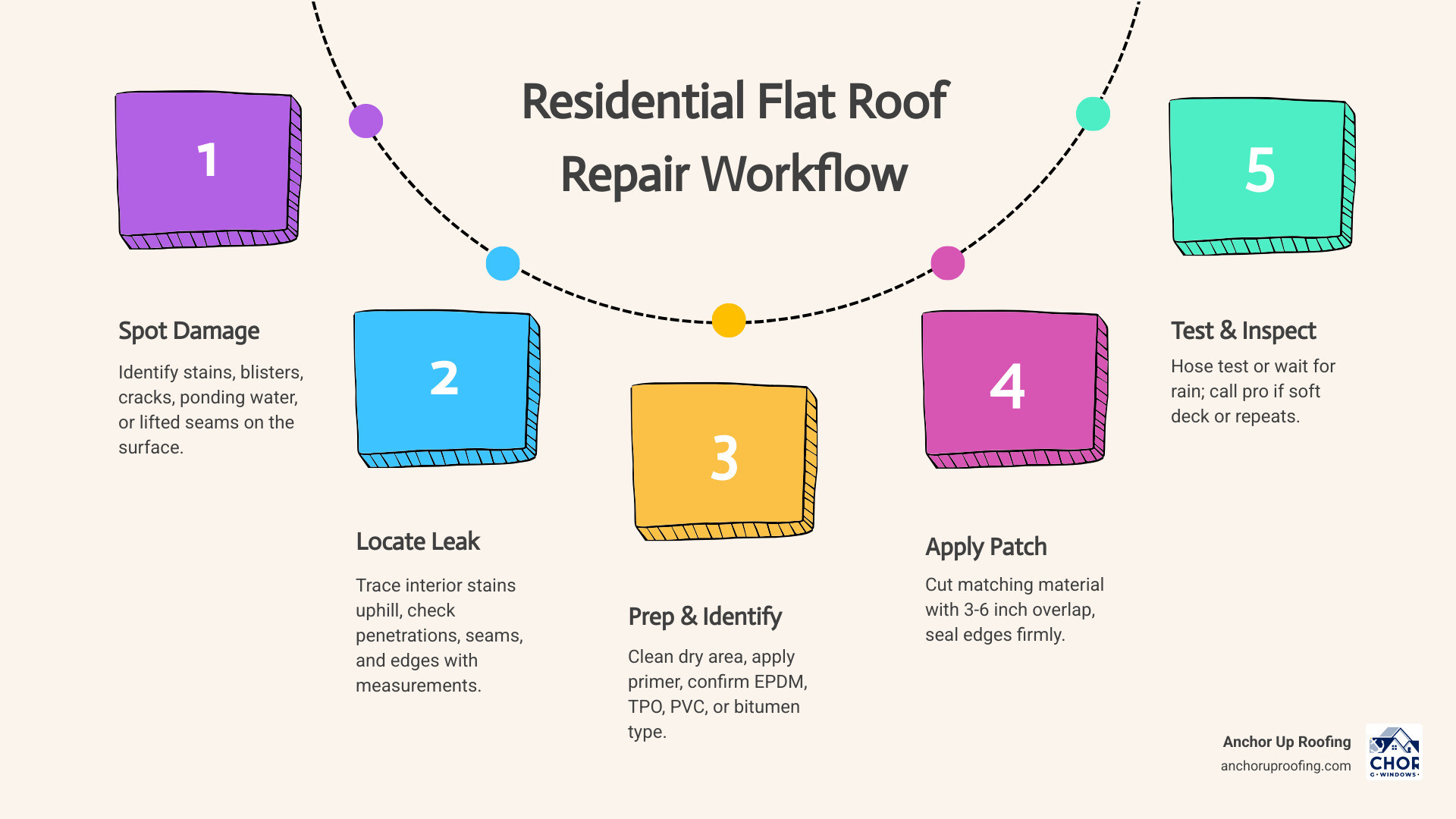
- Spot the damage — Look for water stains, blisters, cracks, ponding water, or lifted seams
- Locate the leak — Trace interior stains to find the entry point on the roof surface
- Identify your roof type — EPDM, TPO, PVC, or modified bitumen each need different repair methods
- Clean and prep the area — Dry surface, remove debris, apply primer
- Apply the patch — Use matching material, extend at least 3–6 inches beyond the damage, seal edges
- Test the repair — Use a hose or wait for the next rain to confirm the fix held
- Call a pro — If leaks repeat, damage is widespread, or the deck feels soft, stop DIY and get an inspection
Flat roofs look simple. But they manage water differently than sloped roofs — relying on drains and a slight pitch rather than gravity. That makes them more vulnerable to standing water, seam failure, and UV breakdown, especially here in South Florida where heavy rain, intense heat, and hurricane season push every roofing material to its limit.
A small drip after a storm can feel minor. But water travels. It moves along decking and through insulation before it ever shows up as a ceiling stain inside your home. By the time you notice it, the damage underneath may already be significant. Flat roof leaks account for over $12 billion in roofing repairs nationwide each year — and most of those start as problems that were ignored too long.
This guide walks you through everything: how to spot trouble early, how to safely find and fix leaks, which repairs you can handle yourself, and when it’s time to bring in a licensed professional.
I’m Oscar Perez, founder of Anchor Up Roofing and a retired veteran with years of hands-on experience in residential flat roof repair across Miami-Dade, Broward, Palm Beach, and surrounding South Florida communities. My team has seen how Florida’s climate turns minor roofing issues into major structural problems when they go unaddressed — and this guide is built around what actually works in the field.
Spot the Early Warning Signs Before Damage Spreads
In our experience at Anchor Up Roofing, flat roofs are “quiet” sufferers. Unlike a shingle roof where you can see a missing tab from the driveway, flat roof issues often hide in plain sight. Because these roofs have a very low slope (usually only 1/4 inch per foot), water doesn’t rush off; it lingers.
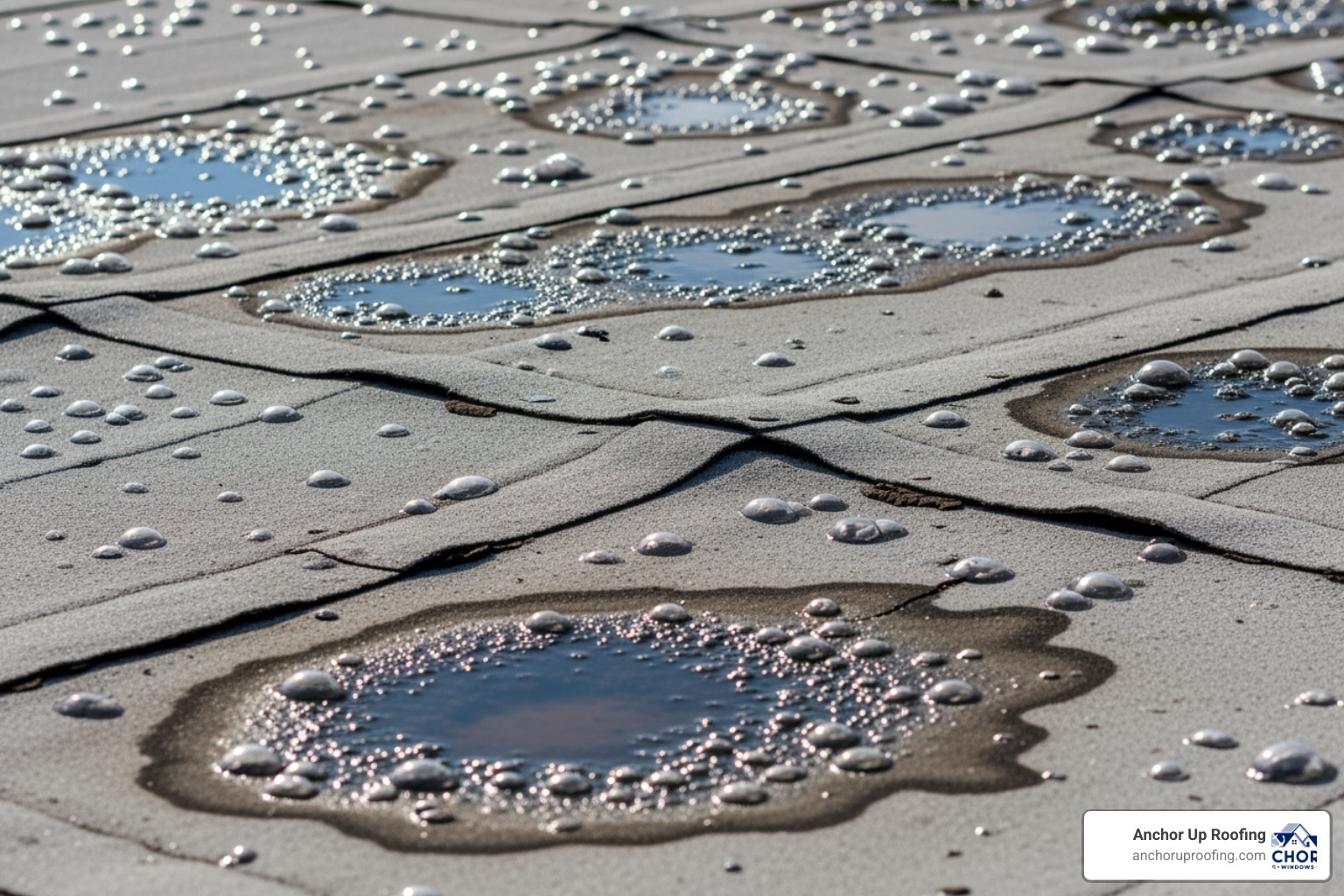
Common signs your Residential flat roof repair can’t wait
If you notice any of the following, your Residential flat roof repair has officially moved from “to-do list” to “emergency”:
- Interior Stains: Brown, tea-colored circles on your ceiling are the classic smoking gun.
- Peeling Paint: Moisture trapped in the walls often causes paint to bubble or peel near the ceiling line.
- Damp Insulation: If your attic space feels unusually humid or smells musty, your insulation might be acting like a giant sponge.
- Membrane Splits: Look for “alligatoring”—a pattern of cracks that looks like reptile skin—or long splits in the surface material.
- Loose Edges: If the perimeter metal or the membrane is lifting at the edges, wind can get underneath and peel the roof back like a sardine can.
What usually causes flat roof leaks and damage
Why do these issues happen? It’s usually a combination of age and the brutal South Florida environment.
- Aging Membranes: Most flat roofs last 15–25 years. As they age, they lose flexibility and crack.
- Ponding Water: This is the “silent killer.” Water that sits for more than 48 hours physically and chemically breaks down the roof’s waterproofing.
- Clogged Drains: Leaves and debris turn your roof into a swimming pool.
- Flashing Failure: Around 70% of leaks happen at “penetrations”—places where vents, pipes, or chimneys poke through the roof.
- Thermal Movement: The Florida sun heats the roof to 150°F during the day, then a rainstorm cools it to 80°F in minutes. This constant expansion and contraction stresses the seams.
How drainage problems turn small issues into major repairs
Ponding water doesn’t just sit there; it adds immense weight to your structure. A single inch of water weighs about 5 pounds per square foot. On a large flat roof, that’s thousands of extra pounds your house wasn’t designed to hold. This weight can cause the roof deck to sag, creating even deeper “bowls” for more water to collect. If you see algae or organic growth on your roof, it’s a sign that water is staying long enough to support life—and that’s never good for your home’s health. More info about Flat Roofs.
Find the Leak Safely and Confirm the Roof Type
Finding a leak on a flat roof is a bit like being a detective. Water rarely drips straight down from where it enters. It might enter through a crack on the west side, travel along a roof joist, and finally drip into your kitchen on the east side.
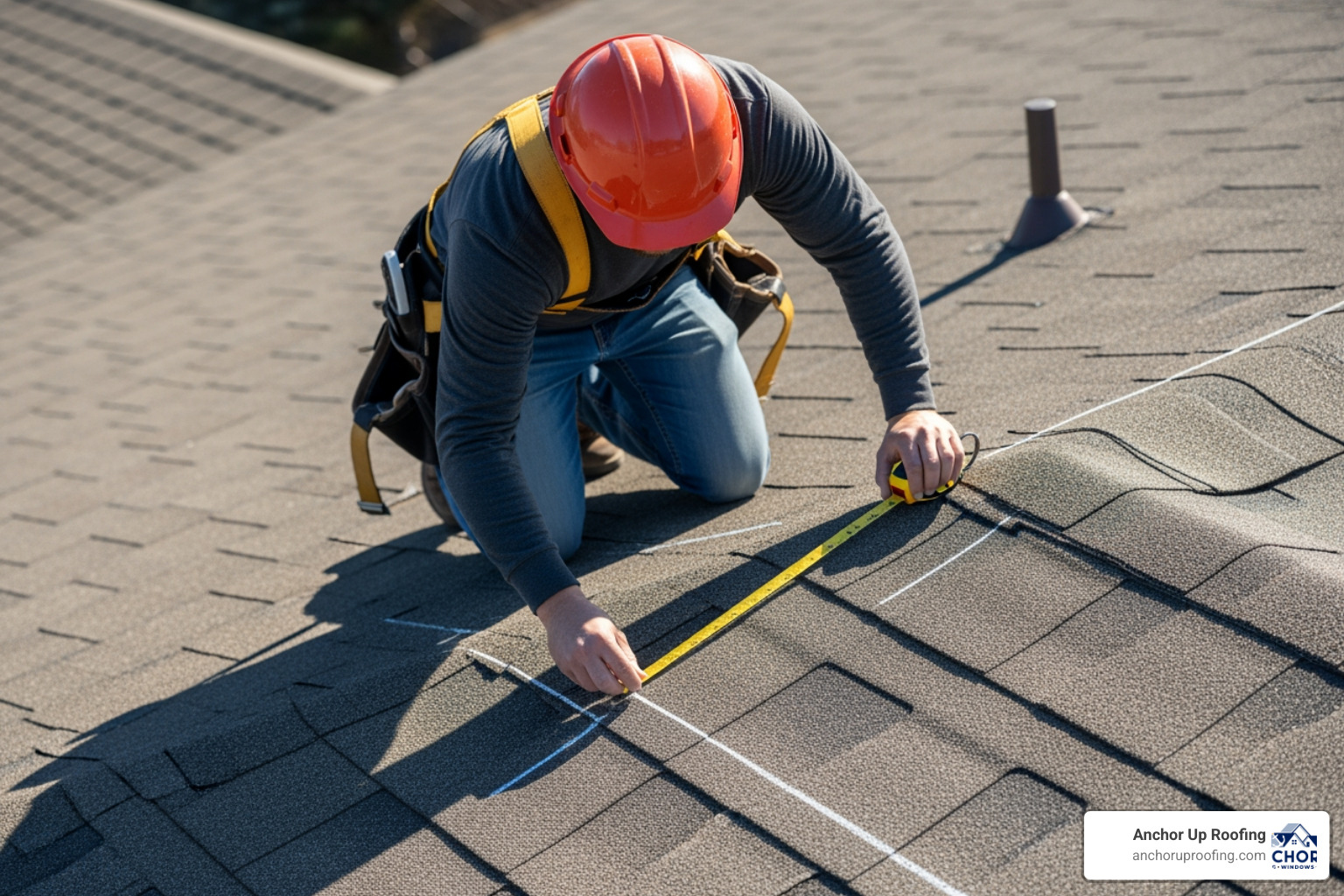
How to locate a Residential flat roof repair area without guessing
To find the source for your Residential flat roof repair, start inside. Measure the distance from the drip to the two nearest walls. Go up on the roof and find that same spot using your measurements. Now, look “uphill.” Even though the roof looks flat, it has a slope. Examine everything within 10 feet of that spot, especially:
- Seams: Look for areas where the membrane is peeling back.
- Vents and Skylights: Check the sealant around the base.
- Chalk Marks: Once you find a suspect spot, mark it with sidewalk chalk so you don’t lose it when you go to get your tools.
Identify whether you have EPDM, TPO, PVC, or modified bitumen
You cannot use just any material for a patch. Incompatibility is a leading cause of failed DIY repairs.
- EPDM: Feels like a black rubber inner tube. It’s usually glued down.
- TPO: Usually white or light grey. It feels like a stiff plastic. Seams are typically heat-welded.
- PVC: Looks like TPO but is more chemical and grease-resistant. Also white/grey and heat-welded.
- Modified Bitumen: Looks like asphalt shingles but in a roll. It often has a “granulated” (sandy) surface.
Essential safety precautions before stepping onto the roof
Safety is our top priority at Anchor Up Roofing. Before you climb that ladder:
- Wait for Dry Weather: A wet flat roof is as slippery as an ice rink.
- Use a Helper: Never climb a ladder without someone at the bottom to steady it.
- Wear Non-Slip Shoes: Rubber-soled work boots are a must.
- Watch the Edges: It’s easy to get focused on a repair and forget how close you are to the perimeter.
- Electrical Hazards: Look up! Make sure you aren’t carrying a metal ladder near power lines. More info about When to Schedule a Residential Roofing Inspection.
Gather the Right Tools and Materials for DIY Flat Roof Repairs
If you’ve determined the damage is small enough for a DIY fix, you need the right kit. Don’t try to “MacGyver” this with duct tape or bathroom caulk—it won’t hold against a Miami thunderstorm.
What tools and materials are essential for small repairs
For a standard Residential flat roof repair, you’ll generally need:
- Cleaning Supplies: A stiff broom, rags, and a specialized membrane cleaner (specific to your roof type).
- Patching Material: A piece of the same membrane or a high-quality “peel-and-stick” repair flash.
- Adhesives: Roofing cement or specialized EPDM/TPO primer and glue.
- Hand Tools: A utility knife, a tape measure, a caulk gun, and a small heavy roller to press the patch down.
Common mistakes homeowners should avoid during DIY repairs
We see these mistakes all the time when we’re called in to “fix the fix”:
- Using the Wrong Material: Putting asphalt-based “wet patch” on a TPO or EPDM roof will actually eat through the membrane.
- Dirty Surfaces: If the area isn’t scrubbed clean, the patch will peel off in weeks.
- Tiny Patches: Your patch should extend at least 3 to 6 inches past the damage in every direction.
- Trapping Moisture: Never seal a patch over a wet roof deck. You’ll just trap the rot inside.
When DIY Residential flat roof repair is okay and when to call a pro
You can likely handle a Residential flat roof repair if it’s a small puncture from a fallen branch or a tiny pinhole leak. However, stop and call us at Anchor Up Roofing if:
- The roof feels “spongy” or soft when you walk on it (this indicates structural rot).
- There are multiple leaks across a large area.
- The roof is under warranty (DIY repairs often void your coverage).
- You have TPO or PVC that requires heat-welding tools you don’t own. How to repair a leaky flat roof.
Step-by-Step: Repair Small Cracks, Holes, Blisters, and Seams
Ready to get to work? Follow these steps for a professional-grade patch.
How to repair small cracks and punctures
- Clean: Scrub the area with a weathered membrane cleaner.
- Prime: Apply the appropriate primer and let it get “tacky” (usually 10-20 minutes).
- Cut: Cut your patch material. Pro tip: Round the corners of your patch! Square corners peel up much easier than rounded ones.
- Apply: Press the patch firmly from the center outward to avoid air bubbles.
- Roll: Use a hand roller to ensure a 100% bond.
- Seal: Apply a bead of lap sealant around the edge of the patch.
How to fix blisters, bubbles, and lifted seams
Blisters happen when air or moisture gets trapped under the membrane.
- For Blisters: Carefully slit the blister with a utility knife to let the moisture out. Let it dry completely (you can use a hair dryer on a low setting if you’re careful). Apply roofing cement inside the slit, press it flat, and then apply a patch over the entire cut.
- For Seams: Clean underneath the lifted edge, apply seam adhesive, and use your roller to press it back down. If the seam is brittle, it’s better to apply a new strip of seam tape over the top.
Repair methods by material type: EPDM, TPO, PVC, and modified bitumen
| Material | Primary Repair Method | DIY Friendliness |
|---|---|---|
| EPDM | Peel-and-stick patches & primer | High |
| TPO | Heat-welding or specialized tape | Low (Needs heat gun) |
| PVC | Heat-welding | Low (Needs heat gun) |
| Modified Bitumen | Roofing cement & mesh or torch-on | Moderate |
Note: For TPO and PVC, heat welding creates a molecular bond. While tape exists, it’s often a temporary fix compared to a welded patch. Step-by-step flat roof repair methods.
How to address flashing and roof edge trouble spots
Flashing is the metal or membrane that transitions the roof to a wall or pipe. If the sealant is cracked, scrape away the old gunk and apply a high-grade flashing sealant. If the metal itself is rusted or bent, it likely needs professional replacement to ensure it can withstand South Florida wind uplift. More info about Roof Coating and Waterproofing.
Understand Costs, Long-Term Fixes, and When Replacement Makes More Sense
Let’s talk numbers. In 2026, costs have shifted slightly, but the logic remains the same: a stitch in time saves nine.
How to know when repair is no longer enough
At Anchor Up Roofing, we use the 50 Percent Rule: If the cost of repairs exceeds 50% of the cost of a new roof, it’s time to replace. Other signs include:
- 30% Rule: If more than 30% of the roof surface is damaged or blistering.
- Wet Insulation: If the core of your roof is soaked, patching the top won’t stop the rot.
- Age: If your roof is over 20 years old, you’re likely throwing good money after bad. More info about Signs Your Roofs Need a Replacement.
Warranties, coatings, and long-term solutions to extend roof life
If your roof is in decent shape but aging, a reflective roof coating can be a lifesaver. These “cool roof” coatings reflect UV rays and can lower cooling costs by 15 to 30 percent. Plus, they provide a seamless waterproofing layer that can extend your roof’s life by 5 to 10 years.
How to choose a reliable residential flat roofing contractor
Don’t just hire the guy with a truck and a ladder. Look for:
- Manufacturer Certifications: Are they authorized to install the specific material on your roof?
- Local Experience: South Florida has unique building codes (like Miami-Dade NOA requirements).
- Insurance: Verify they have both liability and workers’ comp.
- Veteran-Owned Values: At Anchor Up Roofing, we bring military precision and honesty to every job. More info about Services.
Prevent Future Leaks With Smart Flat Roof Maintenance
Maintenance is the difference between a roof that lasts 10 years and one that lasts 25.
The maintenance routine that helps avoid repeat leaks
- Biannual Inspections: Check your roof every Spring and Fall.
- Clean the Drains: A handful of leaves can cause a 100-gallon puddle.
- Post-Storm Checks: After a major Florida storm, walk the roof to check for debris punctures or lifted edges.
Fix ponding water before it shortens roof life
If you have a persistent puddle, we can often fix it without a full replacement. We use tapered insulation—basically foam blocks cut at an angle—to create a “slope” where there wasn’t one before, directing water toward the drains.
South Florida factors homeowners should not ignore
Our climate is tough. The salt air in places like Venice and Sarasota can corrode metal flashing. The humidity in Homestead and Miami promotes algae growth. And the hurricane-force winds in the Keys and Fort Myers require specific perimeter securement. If your roof isn’t built for Florida, it won’t last in Florida. More info about Flat Roof Installation and Flat Roof vs Pitched Roof for Residential Buildings.
Frequently Asked Questions About Residential Flat Roof Repair
How long does a flat roof repair usually last?
A professional repair using the correct materials should last 5 to 10 years. However, a DIY patch with the wrong sealant might not even last until the next rain.
Can ponding water be fixed without replacing the whole roof?
Yes! Through drainage correction, adding scuppers, or using localized tapered insulation, we can often solve standing water issues on an otherwise healthy roof.
Should you file an insurance claim for flat roof damage?
If the damage was caused by a “sudden and accidental” event—like a hurricane or a fallen tree—yes. If the leak is just from an old roof wearing out, insurance typically won’t cover it. Always take photos before you start any repairs!
Conclusion
Handling your Residential flat roof repair doesn’t have to be a nightmare. By catching signs like ponding water or ceiling stains early, you can protect your home’s structure and your wallet. Whether you’re attempting a small patch yourself or you’ve decided the job is too big to handle alone, the goal is always a dry, safe home.
At Anchor Up Roofing, we’re proud to serve our fellow Floridians from the Sun Coast to Miami-Dade. As a retired veteran-owned company with 20+ years of experience, we don’t just fix roofs—we provide peace of mind. We offer 5-star service, 100% financing, and the expertise to handle Florida’s toughest weather.
Ready to stop that leak for good? Don’t wait for the next storm. Contact us today for a free flat roof inspection and let our family protect yours.