
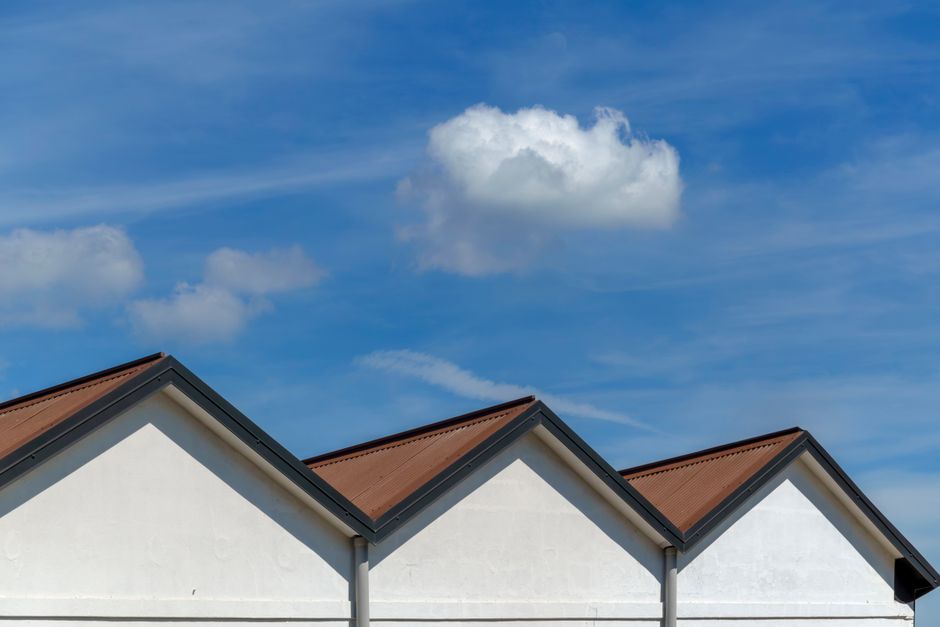
What Is Commercial Roofing – and Why It Matters for Your Business
Commercial roofing is the system of materials, components, and installation methods used to protect business properties, warehouses, retail centers, and other large structures from the elements. Unlike a home roof, a commercial roof is engineered to cover large flat or low-slope surfaces, support heavy HVAC equipment, and meet strict building codes – all while keeping your business running without interruption.
Here’s what you need to know at a glance:
| Topic | Quick Answer |
|---|---|
| What it covers | Businesses, warehouses, retail, industrial, and multi-family buildings |
| Common materials | TPO, PVC, EPDM, modified bitumen, built-up roofing (BUR), metal |
| Typical roof shape | Flat or low-slope |
| Key concerns | Drainage, wind uplift, HVAC support, building code compliance |
| Main services | Installation, replacement, repair, maintenance, inspections, storm damage |
Even a small roof leak can shut down operations, damage inventory, or trigger costly repairs. For Florida property owners especially, a roof that can’t handle heavy rain, UV exposure, and hurricane-force winds isn’t just an inconvenience – it’s a serious business risk.
That is why choosing the right system and the right contractor matters so much.
I’m Oscar Perez, founder of Anchor Up Roofing, a veteran-owned roofing company with hands-on experience completing commercial roofing projects across Miami-Dade, Broward, Palm Beach, and beyond. I’ve put together this guide to walk you through everything you need to make smart, confident decisions about your commercial roof. For official guidance on storm preparedness and building resilience, property owners can also review resources from FEMA.
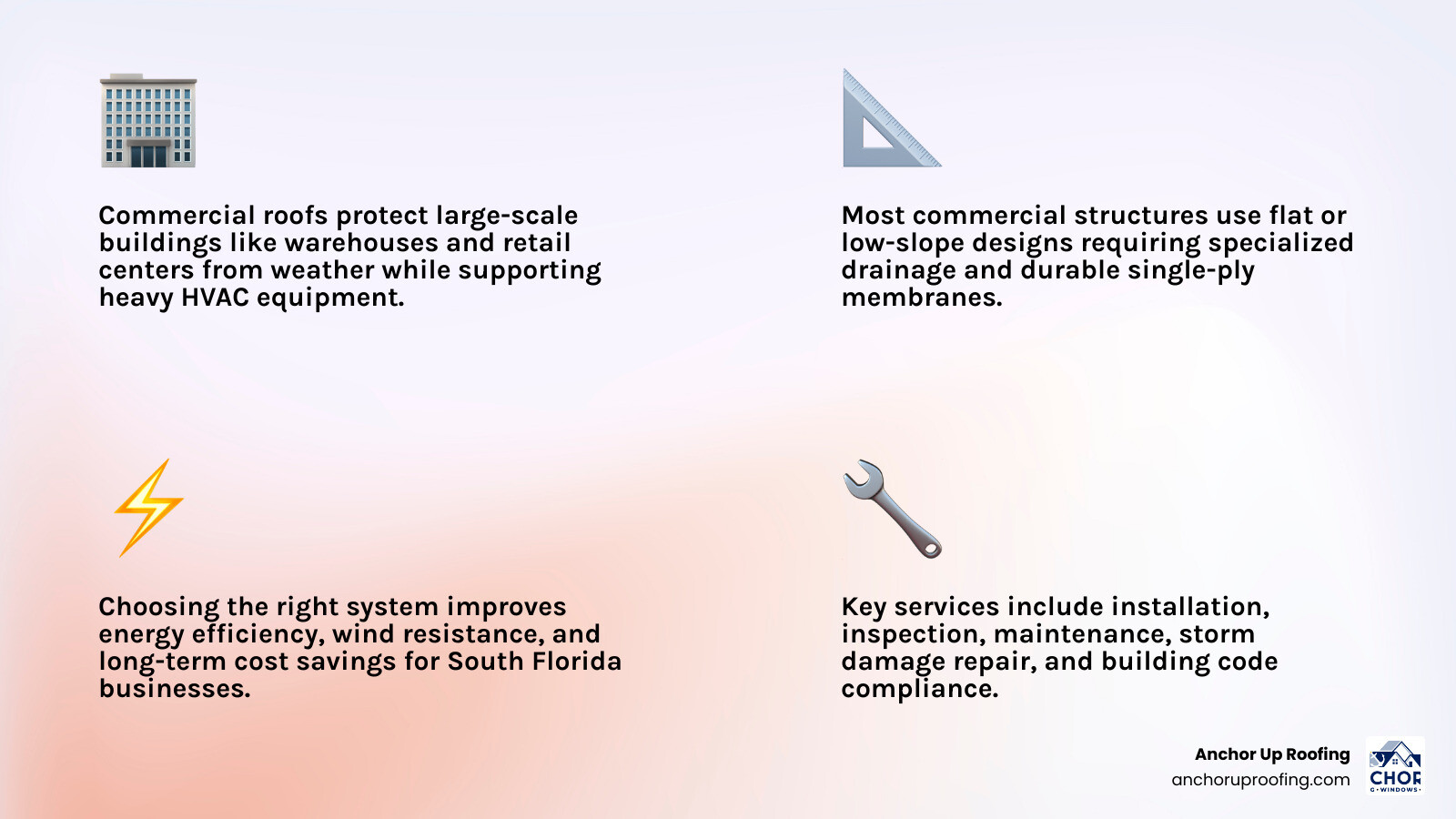
Understanding Commercial Roofing Systems and Materials
When it comes to protecting a commercial property in South Florida, the material you choose dictates how well your building handles the elements, how much you save on cooling bills, and how long the system lasts before requiring replacement. Most commercial structures feature Flat Roofs or low-slope designs, which require specialized water management and highly durable membranes.
Selecting the right system involves weighing upfront expenses against long-term performance. To make this easier, we have broken down Everything You Need to Know About Flat Roof Types to help you choose the ideal system for your facility.

Comparing Flat Roof Materials and Lifespans
| Material Type | Average Lifespan | Key Benefit | South Florida Climate Fit |
|---|---|---|---|
| TPO (Thermoplastic Polyolefin) | 20–30 Years | Exceptional solar reflectance & heat-welded leak protection | Outstanding (cuts cooling costs) |
| PVC (Polyvinyl Chloride) | Up to 30 Years | Resistant to chemicals, grease, and high winds | Outstanding (highly durable) |
| EPDM (Rubber) | 20–25 Years | Highly flexible and puncture-resistant | Good (but absorbs more heat if dark) |
| Modified Bitumen | 15–20 Years | Multi-layered asphaltic redundancy | Very Good (tough against punctures) |
| Built-Up Roofing (BUR) | 15–25 Years | Classic, highly durable multi-ply system | Good (heavy but highly reliable) |
| Standing Seam Metal | 50+ Years | Maximum longevity and wind resistance | Outstanding (highly wind-resistant) |
Single-Ply Membranes in Commercial Roofing
Single-ply membranes are the modern standard for low-slope commercial properties. These flexible sheets of compounded synthetic materials are manufactured in quality-controlled environments and installed in a single layer across the roof. They offer excellent durability, ease of installation, and superb energy efficiency. Let’s look at the three most common options we install through our Commercial Roofing services:
TPO (Thermoplastic Polyolefin)
TPO has been one of the most popular products used for low-slope roofing for over 20 years. Its rise to fame is largely due to its bright white reflective surface, which deflects South Florida’s intense UV rays. By reflecting solar heat, TPO keeps your building’s interior cooler and reduces the load on your commercial HVAC systems.
TPO seams are heat-welded together using hot-air equipment, creating a single, continuous membrane. These fused seams are incredibly strong—often stronger than the membrane itself—making them highly resistant to wind uplift and leaks.
PVC (Polyvinyl Chloride)
If your commercial building houses a restaurant, food processing plant, or manufacturing facility, PVC is often the best choice. PVC roofing membranes offer guarantees up to 30 years and are naturally resistant to chemicals, animal fats, grease, and acids that vent out of commercial kitchens. Like TPO, PVC features heat-welded seams and excellent reflective properties, and it is highly resistant to South Florida’s frequent windstorms.
EPDM (Ethylene Propylene Diene Monomer)
EPDM is a highly durable synthetic rubber membrane. It is exceptionally flexible, allowing it to expand and contract with temperature shifts without cracking. EPDM is resistant to ozone, UV rays, and punctures. While traditionally black, white EPDM options are available to help manage thermal gain in warmer climates like Hialeah FL and Pembroke Pines FL.
Asphaltic and Metal Commercial Roofing Options
For properties requiring heavy-duty durability, multi-layered waterproofing, or extreme longevity, asphaltic and metal systems remain highly reliable choices.
Modified Bitumen
Modified bitumen systems utilize asphalt that has been chemically modified with plastic or rubber polymers (such as SBS or APP) to increase flexibility and durability. These systems are installed in multiple layers, providing built-in redundancy. If the top layer is punctured, the lower layers continue to block water.
Modified bitumen is highly resistant to foot traffic, making it ideal for roofs with heavy HVAC maintenance needs. However, when these systems eventually wear out, a full tear-off can be costly.
Built-Up Roofing (BUR)
Often referred to as “tar and gravel” roofs, BUR is one of the oldest and most reliable commercial systems. It consists of alternating layers of asphalt-coated felt sheets and hot liquid asphalt, topped with a protective layer of gravel or mineral surfacing. BUR provides outstanding multi-layered waterproofing and is highly resistant to fire and physical impact.
Its main drawbacks are its heavy weight and the labor-intensive installation process. For major commercial properties on Florida’s East Coast or West Coast, BUR remains a classic choice for maximum physical durability.
Standing Seam Metal
For flat roofs with a slight pitch or steep-slope commercial designs, standing seam metal is the gold standard. Metal roofs can last for 50 years or more with minimal maintenance. The seams of these panels are raised above the roof level and fastened with concealed clips, eliminating exposed screws that could rust or leak.
Metal roofing offers unmatched wind resistance, which is critical for meeting strict South Florida building codes, and it is fully recyclable at the end of its lifespan.
Key Differences Between Commercial and Residential Roofing
Many building owners assume that commercial roofing is simply residential roofing on a larger scale. In reality, the two disciplines are vastly different, requiring entirely different materials, engineering principles, and safety protocols. For a deeper dive into structural shapes, check out our comparison on Flat Roof vs Pitched Roof for Residential Buildings.
Structural Complexity and Slopes
The most obvious difference lies in the slope. Residential roofs are typically steep-sloped (pitched), meaning gravity naturally sheds rainwater into peripheral gutters. Commercial roofs, however, are flat or low-sloped. Because water does not run off them naturally, they must be carefully engineered with a slight pitch (usually a minimum of 1/4 inch per foot) to guide water toward drains, scuppers, and gutters.
If a flat roof is not properly sloped, it will suffer from ponding water—water that remains on the roof for 48 hours or more without evaporating or draining. Ponding water places immense structural weight on the building and accelerates the deterioration of the roofing membrane, leading to premature failure.
Additionally, commercial roofs feature far more penetrations than residential homes. A typical warehouse or office building in Doral FL or Miami Springs FL has numerous HVAC units, exhaust fans, commercial drains, and electrical conduits cutting through the roof. Every single one of these penetrations represents a potential leak point that must be meticulously flashed and sealed.
Specialized Skills and Installation Techniques
Because of the scale and technical complexity involved, commercial roofers require specialized training and equipment that residential roofers rarely use. For example, installing single-ply membranes requires expertise in hot-air welding, adhesive application, and mechanical fastening.
A single residential roofing crew can often perform a tear-off and install a new roof on two houses per day. Commercial projects, by contrast, can take weeks or even months of careful coordination. Commercial roofers must also be experts in local building regulations.
In South Florida, we must adhere to the nation’s strictest wind-resistance guidelines. This includes installing reinforced edge metals, implementing specific perimeter fastening patterns, and ensuring every component complies with local High Velocity Hurricane Zone (HVHV) requirements.
To see how these advanced techniques translate to a physical build, read about our process for a professional Flat Roof Installation.
The Ultimate Commercial Roof Inspection and Maintenance Checklist
To protect your investment and avoid unexpected capital expenses, a proactive maintenance program is essential. Regular inspections allow you to catch minor issues—such as failing seams, cracked flashing, or minor punctures—before they develop into severe structural damage.
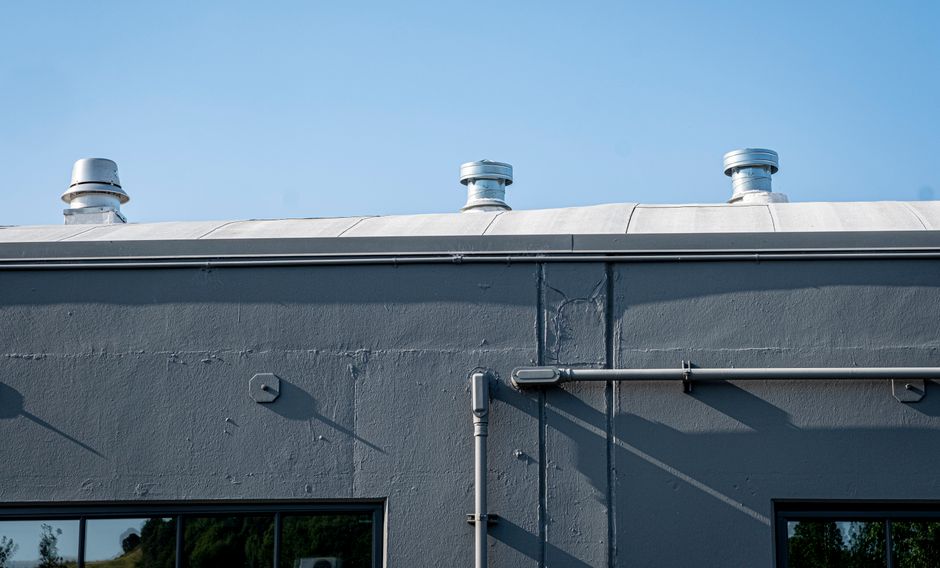
When we perform a professional inspection, we don’t just walk the surface looking for obvious holes. We use a series of diagnostic tools and methods to assess the hidden health of your roof:
- Core Samples: We take physical core samples of the roof layers to determine the exact composition of the system, the condition of the underlying deck, and whether moisture has penetrated the insulation.
- Infrared Moisture Scanning: Using thermal imaging cameras, we detect temperature differences across the roof surface after sunset. Wet insulation retains heat longer than dry insulation, allowing us to pinpoint hidden leaks under the membrane without tearing up the roof.
- Ponding Analysis: We evaluate the roof’s drainage paths, checking for low spots, blocked drains, or improper sloping that could lead to standing water.
To help your maintenance team keep a daily eye on your asset, we have compiled a comprehensive Commercial Roof Inspection Checklist that covers structural, atmospheric, and membrane-specific check points. If you find minor aging across your roof, applying professional Roof Coating and Waterproofing can seal hairline cracks, restore UV protection, and add years of reliable service to your building.
Insulation and Energy Efficiency
Your commercial roof is your building’s primary shield against thermal gain. The type of Roof Insulation you choose plays a massive role in your monthly energy consumption.
Polyisocyanurate (polyiso) is one of the most popular insulation choices for flat and tapered commercial applications. It offers an exceptionally high thermal value (R-value) per inch of thickness, meaning you need less material to achieve the desired insulation level. For a detailed comparison of different commercial insulation strategies, explore our guide on Spray Foam Insulation vs Fiberglass.
By pairing high-quality polyiso insulation with a reflective white TPO or PVC membrane, you create an energy-efficient barrier that keeps heat out of your facility and lowers your cooling bills.
Storm Damage and Emergency Repairs
Living and doing business in South Florida means preparing for severe weather. High winds, torrential downpours, and hurricanes can cause immediate, catastrophic damage to commercial roofs.
When a storm strikes, wind uplift typically begins at the perimeter edges of a flat roof. If the edge metal or perimeter fastening fails, the wind can peel the membrane back, exposing the building’s interior to water damage.
If your property suffers storm damage, rapid action is critical:
- Emergency Tarping: We provide immediate temporary mitigation to stop active leaks and protect your building’s interior, inventory, and equipment from further damage.
- Insurance Documentation: We assist property managers and owners by providing detailed, photographic damage assessments and comprehensive reports to streamline the insurance claims process.
- Code-Compliant Restoration: Once the storm passes, we execute permanent repairs that meet or exceed local building codes, ensuring your building is stronger and more resilient than before.
Frequently Asked Questions about Commercial Roofs
What is the best flat roof material for hurricane-prone areas?
In South Florida, the best flat roof materials are TPO and PVC membranes, as well as standing seam metal. To handle hurricanes, the installation method is just as important as the material.
The system must be installed to current Miami-Dade building codes, which require reinforced perimeters, specific mechanical fastening patterns, and heavy-duty edge metal details. Heat-welded seams on TPO and PVC systems provide exceptional resistance to wind uplift, making them highly reliable in extreme storm conditions.
How long does a commercial flat roof typically last?
A commercial flat roof typically lasts between 15 and 30 years, depending on the material used, the quality of the installation, and how well it is maintained. TPO and PVC systems often last 20 to 30 years, while standing seam metal roofs can easily exceed 50 years.
Regular maintenance, proper drainage engineering to prevent ponding water, and applying protective coatings can significantly extend the life of your membrane, delaying costly replacements.
If you are located in the southern regions of the state, you can find local support through professional commercial roofing services in Homestead, FL, Naples, FL, and throughout Broward County.
Can a commercial roof be restored instead of fully replaced?
Yes! If your commercial roof is structurally sound and the underlying insulation is dry, you can often restore the roof instead of paying for a costly full tear-off.
Applying a high-quality silicone or acrylic roof coating system can seal minor leaks, restore UV reflectivity, and extend your roof’s lifespan by 10 to 15 years. This process keeps waste out of landfills, minimizes disruption to your business, and is a highly cost-effective alternative to a full replacement.
For businesses on the West Coast, including Fort Myers, professional repair and restoration options can help extend the life of your existing roof system.
Conclusion
Your commercial roof is one of the most significant physical investments you will make for your business. Protecting that investment requires durable materials, regular maintenance, and a commercial roofing partner who understands the unique engineering and regulatory demands of commercial properties.
At Anchor Up Roofing, we bring a disciplined, detailed approach to every project we touch. As a retired veteran-owned company with over 20 years of experience, we are proud to serve South Florida businesses with integrity, transparency, and outstanding craftsmanship. We hold 5-star reviews across the region and offer flexible financing options to help you complete critical roof projects without putting a strain on your business’s cash flow.
Whether you need a comprehensive roof inspection, a minor leak repair, a silicone restoration coating, or a complete flat roof replacement, our team is ready to deliver.
Secure your business investment today. Contact us at Anchor Up Roofing to schedule a professional inspection and experience the peace of mind that comes with working with South Florida’s trusted commercial roofing experts. Visit our Commercial Roofing page to get started!