

What Every Florida Homeowner Needs to Know About Roof Leak Repair
Roof leak repair starts with finding where water is actually entering — then choosing the right fix before interior damage spreads.
Here are the 5 most reliable methods covered in this guide:
- Replace failed pipe boots — the single most overlooked DIY fix
- Reseal step flashing and dormers — fixes 65% of roof leaks
- Restore roof valleys — clear debris and replace damaged liners
- Patch shingle and field damage — address nail pops and wind damage
- Seal roof penetrations and vents — HVAC flues, skylights, and attic fans
Water is patient. A small damp spot on your ceiling after a Florida rainstorm can quietly grow into significant and costly structural damage — rotted decking, soaked insulation, mold behind your drywall — if left unaddressed even for a single season.
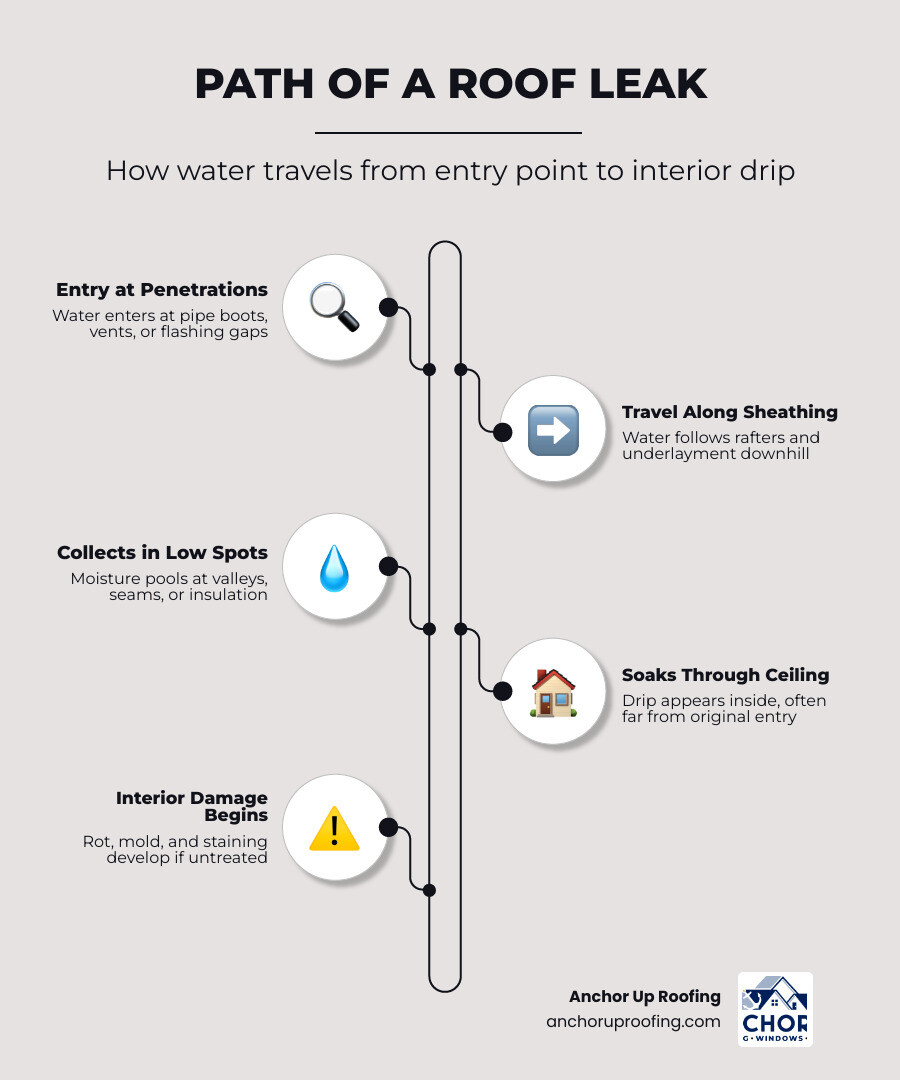
The frustrating part? The drip you see on your ceiling is almost never directly below where the water is actually getting in. Water enters at one point, then travels along rafters and sheathing before appearing somewhere else entirely. That’s what makes roof leak repair both urgent and tricky.
The good news: most leaks follow predictable patterns. They originate at pipe boots, step flashing, chimney joints, and valley systems. Once you know what to look for, many repairs are manageable — and catching them early keeps costs from spiraling.
I’m Oscar Perez, founder of Anchor Up Roofing, a veteran-owned roofing company serving South Florida homeowners across Miami-Dade, Broward, and Palm Beach Counties. With years of hands-on roof leak repair experience in one of the most demanding climates in the country, I’ve seen how a fast, correct repair protects everything underneath it. Let’s walk through exactly how to do this right.
Identifying the Source of a Roof Leak Safely
Finding the leak is often harder than fixing it. Because water obeys gravity, the entry point is almost always higher and farther “uphill” from where the drip appears in your living room. To avoid unnecessary costs and frustration, you must trace the moisture back to its origin.

We always recommend starting in the attic. Grab a flashlight, a mask, and a pair of gloves. Look for:
- Water trails: Dark stains or “tide marks” on the underside of the roof sheathing.
- Black spots or mold: Signs of chronic, long-term moisture.
- Damp insulation: Even if the wood looks dry, the insulation might be holding water like a sponge.
- Shiny spots: If it’s currently raining, look for the reflection of your flashlight on wet surfaces.
Once you find a stain, follow it “up” the rafter. Water often enters through a hole, hits a rafter, and runs down several feet before dripping onto your ceiling. If you can’t find the source visually, it might be time to schedule a residential roofing inspection to ensure nothing is missed. For more tips on detection, you can also check out this DIY Leak Repair Guide.
Common Causes of Water Intrusion
In South Florida locations like Miami, Fort Myers, and Sarasota, our roofs take a beating from intense UV rays and tropical downpours. Common culprits include:
- Pipe Boots: The rubber seal around plumbing vents that cracks after 8-15 years of Florida sun.
- Step Flashing: The “L-shaped” metal pieces where the roof meets a wall or chimney.
- Roof Valleys: The “V-shaped” channels where two roof planes meet; these carry the highest volume of water.
- Clogged Gutters: When water backs up, it can seep under the eaves and rot the fascia.
- Shingle Deterioration: High winds can lift shingles, breaking the adhesive seal.
For business owners, we also recommend checking a commercial roof inspection checklist to stay ahead of these issues.
The Water Hose Diagnostic Method
If the attic doesn’t reveal the secret, we use the “water hose test.” This requires two people and a sunny day.
- Start Low: One person goes on the roof with a garden hose, and the other stays in the attic with a flashlight.
- Systematic Soaking: Start at the downslope (bottom) of the roof, near where you suspect the leak is. Soak just that area for 5-10 minutes.
- Work Upward: If no leak appears, move the hose higher. This prevents you from “masking” a lower leak with water running down from above.
- Communication: Use cell phones or walkie-talkies. The person inside should shout the moment they see a drip.
Emergency Measures for Active Leak Mitigation
If it’s 2 AM and raining in Broward County, you can’t exactly start a permanent roof leak repair. Your goal is damage control.
- Bucket Placement: Put a container under the drip. If the ceiling is bulging, use a screwdriver to puncture a small hole at the center of the bulge. This allows the water to drain into the bucket rather than spreading across the ceiling and causing a collapse.
- Move Valuables: Electronics and furniture should be moved or covered with plastic sheeting.
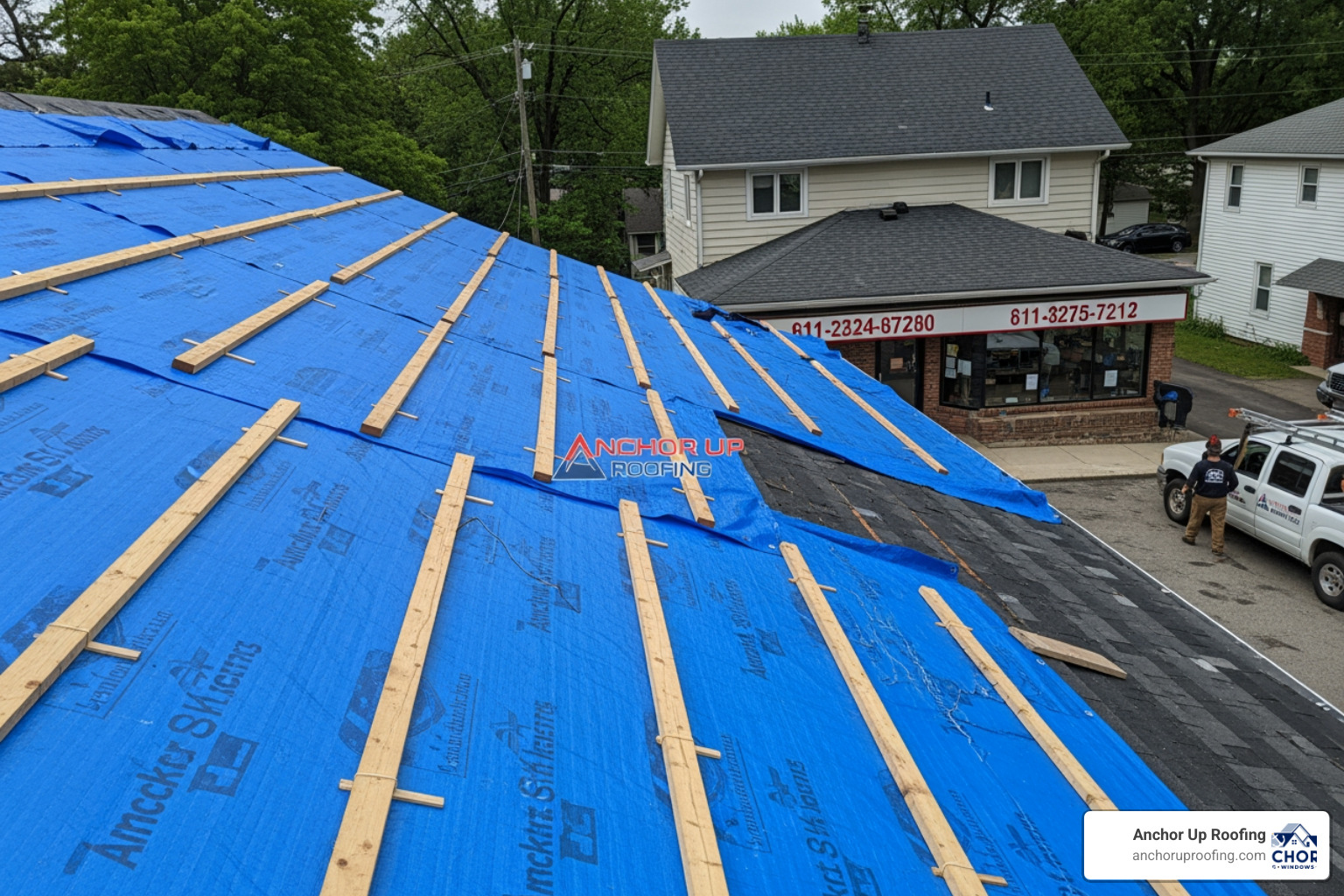
- Emergency Tarping: Once the rain stops and the roof is safe to walk on, apply a heavy-duty tarp. A tarp should extend at least 3-6 feet beyond the damaged area on all sides and over the ridge of the roof to prevent water from running under the top edge. Secure it with 2×4 wooden boards screwed into the roof (avoiding the shingles where possible) rather than just using bricks or sandbags. You can find more on temporary and permanent repairs here.
Temporary Sealants and Patches
For minor cracks or holes, a rubberized wet patch (like Henry 208R) is a lifesaver. These products are designed to be applied in standing water or during a rainstorm.
- The 3-Course Patch: For a stronger temporary fix, apply a layer of sealant, embed a piece of roofing fabric or mesh into it, and then apply another layer of sealant on top.
- Adhesion: These patches are highly effective for emergency roof leak repair because they stick to wet surfaces, providing a 100% wet surface adhesion.
For those with flat roofs, consider how roof coating and waterproofing can provide a more robust barrier against our Florida humidity.
5 Reliable Methods for Permanent Roof Leak Repair
Once things dry out, it’s time for a permanent fix. Here are the five most effective ways we restore roof integrity.
Method 1: Replacing Failed Pipe Boots
Failed pipe boots are the single most common cause of leaks. The rubber gasket around the plumbing vent pipe dries out, cracks, and allows water to run straight down the pipe into your attic.
- The Fix: Don’t just slap caulk on the crack; it will fail in a few months. Instead, buy a new boot. You’ll need to carefully pry up the shingles around the vent, remove the old boot, slide the new one on, and tuck the top edge of the boot’s flange under the shingles above it. Secure it with washer-head screws and seal the nail heads with roofing cement.
Method 2: Resealing Step Flashing and Dormers
Flashing issues account for about 65% of all roof leaks. Where a roof meets a vertical wall (like a dormer or chimney), “step flashing” is used to channel water.
- The Fix: If the flashing is rusted or loose, it must be replaced. This involves removing the siding or shingles in that area, installing new galvanized steel or aluminum flashing, and sealing the joints with a high-quality polyurethane sealant. Polyurethane is superior to silicone for masonry-to-metal joints because it handles the thermal expansion of the Florida sun much better.
Method 3: Restoring Roof Valleys
Valleys are the “gutters” of your roof. They collect water from two different slopes. If debris like pine needles or leaves accumulates here, it creates a “dam” that forces water under the shingles.
- The Fix: Clean the valleys twice a year. If the valley underlayment is damaged, we often install a metal valley liner or an “ice-and-water shield” (even in Florida, this self-adhering membrane is excellent for waterproofing). For more on specialized roof structures, see everything you need to know about flat roof types.
Method 4: Patching Shingle and Field Damage
Sometimes a leak is caused by a “nail pop”—where a nail backs out of the wood and pushes the shingle up—or a shingle that was torn during a storm.
- The Fix: For a torn shingle, lift the shingles above it with a pry bar, remove the nails, and slide in a new shingle that matches the color and style. For nail pops, pull the nail, fill the hole with roofing cement, and drive a new nail into a fresh spot of wood nearby.
Method 5: Sealing Roof Penetrations and Vents
Skylights, attic fans, and HVAC flues are all holes in your roof. Over time, the gaskets and sealants around these penetrations fail.
- The Fix: Inspect the masonry joints on chimneys and the gaskets on skylights. Use roofing-specific sealants for these areas. For flat roofs, which are common in places like Hialeah and Doral, ensure the membrane is properly sealed around these units. Check our guide on flat roof installation for more technical details.
Essential Materials and Safety for DIY Roof Leak Repair
Before you climb that ladder, safety is the most important part of any roof leak repair.
Selecting the Right Sealant for Roof Leak Repair
Not all caulks are created equal. For South Florida, we look for:
- Miami-Dade County Approval: This ensures the product can withstand our wind and rain standards.
- Rubberized Wet Patch: Products like Henry 208R are excellent. They cover about 12-1/2 sq. ft. per gallon at 1/8 in. thickness and often come with a 10-year limited warranty.
- Service Temperature: Ensure the sealant can handle temperatures from -40°F to 180°F (yes, your roof gets that hot in August!).
Safety Protocols for Residential Roof Leak Repair
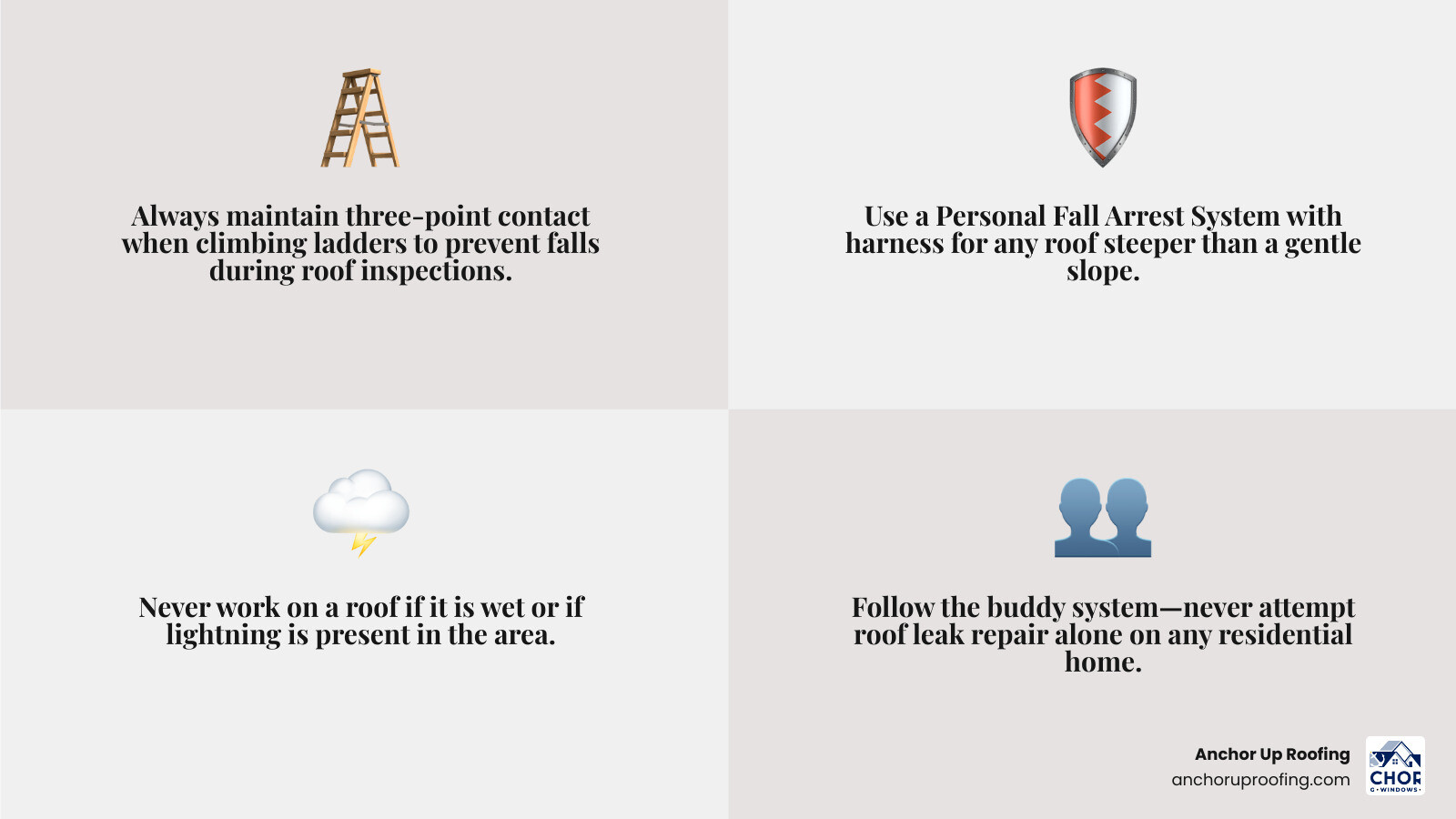
- Fall Protection: Use a Personal Fall Arrest System (harness) if the roof is steep.
- Ladder Safety: Always maintain “three-point contact” (two hands and one foot, or two feet and one hand) on the ladder.
- The Buddy System: Never work on a roof alone.
- Weather Monitoring: Never get on a roof if it is wet or if lightning is in the area.
When to Call a Professional vs. DIY
While a single pipe boot is a great DIY project, some things require a pro.
Call us if:
- The roof is steep: Anything over a 6/12 pitch is dangerous for amateurs.
- There are multiple leaks: This usually indicates the roof has reached the end of its life.
- Structural damage: If the roof feels “spongy” when you walk on it, the decking is rotted and needs replacement.
- Warranty concerns: DIY repairs can sometimes void your existing roof warranty.
Indicators of Necessary Roof Replacement
Sometimes a roof leak repair is just a Band-Aid. You might need a full replacement if you see:
- Widespread granule loss: Your shingles look “bald.”
- Recurring leaks: You’re fixing a new spot every time it rains.
- Age: Most asphalt roofs in Florida last 15-20 years. If yours is older, it’s time.
Check out our guide on signs your roof needs a replacement for a deeper dive, or browse our full list of roofing services.
Frequently Asked Questions about Roof Leak Repair
How long do temporary roof patches last?
A temporary patch with roofing cement or a wet patch sealant typically lasts 1 to 3 years. However, they are vulnerable to UV degradation and should be replaced with a permanent fix as soon as possible.
Can I fix a roof leak from inside the attic?
You can apply a “patch” to the underside of the wood to stop a drip temporarily, but this is dangerous because it traps water inside the roof structure, which accelerates wood rot. You must always fix the leak from the outside.
Does homeowners insurance cover roof leak repair?
Generally, yes, if the leak was caused by a “sudden and accidental” event like a hurricane or a fallen tree limb. However, insurance usually excludes leaks caused by “wear and tear” or lack of maintenance on an old roof. Always document the damage with photos immediately for your claim.
Conclusion
At Anchor Up Roofing, we know that your roof is the only thing protecting your family and your investment from the Florida elements. Whether you are in Pembroke Pines, Naples, or Homestead, a quick and effective roof leak repair is the key to longevity.
We are a retired veteran-owned business with over 20 years of experience, and we take pride in our 5-star service and flexible financing options. Don’t let a small drip become a big disaster. If you’re unsure about a leak or need a professional eye, contact us today for an expert evaluation. We’ve got you covered from the Sun Coast to the East Coast!