
When Your Roof Is Damaged, Every Hour Counts
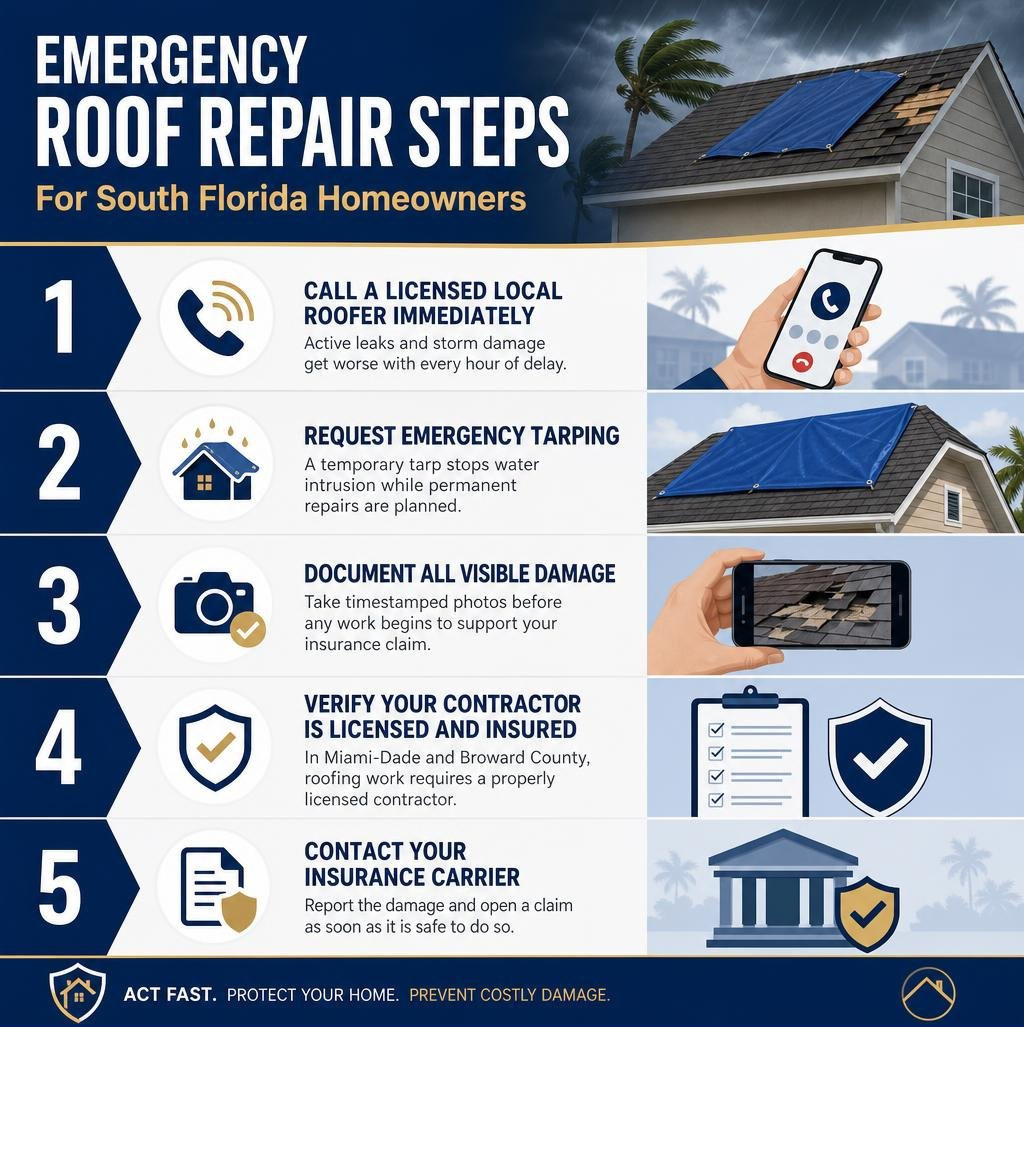
If you need roof damage repair near me, here’s how to get help fast in South Florida:
- Call a licensed local roofer immediately — active leaks and storm damage get worse with every hour of delay.
- Request emergency tarping — a temporary tarp stops water intrusion while permanent repairs are planned.
- Document all visible damage — take timestamped photos before any work begins to support your insurance claim.
- Verify your contractor is licensed and insured — in Miami-Dade and Broward County, roofing work requires a properly licensed contractor.
- Contact your insurance carrier — report the damage and open a claim as soon as it is safe to do so.
A roof leak is never just a roof problem. Water travels fast — soaking insulation, rotting wood framing, and creating hidden mold before you ever notice a ceiling stain. For South Florida homeowners, storm season makes this risk even greater. High winds, heavy tropical rain, and hurricane-force gusts can cause serious damage overnight. And when that happens, the last thing you want to be doing is searching blindly for someone you can trust to fix it right.
That’s why knowing who to call — and what to expect — before an emergency strikes is so important.
I’m Oscar Perez, founder of Anchor Up Roofing and a retired veteran with years of hands-on experience helping South Florida homeowners navigate roof damage repair near me situations — from active storm leaks to full post-hurricane restorations across Miami-Dade, Broward, and beyond. In this guide, I’ll walk you through everything you need to know to find reliable local help, understand your options, and protect your home.
How to Find the Best Roof Damage Repair Near Me
When South Florida’s volatile weather strikes, finding a trustworthy contractor is your first line of defense. The search for a reliable professional shouldn’t be left to guesswork or the first flyer left on your doorstep. In our region, high humidity, intense UV rays, and seasonal tropical storms require localized expertise that out-of-state “storm chasers” simply cannot provide.
To secure the best local roof repair services, you must prioritize verified contractor credentials, local physical presence, and deep familiarity with regional building requirements.
Selecting a Licensed Contractor for Roof Damage Repair Near Me
In Florida, and specifically within Miami-Dade and Broward counties, the regulatory environment for construction is exceptionally strict. This is for your protection. The High Velocity Hurricane Zone (HVHZ) building codes are among the most stringent in the nation. This means any roofing professional working on your home must possess specific qualifications.
When evaluating local contractors, always verify the following:
- Active Florida State Licensing: A legitimate contractor must hold an active license with the Florida Department of Business and Professional Regulation (DBPR). Unlicensed roofing work is not only illegal, but it can also lead to severe structural failures and the denial of insurance claims.
- Comprehensive Insurance Coverage: Your contractor must carry substantial general liability insurance and active worker’s compensation. If an uninsured worker is injured on your property, you could be held liable.
- Better Business Bureau (BBB) Accreditation: Working with a Better Business Bureau (BBB) accredited business ensures a public track record of resolving customer disputes and maintaining ethical business practices.
- Local Physical Office: Ensure the contractor has a permanent local address in areas like Miami, Doral, Hialeah, Pembroke Pines, or Naples rather than a temporary P.O. Box.
For comprehensive residential and commercial solutions tailored to these strict standards, you can read more info about professional roofing services to see how qualified local experts approach complex structural repairs.
Red Flags When Searching for Roof Damage Repair Near Me
Following a major storm, communities from Fort Myers and Naples to Homestead and Miramar often see an influx of out-of-state roofing companies. While some may be legitimate, many are “storm chasers” looking to secure quick insurance payouts before disappearing.
Be on high alert for these common warning signs:
- High-Pressure Sales Tactics: Avoid contractors who pressure you to sign a contract immediately or demand a large cash deposit upfront before conducting a thorough inspection.
- Offering to “Cover” Your Deductible: This is a major red flag. In Florida, it is highly illegal for a contractor to offer to pay, waive, or rebate your homeowners insurance deductible. Any contractor suggesting this is committing insurance fraud.
- Lack of Local References: A reputable local company should easily provide references from homeowners in your immediate area, whether you are on the Sun Coast, the West Coast, or deep in Miami-Dade.
- Unwillingness to Pull Permits: If a contractor suggests doing a significant repair without pulling the required municipal permits, ask them to leave. Unpermitted work can result in heavy code enforcement fines and complicate future home sales.
To safeguard your property and ensure you are taking the correct preliminary steps after a storm, review these storm damage documentation tips to protect your interests from day one.
Identifying Common Signs of Roof Damage in South Florida
Roof damage in South Florida doesn’t always present itself as a dramatic, gaping hole. More often, it begins as subtle deterioration that quietly worsens over time. Our unique climate—characterized by intense daily solar heating, high humidity, and sudden tropical downpours—accelerates the aging process of even the most durable materials.
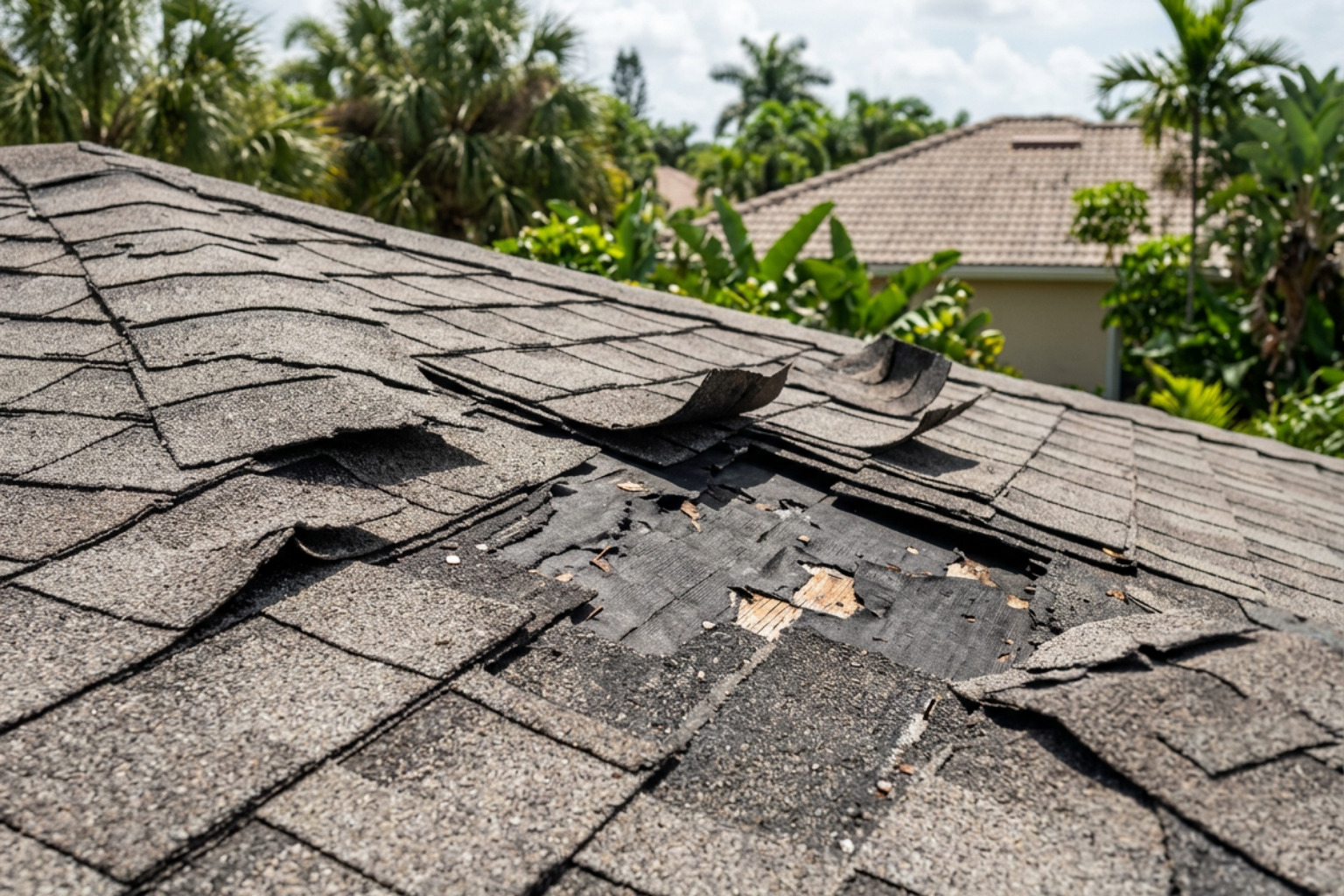
To help you determine whether your property requires immediate attention, we have compiled the most common signs of roof compromise:
- Water Stains on Ceilings or Walls: Dark, spreading rings or bubbling paint are clear indicators of an active leak.
- Curled, Cracked, or Missing Shingles: High winds can lift asphalt shingles, weakening their sealant strips and exposing the underlayment.
- Cracked or Loose Roof Tiles: Clay and concrete tiles can crack under the impact of falling debris or degrade due to thermal expansion.
- Granule Loss in Gutters: Excess shingle granules washing down your downspouts indicate that your asphalt shingles are reaching the end of their functional lifespan.
- Damaged or Rusted Flashing: Metal flashing around chimneys, vents, and valleys is highly susceptible to corrosion and shifting.
Comparing Roof Repair vs. Roof Replacement
Understanding whether your home requires a targeted repair or a complete overhaul is crucial for budgeting. Below is a comparison table outlining how local experts evaluate these two paths:
| Feature / Condition | Targeted Roof Repair | Full Roof Replacement |
|---|---|---|
| Scope of Damage | Localized (e.g., a few missing shingles, a single cracked tile, minor flashing leak) | Widespread (e.g., multiple leaks, extensive structural rot, major storm damage) |
| Roof Age | Relatively young (under 10–15 years for shingles; under 20 years for tile/metal) | Nearing or past life expectancy (20+ years for shingles; 30+ years for tile) |
| Florida 25% Rule | Damaged area represents less than 25% of the total roof section | Damaged area exceeds 25% of the roof section (requires full code compliance update) |
| Long-Term Cost | Budget-friendly for immediate, isolated issues | Costly upfront, but delivers maximum ROI and lowers insurance premiums |
| Permit Requirements | Often minor or exempt depending on the local municipality | Always requires comprehensive municipal permits and multiple inspections |
Wind and Hurricane Damage
High winds from tropical storms and hurricanes exert immense uplift pressure on your roof. This pressure is strongest at the edges, eaves, and ridges of your home. When wind gets underneath shingles or tiles, it can peel them back, exposing the water-resistant underlayment below.
Furthermore, wind-borne debris—such as tree branches, coconuts, and loose building materials—can cause severe impact damage. Even if your tiles or shingles look intact from the ground, the impact can fracture the underlying felt or synthetic barrier, paving the way for water intrusion during the next storm.
If you suspect your roof has suffered structural wind damage, it is vital to act quickly. You can read about the key signs your roof needs a replacement to understand when simple repairs are no longer a safe or viable option.
Water Leaks and Moisture Intrusion
Water is incredibly patient. It will find the path of least resistance, often traveling along roof trusses, piping, and drywall before dripping onto your ceiling. This means the water stain in your living room might be caused by a leak originating ten feet away on your roof.
In South Florida’s warm environment, moisture intrusion quickly leads to secondary issues. Mold and mildew can begin growing within 24 to 48 hours of water exposure, posing serious health risks to your family and severely damaging your home’s structural integrity.
If you find yourself dealing with an active drip, knowing how to temporarily manage the situation can save you from costly interior damage. Explore this step-by-step guide on how to fix a roof leak for reliable methods to mitigate water damage before our crew arrives.
Emergency Roof Repair and Same-Day Tarping Services
When a major leak occurs during a tropical downpour, you cannot afford to wait days for an estimator to visit your property. You need immediate, reactive protection to dry-in your home and protect your personal belongings.
Reputable local roofing companies provide 24/7 emergency dispatch services to handle critical situations. While permanent repairs cannot be safely executed during active lightning, high winds, or torrential rain, emergency crews are trained to respond the moment weather conditions drop to safe operating levels (typically when sustained winds are below 30 mph).
Our primary goal during an emergency call is stabilization. For rapid assistance and to secure your property immediately, contact our dedicated team for emergency roof repair services.
The Emergency Tarping Process
Emergency roof tarping is the most effective temporary defense against secondary water damage. However, throwing a basic blue tarp over a roof and weighing it down with bricks will not withstand South Florida’s winds.
A professional emergency tarping installation involves a structured process:
- Safety Assessment: Technicians inspect the roof to identify structural sagging, soft decking, or electrical hazards.
- Debris Clearance: Any fallen tree limbs, loose tiles, or damaged shingles are carefully cleared from the target area.
- Heavy-Duty Tarp Selection: Commercial-grade, UV-resistant tarps are measured to cover the damaged area with ample overlap.
- Furring Strip Anchoring: The tarp is secured using wooden furring strips fastened directly to the roof structure. This prevents wind from getting underneath the tarp and blowing it away.
- Photo Documentation: The completed installation is documented with high-resolution photos to provide your insurance company with proof of active mitigation.
A professionally installed tarp is designed to protect your home for 30 to 90 days, giving you the necessary time to obtain permits, coordinate with your insurance adjuster, and schedule permanent repairs.
Navigating Homeowners Insurance Claims
Most standard homeowners insurance policies in Florida cover sudden and accidental physical damage caused by covered perils, such as hurricane-force winds, hail, and fallen trees. However, they strictly exclude damage resulting from wear and tear, lack of maintenance, or pre-existing neglect.
To ensure your claim is processed smoothly, follow these steps:
- Document Everything: Take clear, timestamped photos of the interior water damage and the exterior roof damage before any temporary repairs are made.
- Keep Mitigation Receipts: Save all invoices and receipts for emergency services, such as professional tarping or water extraction. These costs are typically reimbursable under your policy’s “Reasonable Repairs” coverage.
- Request Professional Representation: A reputable roofing contractor will meet on-site with your insurance adjuster to point out hard-to-see damage, such as micro-cracks in tiles or subtle wind uplift.
For a detailed look at navigating this complex process on the coast, check out our Florida East Coast storm repair guide to learn how to streamline your recovery.
Frequently Asked Questions About Local Roof Repairs
To help you make informed decisions, we have compiled answers to the most common questions South Florida homeowners ask about local roofing repairs.
How long does a typical roof repair take?
The duration of a roof repair depends heavily on the scope of the damage and the type of roofing material:
- Minor Shingle Repairs: Replacing a small section of wind-damaged shingles or repairing localized flashing typically takes between 2 to 4 hours.
- Tile Roof Repairs: Repairing cracked tiles and replacing the underlying waterproof underlayment usually takes 1 to 2 days, as tiles must be carefully removed and re-installed.
- Flat Roof Membrane Repairs: Patching or coating a flat roof section generally takes a single day, depending on the drying time of the specialized sealants.
Please keep in mind that South Florida’s summer weather—specifically afternoon thunderstorms—can cause temporary safety delays. Our crews monitor local radar closely to ensure work is completed safely and efficiently.
What roofing materials are best for hurricane resistance?
In our High Velocity Hurricane Zone (HVHZ), your choice of roofing material directly impacts your home’s safety and your insurance premiums:
- Metal Roofing (Standing Seam): This is widely considered the gold standard for hurricane resistance. Standing seam metal roofs feature concealed fasteners and can withstand winds exceeding 140 mph while offering excellent longevity.
- Clay and Concrete Tile: Extremely popular in South Florida, tile roofs offer excellent wind resistance and durability. However, they are heavy and require a robust structural deck.
- Asphalt Shingles (Architectural): Modern architectural shingles rated for high winds are a budget-friendly option, though they have a shorter lifespan in our intense heat.
When should I schedule a professional roof inspection?
We highly recommend scheduling a professional roof inspection at least once a year, ideally in the spring before the Atlantic hurricane season begins. Additionally, you should always request an inspection immediately following any major storm event.
Catching minor issues—such as a small crack in a valley flashing or a loose tile—before the heavy summer rains arrive can save you from incredibly costly interior repairs. To learn more about timing your assessments, read about when to schedule a residential roofing inspection.
Conclusion
Your roof is the single most important protective barrier keeping your family, your home, and your valuables safe from South Florida’s unforgiving elements. When storm damage, active leaks, or wind wear threaten that barrier, delaying action will only turn a simple repair into a costly, stressful headache. Finding qualified roof damage repair near me is about securing peace of mind and protecting your largest investment.
At Anchor Up Roofing, we are proud to serve communities across Florida’s East Coast, West Coast, Sun Coast, and throughout Miami-Dade, Broward, Naples, Sarasota, and Fort Myers. As a retired veteran-owned business with over 20 years of hands-on experience, we back our work with 5-star service, local expertise, and flexible financing options to make your recovery as smooth as possible.
Whether you need immediate emergency tarping after a storm, a comprehensive leak diagnosis, or a full roof replacement, our team is ready to deliver. Contact our local roofing experts today to schedule your professional inspection and protect your home for years to come.