
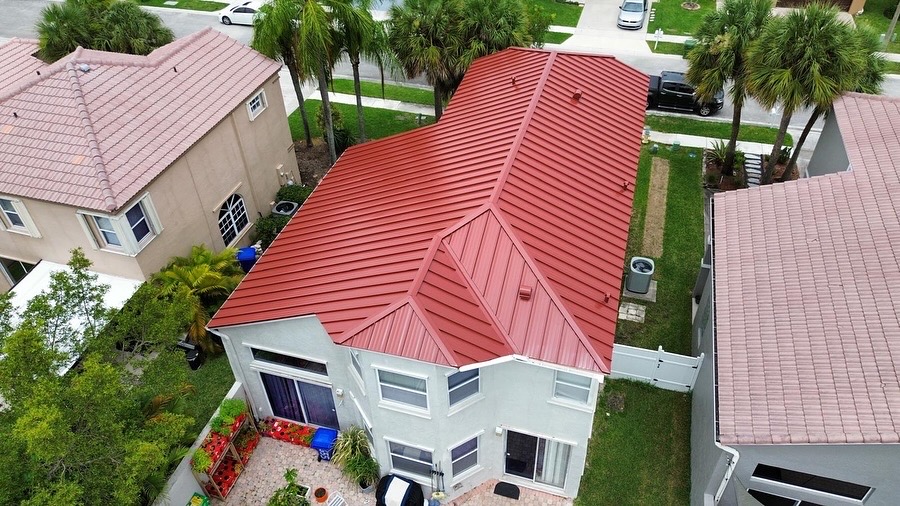
Why Hialeah FL Roofing Is One of South Florida’s Most Demanding Challenges
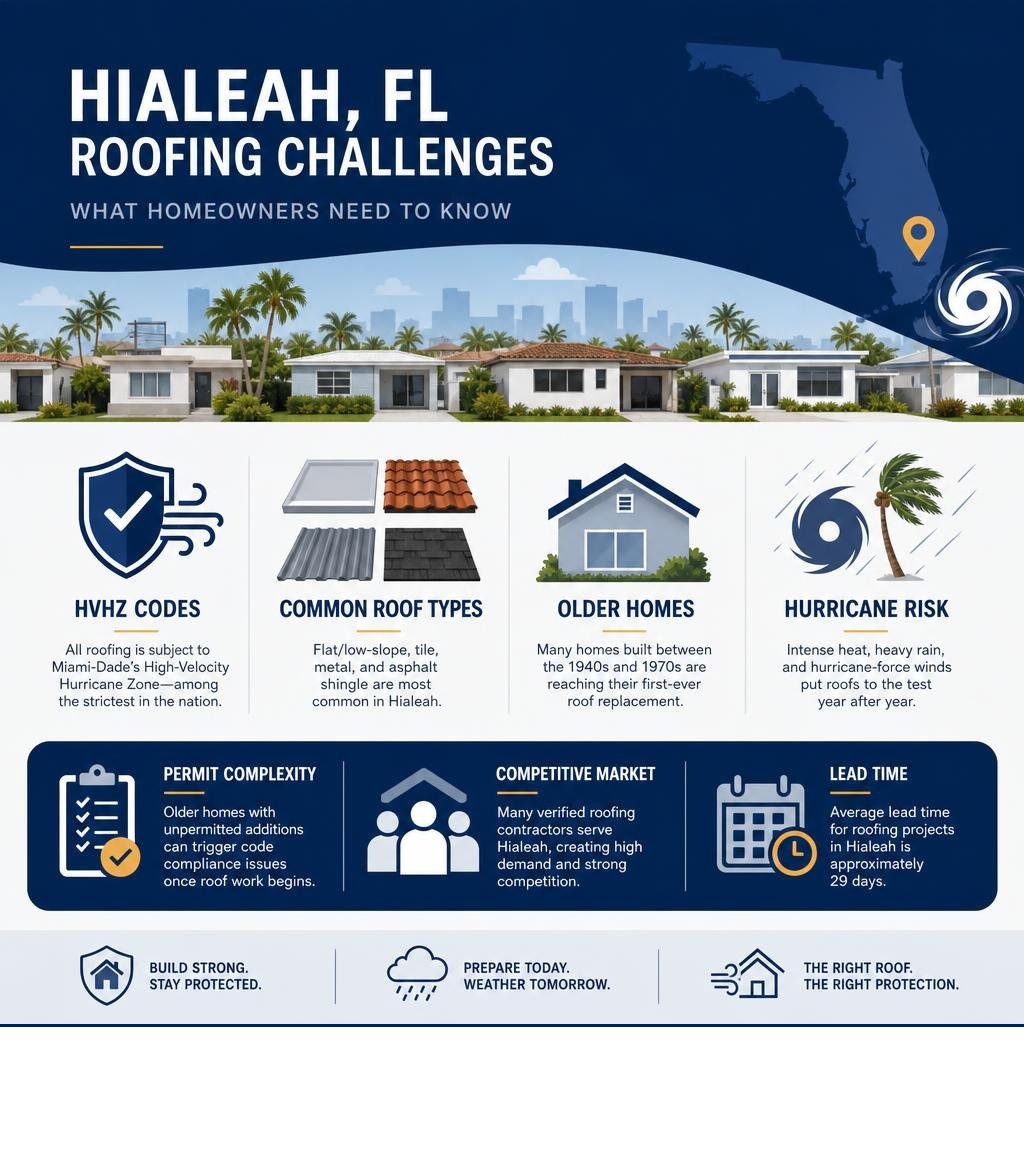
Hialeah FL roofing sits at the crossroads of some of the toughest conditions a roof can face — intense heat, hurricane-force winds, heavy seasonal rain, and one of the most densely built urban environments in the United States.
Here’s a quick snapshot of what Hialeah homeowners need to know:
- Climate: 90°F+ summers, 60+ inches of annual rain, and active hurricane exposure
- Code requirements: All roofing falls under Miami-Dade’s High-Velocity Hurricane Zone (HVHZ) — one of the strictest standards in the country
- Common roof types: Flat/low-slope, tile, metal, and asphalt shingle
- Key challenge: Many homes built between the 1940s and 1970s are reaching their first-ever roof replacement
- Permit complexity: Older homes with unpermitted additions can trigger code compliance issues the moment roof work begins
- Contractor market: 404 verified roofing contractors serve the area, with high bidding competition and an average lead time of 29 days
Hialeah is the second-largest city in Miami-Dade County, and its dense blocks of mid-century concrete block homes create unique logistical and structural challenges that most roofing guides simply don’t address.
Getting the wrong contractor — or the wrong materials — in this environment isn’t just inconvenient. It can leave your home exposed to the next major storm.
I’m Oscar Perez, founder of Anchor Up Roofing and a retired veteran with years of hands-on experience completing residential and commercial Hialeah FL roofing projects across Miami-Dade and beyond. In this guide, I’ll walk you through everything you need to make a confident, well-informed decision about your roof.
Key Materials and Types of Hialeah FL Roofing
Selecting the right material for your South Florida home involves balancing long-term durability, visual appeal, wind resistance, and your budget. The tropical climate in Hialeah subjects roofs to intense UV radiation and rapid thermal expansion (where materials expand in the scorching midday sun and contract quickly during afternoon downpours).
To help you understand how different options stack up, we have compiled a comparison of the most common systems used in our region. For a deeper dive into these options, check out our guide on the Types of Residential Roofing Compared.
| Roofing Material | Expected Lifespan | Wind Resistance Rating | Thermal Expansion Handling | Cost Category |
|---|---|---|---|---|
| Asphalt Shingles | 15–20 Years | Up to 110–130 MPH | Moderate (can crack over time) | Budget-Friendly |
| Concrete/Clay Tile | 50+ Years | Up to 150+ MPH | Excellent (natural air gap) | Costly |
| Metal Panels | 40–70 Years | Up to 140–180 MPH | Excellent (with proper fasteners) | Costly |
| Flat / TPO Membrane | 15–25 Years | High (fully adhered) | Good (highly reflective) | Moderate |
Whether you are managing a residential property or coordinating a large commercial project, the material you choose dictates how well your building stands up to the elements. Commercial projects in Hialeah often involve substantial properties; in fact, looking at local development, our market sees commercial roofing projects averaging 25,959 square feet, with some industrial warehouses stretching up to 200,000 square feet. For these large-scale flat surfaces, single-ply membranes are highly favored, whereas residential properties typically rely on sloped tile, metal, or shingle systems.
Here in Southeast Florida, our focus remains locked on surviving the intense High-Velocity Hurricane Zone (HVHZ) requirements.
Tile and Metal Hialeah FL Roofing Systems

For homeowners seeking maximum durability, tile and metal are the gold standards. Traditional Mediterranean clay and concrete tiles are staple features of classic South Florida architecture. Beyond their beautiful aesthetic, tiles provide exceptional thermal insulation. They create a natural air buffer between the tile and the roof deck, which helps keep your attic cooler and reduces household energy consumption. To learn more about this classic option, read our article containing Everything You Need to Know About Tile Roofing.
On the other hand, modern metal roofing has surged in popularity. Metal panels coated with reflective finishes can lower your cooling costs by reflecting solar radiation away from your home. This material handles thermal expansion beautifully and offers a lifespan that can easily reach 50 to 70 years. If you want to understand why so many homeowners are making the switch, check out the Benefits of a Metal Roof to see how these systems perform under extreme wind loads.
Shingle and Flat Roofing Options
While tile and metal offer incredible longevity, architectural asphalt shingles remain a popular, budget-friendly option for many Hialeah neighborhoods. Modern shingles are engineered with algae-resistant granules and designed to withstand winds up to 130 MPH. However, in our aggressive climate, shingles generally require replacement sooner than metal or tile due to constant UV exposure.
For flat and low-slope roofs—which are incredibly common on mid-century Hialeah homes and local commercial corridors—we typically install TPO (Thermoplastic Polyolefin) membranes, modified bitumen, or EPDM rubber systems. TPO is highly reflective, helping to lower roof surface temperatures that can easily exceed 160°F during the summer. EPDM is another reliable, cost-effective option for flat structures. Some eco-conscious property owners also look into organic shingles or fire-resistant treated asphalt options to minimize their environmental footprint while protecting against local fire hazards.
Miami-Dade Building Codes, Permitting, and Urban Logistics
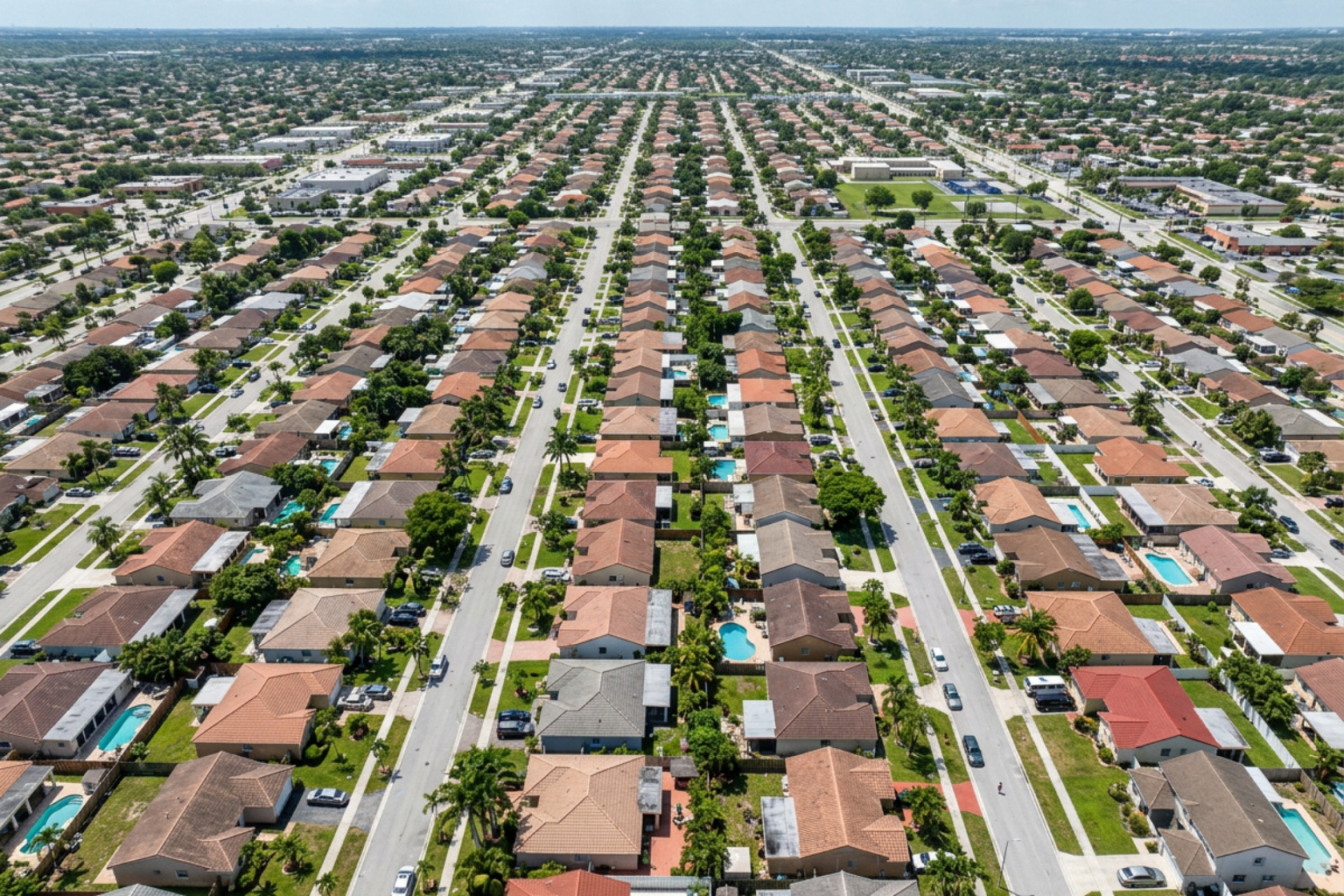
Hialeah’s dense urban layout is unique. Many neighborhoods feature narrow lots, minimal setbacks, and overhead utility lines. This dense access makes staging a roofing project highly technical. Parking large dumpsters, operating boom trucks, and delivering heavy pallets of tile or metal requires careful coordination to avoid blocking neighborhood traffic or damaging adjacent properties.
Furthermore, all roofing work in Hialeah must comply with the strict Florida Building Code. Because Hialeah is located within the High-Velocity Hurricane Zone (HVHZ), every product used—from the underlayment to the individual fasteners—must have a valid Miami-Dade Product Approval (Notice of Acceptance, or NOA).
Hurricane Standards and Wind Resistance
Under the current building code standards, roofs in Hialeah must be engineered to withstand extreme wind pressures. This means contractors must use enhanced sheathing attachments, such as ring-shank nails spaced closely together, and install a self-adhered “peel-and-stick” secondary water barrier. This barrier ensures that even if your primary roofing material (like shingles or tiles) is blown off during a storm, water cannot penetrate the wooden deck and ruin your home’s interior.
Additionally, if you live in a community governed by a homeowners association, it is important to stay updated on local guidelines, such as the New Florida HOA Law 2024, which impacts how architectural standards and wind-resistance upgrades are approved.
Permitting for Older Concrete Block Homes
The majority of Hialeah’s residential real estate consists of classic concrete block homes built between the 1940s and 1970s. A significant hurdle when roofing these older properties is the presence of unpermitted additions, such as enclosed back patios or utility rooms.
When we pull a permit for a roof replacement, the local building department reviews the entire structure. If an unpermitted addition is discovered, or if the structural integrity of the existing roof deck is compromised by wood rot, the entire section must be brought up to modern building codes before the final inspection can be signed off.
Navigating this process requires experience. You can learn more on the official Roofing Permits – Miami-Dade County portal, or read our step-by-step guide on How to Get Your Miami Dade Roofing Permit Easily.
Managing First-Time Replacements on Mid-Century Homes
It is surprisingly common to find mid-century homes in Hialeah that are undergoing their very first complete roof replacement. Over decades of service, these older roofs can hide severe deck deterioration, damaged fascia boards, and failing soffit systems.
Many homeowners choose this milestone to perform flat-to-tile or flat-to-shingle conversions, which require structural reinforcement to support the heavier weight of clay or concrete tiles. If you are unsure whether your older roof can survive another rainy season, look out for the warning signs highlighted in our guide on Signs Your Roofs Need a Replacement.
Contractor Selection, Costs, and Financing
With 404 verified roofing contractors serving the Hialeah area, finding the right partner can feel overwhelming. The local market is highly competitive, resulting in a “High” bidding difficulty rating for projects. Because local contractors travel an average of 43 miles to bid on projects, you will find bidders coming from all over South Florida. The regional distribution of bidding contractors highlights this reach:
- Within 10 miles: 19% of bidding contractors
- 10 to 20 miles: 14% of bidding contractors
- 20 to 30 miles: 4% of bidding contractors
- Over 30 miles: 33% of bidding contractors
Because of this high demand, the average lead time to secure a bid is 29 days, and the average response time for contractors to return calls or adjust estimates is 4 days. Planning your project well in advance is essential to avoid delays, especially before the Atlantic hurricane season begins.
When comparing options, look for contractors who hold active state licenses (which you can verify on myfloridalicense.com) and comprehensive general liability and workers’ compensation insurance. If you want to know what specific questions to ask during your consultations, read our article on How to Choose the Right Roofing Contractor: 5 Questions to Ask.
We proudly serve Hialeah and surrounding areas from our base in Miami-Dade, ensuring that all local projects meet the highest professional standards and credentials.
Red Flags in Hialeah FL Roofing Services
Unfortunately, the high-demand roofing market attracts unscrupulous operators. Homeowners should be on high alert for “storm chasers”—out-of-state contractors who arrive immediately after a major storm, offer quick repairs, collect insurance checks, and disappear before the work is properly completed or inspected.
Other red flags include:
- High-pressure sales tactics demanding immediate cash deposits.
- Reluctance to provide a detailed, written estimate.
- Lack of local physical office addresses.
- Inability to communicate in both English and Spanish.
Because Hialeah has one of the highest concentrations of Spanish speakers in the United States, working with a fully bilingual team ensures that every detail of your contract, permit, and warranty is completely understood without any language barriers.
Inspections, Warranties, and Storm Damage Claims
A new roof is a significant investment, and protecting that investment requires proactive maintenance. We recommend scheduling a professional roof inspection at least once a year, ideally in late spring before the heavy summer rains and hurricane season arrive. To find out what we look for during these assessments, refer to our guide on When to Schedule a Residential Roofing Inspection.
If your roof suffers storm damage, document the scene immediately with photos and video before scheduling emergency tarping to prevent further indoor water damage. Keep detailed records of all repairs and correspondence for your insurance carrier.
To help ease the financial burden of unexpected storm damage or planned upgrades, we offer flexible payment solutions. You can read more about your options in our resource on How to Finance Your Roof Replacement to find a plan that fits your budget.
Frequently Asked Questions
How long does a roof replacement take in Hialeah?
A standard residential roof replacement in Hialeah typically takes between 2 to 5 days of active on-site work. However, the entire process—including initial inspections, material deliveries, Miami-Dade County permitting, and final building department inspections—can take several weeks to fully finalize.
What is the most durable roofing material for South Florida’s climate?
Metal roofing and concrete or clay tile systems are the most durable options. Both materials are engineered to withstand winds up to 150 MPH or higher, handle thermal expansion exceptionally well, and offer a service life of 50 years or more when properly installed and maintained.
Do I need a permit for minor roof repairs in Miami-Dade County?
Yes, Miami-Dade County requires permits for most roofing activities, including repairs that exceed a basic square footage threshold. It is always best to consult with a licensed contractor or check directly with the local building department to ensure your project remains fully compliant with local codes.
Conclusion
Navigating the complexities of Hialeah FL roofing requires a partner who understands the local architecture, the strict Miami-Dade building codes, and the logistical challenges of our dense neighborhoods.
At Anchor Up Roofing, we bring over 20 years of industry experience to every project. As a retired veteran-owned and operated business, we pride ourselves on military-grade precision, absolute integrity, and exceptional customer service. We offer a full suite of services—including high-quality tile, metal, shingle, and flat roofing, as well as hurricane-impact windows, doors, gutters, and insulation. To make your project as smooth as possible, we provide flexible financing options to fit your needs.
If you are ready to protect your home with a roof built to last, visit our dedicated Hialeah FL page or contact us today to schedule your comprehensive structural evaluation and free estimate. Let us help you anchor down your home’s defenses!